



Laser technology is integral to modern life-used in medicine, manufacturing, research, entertainment, and even everyday gadgets like barcode scanners and laser pointers. But with great utility comes significant risk: even a one-second exposure of a laser beam to the eye can cause permanent vision damage.
In this comprehensive guide, we'll explain how lasers interact with the eye, what types of injuries can occur in just one second, how laser safety classes work, and practical steps you can take to protect your vision-all based on internationally recognized standards such as IEC 60825-1 and ANSI Z136.1.
Why Are Lasers Especially Dangerous to the Eyes?
The human eye functions like a precision optical instrument. When light enters through the pupil, the cornea and lens focus it onto the retina-the light-sensitive tissue at the back of the eye responsible for vision.
A laser beam, due to its coherence and collimation, doesn't scatter like ordinary light. Instead, the eye's lens concentrates the entire beam onto a microscopic spot on the retina-often less than 20 micrometers wide. This focusing effect can amplify the beam's power density by up to 100,000 times.
For example:
A common 5 mW green laser pointer may appear dim.
But once focused on the retina, it can deliver energy densities exceeding 100 watts per square centimeter-enough to cause thermal burns almost instantly.
This risk is highest for visible (400–700 nm) and near-infrared (700–1400 nm) wavelengths, which pass easily through the eye's transparent structures and are efficiently focused on the retina.
Can One Second Really Cause Permanent Damage?
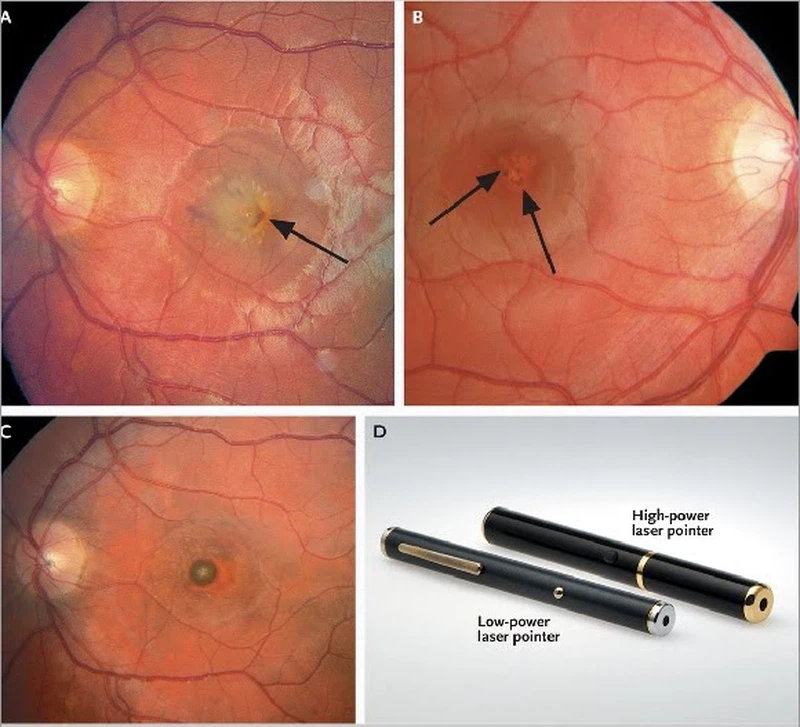
Yes. While the exact outcome depends on several factors, a single second of direct exposure to a moderate- or high-power laser can result in irreversible retinal injury.
Key Factors That Determine Injury Severity:
1. Laser Power (Output)
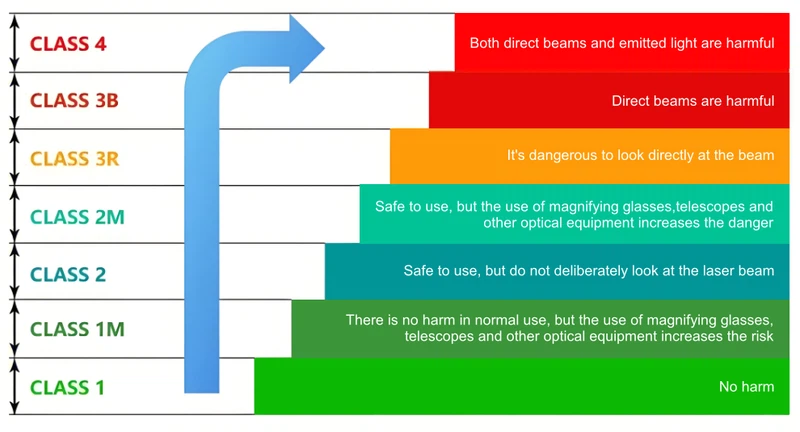
<1 mW (Class 1/2): Generally safe; blink reflex (~0.25 sec) usually prevents harm.
1–5 mW (Class 3R): Low risk, but intentional staring should be avoided.
5–500 mW (Class 3B): Hazardous-direct exposure for even less than a second can burn the retina.
>500 mW (Class 4): Extremely dangerous-causes immediate eye and skin damage, even from reflections.
2. Wavelength
Visible light (e.g., 532 nm green): Focused on retina → thermal/photochemical damage.
Near-infrared (e.g., 808 nm, 1064 nm): Invisible → no blink reflex → higher risk of unnoticed exposure.
UV or far-IR: Absorbed by cornea/lens → surface injuries like photokeratitis or cataracts.
3. Exposure Duration
The natural blink reflex offers limited protection-only about 0.25 seconds. Any exposure longer than that significantly increases injury risk. One full second is more than enough time for cellular destruction in Class 3B or 4 lasers.
4. Beam Characteristics
A narrow, collimated beam (like from a laser pointer) is more hazardous.
Specular (mirror-like) reflections can be nearly as dangerous as direct beams.
Diffuse reflections (off matte surfaces) are usually safe-except with high-power Class 4 lasers.

Types of Laser-Induced Eye Injuries
🔥 Thermal Damage (Most Common)
Rapid heating from laser energy causes:
Protein denaturation
Blood vessel rupture
Coagulation necrosis of retinal tissue
This creates a permanent blind spot (scotoma) in central vision. Because the retina lacks pain receptors, the injury is often painless-symptoms may only appear hours later.
☢️ Photochemical Damage
Primarily from blue light (400–500 nm) and UV. Photons trigger toxic chemical reactions in retinal cells, leading to cumulative damage-even at low power with prolonged exposure.
💥 Acoustic/Mechanical Damage
Occurs with ultrafast pulsed lasers (nanosecond or shorter pulses). The sudden vaporization of tissue generates shockwaves that tear retinal layers-sometimes with energies below thermal thresholds.
Real-World Risk Scenarios
While industrial and medical settings follow strict protocols, everyday situations pose hidden dangers:
Overpowered laser pointers: Many sold online exceed legal limits-labeled "<5 mW" but actually outputting 50–200 mW.
Laser light shows: Poorly regulated public displays using uncertified equipment.
DIY or hobbyist projects: Using salvaged laser diodes without proper training or eyewear.
Aircraft targeting: Even brief illumination can temporarily blind pilots-illegal in most countries.
Crucially, many injuries go unreported because symptoms develop gradually or are mistaken for other vision issues.
Understanding Laser Safety Classes
Two major international standards classify lasers by risk:
✅ IEC 60825-1 (Global Standard)
| Class | Max Visible CW Power | Risk |
|---|---|---|
| Class 1 | <0.39 µW | Safe under all conditions |
| Class 2 | <1 mW | Safe due to blink reflex |
| Class 3R | 1–5 mW | Low risk; avoid direct viewing |
| Class 3B | 5–500 mW | Hazardous; direct/reflected beams dangerous |
| Class 4 | >500 mW | Severe hazard; fire, skin, and eye risks |
✅ ANSI Z136.1 (U.S. Standard)
Uses Maximum Permissible Exposure (MPE) limits-similar principles, tailored to occupational settings.
Both agree: Never look directly into any laser beam, regardless of brightness or color.
Symptoms of Laser Eye Injury
Because retinal damage is often painless, people may not realize they've been injured until it's too late. Watch for:
A persistent dark or blurry spot in central vision
Distorted vision (straight lines appear wavy)
Reduced color sensitivity
Floaters or flashes (if bleeding occurs)
If you suspect exposure, seek immediate evaluation by an ophthalmologist. Diagnostic tools like optical coherence tomography (OCT) can detect subtle retinal changes.
Unfortunately, retinal burns cannot heal-photoreceptor cells do not regenerate. Treatment focuses on monitoring and preventing further injury.
How to Protect Your Eyes: Evidence-Based Practices
1. Know Your Laser's Class
Always check labeling. Avoid unlabeled or novelty lasers-they frequently violate safety limits.
2. Never Point Lasers at People, Vehicles, or Aircraft
This is not only dangerous but also illegal in most countries, with penalties including heavy fines and imprisonment.
3. Use Engineering Controls
In labs or workshops:
Enclose beams where possible
Use beam stops and shutters
Keep beams below eye level
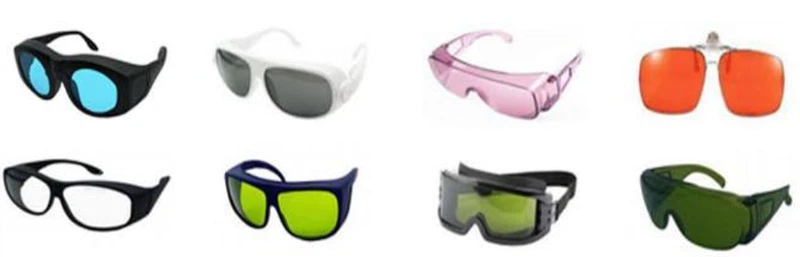
4. Wear Proper Laser Safety Eyewear
Glasses must match the wavelength and power of your laser.
Look for Optical Density (OD) ratings (e.g., OD 4 = 10,000x reduction).
Regular sunglasses or clear safety goggles offer no protection.
5. Control Reflections
Remove watches, jewelry, and reflective surfaces from the beam path. Assume any shiny object can create a hazardous reflection.
6. Educate Children and Students
Emphasize that lasers are precision tools-not toys. Supervise all educational use.
Debunking Common Laser Myths
❌ "If it doesn't hurt, it's safe."
✅ Retinal burns are painless. Damage can be severe before symptoms appear.
❌ "Only military lasers are dangerous."
✅ Many consumer lasers exceed 100 mW-well into the hazardous range.
❌ "Green lasers are safer."
✅ Green (532 nm) is highly visible and efficiently focused by the eye-making it more hazardous at equal power.
❌ "Closing my eyes protects me."
✅ Eyelids block only ~20% of visible light. High-power lasers can penetrate closed eyelids.
Legal and Regulatory Landscape
Governments worldwide restrict laser access:
U.S. FDA: Limits consumer pointers to ≤5 mW.
European Union: Requires CE marking per IEC 60825.
UK, Canada, Australia: Ban public possession of Class 3B/4 lasers without authorization.
Aiming a laser at an aircraft is a federal crime in many nations, with penalties up to $250,000 and years in prison.
Final Takeaway: One Second Is All It Takes
A laser hitting your eye for just one second might seem trivial-but in optical terms, it's an eternity. The combination of the eye's focusing power and the laser's concentrated energy means permanent vision loss can occur faster than you can blink.
Whether you're a student, engineer, educator, or curious user, respect for laser safety is non-negotiable. By understanding classifications, using protective measures, and avoiding reckless behavior, you can harness laser technology safely-without risking your sight.
Remember: No laser is "eye-safe" if misused. Invisible doesn't mean harmless. And when it comes to your vision-there are no second chances.