



Laser detection technology leverages the unique properties of lasers-such as high precision, non-contact operation, and fast response-to enable critical applications across industries. Key use cases include industrial measurement (e.g., alignment, thickness gauging), environmental monitoring (e.g., pollutant detection), medical diagnostics (e.g., blood flow analysis), and security systems (e.g., LiDAR, intrusion detection).
At the heart of these systems are laser modules, which serve as the core components by delivering stable, controllable laser output tailored to specific detection requirements. Their reliability and adaptability make them indispensable for modern sensing and measurement solutions.

Key Parameters of Laser Modules
Laser modules are characterized by several critical parameters that determine their performance and suitability for specific applications:
Wavelength – Determines interaction with materials and detection sensitivity. Common options include:
Visible (405nm, 532nm) for alignment and visual applications
Infrared (808nm, 1064nm) for thermal imaging and LiDAR
UV (355nm) for fluorescence excitation and precision machining
Power – Ranges from:
Low-power (mW range) for sensing and medical applications
High-power (W range) for material processing and long-range detection
Operation Mode – Includes:
Continuous wave (CW) for constant illumination
Pulsed for time-of-flight measurements
Modulated for communication and noise rejection
Beam Quality – Critical for precision applications:
Single-mode (Gaussian beam) for focused spots and interferometry
Multi-mode for uniform illumination and higher power delivery
Additional Parameters – Such as:
Divergence angle (beam spread over distance)
Stability (output consistency over time/temperature)
Lifespan (typically thousands to tens of thousands of hours)
Size/Form Factor (important for embedded systems)
Common Types of Laser Modules for Detection
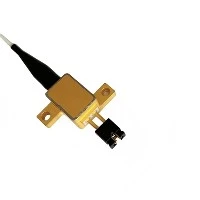
Laser Diode Modules
Features: Compact, efficient, cost-effective.
Applications: Distance measurement (e.g., ToF), barcode scanning, alignment detection.
Examples: 650nm red laser modules, 808nm IR modules.

DPSS Laser Modules (Diode-Pumped Solid-State)
Features: High beam quality, excellent stability.
Applications: Precision measurement (e.g., interferometry), spectral analysis.
Examples: 532nm green modules, 1064nm IR modules.

Fiber Laser Modules
Features: High power, long lifespan, strong interference resistance.
Applications: Industrial defect detection, LiDAR.
Examples: 1550nm fiber lasers (for safety inspections).

UV Laser Modules
Features: Short wavelength, high resolution.
Applications: Fluorescence detection, material surface analysis.
Examples: 355nm UV lasers.
VCSEL Modules (Vertical-Cavity Surface-Emitting Lasers)
Features: Low power consumption, array configurations.
Applications: 3D sensing (e.g., facial recognition), short-range detection.
CO₂ Laser Modules (Gas Lasers)
Features: Long wavelength (10.6μm), high power.
Applications: Gas composition analysis, industrial cutting inspection.

How to Select the Right Laser Module for Detection Applications
1. Match Technical Parameters to Detection Needs
Precision vs. Power Trade-off
High-precision measurements (e.g., interferometry, microscopy) require single-mode lasers with Gaussian beam profiles for tight focus.
Long-range detection (e.g., LiDAR, rangefinders) demands higher power (W-level) and good beam collimation.
Wavelength Selection
Visible lasers (405nm, 532nm) for alignment and visual feedback.
Infrared (808nm, 1550nm) for eye-safe or thermal-sensitive applications.
UV lasers (355nm) for fluorescence excitation or micromachining.
Operation Mode
CW lasers for stable illumination (e.g., spectroscopy).
Pulsed/modulated lasers for time-sensitive detection (e.g., ToF, LiDAR).
2. Environmental Adaptability
Industrial Harsh Environments
Requires temperature-stabilized diodes (e.g., -10°C to 50°C operation).
Vibration-resistant packaging for machinery-integrated systems.
Outdoor/Field Applications
Hermetic sealing to prevent moisture/dust ingress.
Shock-resistant designs for portable devices.
3. Cost & Supply Chain Considerations
| Laser Type | Cost Range | Best For | Trade-offs |
|---|---|---|---|
| Laser Diodes | Low ($10-$100) | Budget projects, barcode scanners | Lower power, multi-mode only |
| DPSS Lasers | Medium ($100-$1k) | Lab-grade precision, green lasers | Sensitive to temperature |
| Fiber Lasers | High ($1k-$10k+) | Industrial cutting, LiDAR | Expensive, high maintenance |
| VCSEL Arrays | Medium ($50-$500) | 3D sensing, consumer electronics | Limited power output |
Availability: Common wavelengths (650nm, 808nm) are cheaper and easier to source than specialized ones (e.g., 355nm UV).
Maintenance Costs: Fiber/CO₂ lasers may need periodic gas refills or optics cleaning.
Quick Selection Guide
✅ For low-cost, short-range detection → Laser diode (650nm, 808nm).
✅ For precision lab measurements → DPSS (532nm, single-mode).
✅ For harsh industrial environments → Fiber laser (1064nm, ruggedized).
✅ For mass-produced 3D sensors → VCSEL arrays (940nm).
Laser Module Applications in Key Industries
1. Industrial Automation
Example: Laser Triangulation for Thickness Measurement
Laser Type: Visible (650nm) or IR (850nm) diode laser
Key Features:
Single-mode beam for high-resolution positioning
Modulated/pulsed operation to reduce ambient light interference
Compact, rugged housing for factory-floor use
How It Works: A laser beam projects onto the target surface, and a CMOS/CCD sensor detects the reflected spot position. Displacement calculations provide real-time thickness measurements (e.g., paper, metal sheets).
2. Environmental Monitoring
Example: Tunable IR Laser for Air Pollutant Detection
Laser Type: Quantum cascade laser (QCL) or DFB diode (3–5 μm mid-IR)
Key Features:
Wavelength-tunable to match gas absorption lines (e.g., CO₂ at 4.2 μm, CH₄ at 3.3 μm)
Pulsed operation for differential absorption lidar (DIAL) systems
How It Works: The laser beam passes through the air, and a spectrometer analyzes absorption spectra to quantify pollutant concentrations (ppm/ppb levels).
3. Medical Devices
Example: Low-Power Laser Doppler for Blood Flow Monitoring
Laser Type: 785nm or 830nm single-mode diode laser
Key Features:
<1 mW power (Class 1M safety compliance)
Ultra-stable CW output for coherent detection
How It Works: Laser light scatters off moving red blood cells, creating a Doppler shift. Photodetectors measure this shift to calculate flow velocity (e.g., in retinal or microvascular diagnostics).
The core of the laser detection system is to select the appropriate laser module for different application scenarios, which requires comprehensive consideration of wavelength (such as visible light/infrared/ultraviolet), power (mW to W level), beam quality (single mode/multimode) and working mode (continuous/pulsed). Industrial detection focuses on accuracy (such as 532nm DPSS laser), environmental monitoring relies on specific wavelength sensitivity (such as 3.3μm laser detection of methane), and medical equipment pursues safety and stability (such as 785nm low-power laser).
Contact information:
If you have any ideas, feel free to talk to us. No matter where our customers are and what our requirements are, we will follow our goal to provide our customers with high quality, low prices, and the best service.
 Email:info@loshield.com
 Tel:0086-18092277517
 Fax: 86-29-81323155
 Wechat:0086-18092277517


