



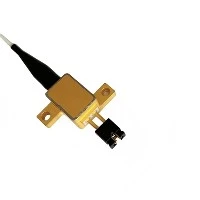
Infrared (IR) technology has become indispensable in modern optoelectronic systems, particularly in low-light or no-light environments where traditional visible-light illumination fails. Infrared illumination laser modules-compact devices that emit IR laser light to enhance imaging or sensing-are critical for applications ranging from security surveillance to autonomous vehicles.

The demand for 24/7 operational systems (e.g., night-vision cameras, biometric authentication) drives the need for efficient IR illumination.
Unlike LEDs, laser-based IR modules offer higher directionality, intensity, and energy efficiency, enabling long-range and high-resolution imaging.
Stealth: IR light (especially 940nm) is invisible to the human eye, avoiding detection in surveillance.
Performance: Enables machine vision, LiDAR, and facial recognition in total darkness.
Working Principles of IR Illumination Laser Modules
1. Core Components
Laser Diode: Typically 850nm (slight red glow) or 940nm (no visible glow).
Optics: Collimating lenses, diffractive optical elements (DOEs) for uniform illumination.
Driver Circuit: Pulse-width modulation (PWM) for power efficiency.
Thermal Management: Heat sinks or thermoelectric coolers to prevent wavelength drift.
2. Emission Mechanism
Electrical-to-Optical Conversion: When current passes through the laser diode, electrons recombine with holes, emitting photons at IR wavelengths.
Wavelength Selection:
850nm: Higher sensitivity for CMOS sensors but faintly visible.
940nm: Truly covert but requires higher power due to lower sensor sensitivity.
3. Intelligent Illumination Control
Adaptive Brightness: Auto-adjusts output based on ambient light (e.g., smart security cameras).
Pulsed vs. Continuous Wave (CW): Pulsed operation reduces power consumption and heat.
Key Technical Parameters and Design Considerations
1. Performance Metrics
| Parameter | Typical Value | Importance |
|---|---|---|
| Wavelength | 850nm/940nm | Determines visibility/sensor compatibility |
| Output Power | 1W–10W | Affects illumination range |
| Divergence Angle | 10°–60° | Influences coverage area |
| Uniformity | >90% | Critical for machine vision |
2. Design Challenges
Thermal Management: High-power lasers require active cooling to maintain stability.
Eye Safety: Must comply with IEC 60825-1 (Class 1 lasers for consumer devices).
Optical Homogeneity: DOEs eliminate "speckle" and "hot spots" for even illumination.
Applications of IR Laser Illumination Modules
1. Security & Surveillance
Covert Night Vision: 940nm modules in IP cameras for no-glow monitoring.
AI-Powered Analytics: Enhances facial recognition in darkness (e.g., Hikvision, Dahua systems).
2. Automotive LiDAR
ToF (Time-of-Flight) Sensing: IR lasers measure distance for autonomous vehicles.
Pedestrian Detection: Works in fog/rain where visible light fails.
3. Consumer Electronics
Smartphones: Face ID (e.g., iPhone's dot projector uses VCSELs).
Smart Locks: Iris recognition under low light.
4. Industrial Machine Vision
Defect Inspection: IR highlights material inconsistencies invisible in visible light.
Robotic Sorting: High-speed IR illumination for precision picking.
5. Medical & Scientific Uses
Ophthalmology: Retinal imaging with IR-safe illumination.
Low-Light Microscopy: Reduces phototoxicity in live-cell imaging.

Market Trends and Future Developments
1. Industry Landscape
Key Players:
Lumentum (VCSEL arrays for iPhones)
Osram (High-power IR lasers for automotive)
Vertilite (Chinese DOEs for uniform illumination)
2. Emerging Technologies
VCSEL Arrays: Replace edge-emitting lasers for better efficiency.
SWIR (Short-Wave IR): 1400–3000nm for advanced material analysis.
3. Future Directions
Multi-Spectral Modules: Combined visible + IR illumination for adaptive scenarios.
AI-Driven Illumination: Real-time adjustment based on object detection.
Challenges and Outlook
1. Current Limitations
Cost: High-power 940nm lasers remain expensive.
Range Limitations: Atmospheric absorption reduces effectiveness beyond 100m.
2. Breakthrough Opportunities
GaN-on-Si Lasers: Lower-cost, high-efficiency alternatives.
Quantum Dot IR Emitters: Tunable wavelengths for multi-spectral use.
IR illumination laser modules bridge the gap between human vision and machine perception, enabling critical applications from security to autonomous driving. As VCSELs, DOEs, and AI integration advance, these modules will become smaller, smarter, and more ubiquitous. Collaborative R&D across optics, semiconductors, and software is essential to unlock their full potential.
Contact information:
If you have any ideas, feel free to talk to us. No matter where our customers are and what our requirements are, we will follow our goal to provide our customers with high quality, low prices, and the best service.
 Email:info@loshield.com
 Tel:0086-18092277517
 Fax: 86-29-81323155
 Wechat:0086-18092277517


