




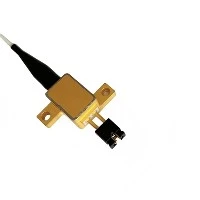
As the core component of laser technology application, the Laser Module is responsible for generating a stable beam of specific wavelength and power. It enables lasers to be utilized in a highly accurate manner by precisely controlling the emission, modulation and focusing of light. In a variety of equipment, whether precision cutting, data encoding reading or long-distance communication, laser modules are the key to achieving these functions.
Since its birth in the mid-20th century, Laser technology has experienced rapid development from theoretical exploration to industrial application. The original invention of the laser was considered a major breakthrough in quantum electronics, and its unique monochromatic, directional, and high-brightness properties quickly found widespread use in multiple scientific and industrial fields. As time goes by, laser technology continues to evolve, involving material processing, communications, medical treatment, scientific research and other aspects, and has become an indispensable part of modern technology.
In environmental science, the importance of laser modules is reflected in their huge potential for monitoring and protecting our natural environment. As global environmental problems become increasingly severe, such as climate change, pollution control, etc., real-time and accurate monitoring of environmental parameters has become crucial. Laser modules can provide high-precision monitoring methods, such as using LiDAR to map the three-dimensional distribution of atmospheric pollutants, or using spectroscopic technology to track toxic chemicals in the environment. These applications not only contribute to scientific research, but also provide policymakers with strong data support, thereby playing a key role in environmental protection and governance.
Laser modules are widely used in environmental monitoring, especially in atmospheric composition analysis and water quality detection technology.
Application:
Atmospheric component analysis: The laser module can be used to monitor atmospheric pollutants, such as using laser spectroscopy methods to measure trace components such as free radicals in the atmosphere. In addition, real-time tracking of greenhouse gas emissions is also one of its important applications, which helps us better understand and manage climate change issues.
Water quality detection technology: The laser module is used to perform spectral identification of water pollutants, which can efficiently and accurately analyze the chemical composition of water and detect the presence and concentration changes of pollutants in a timely manner. At the same time, the remote water quality monitoring system uses laser technology to achieve non-contact monitoring of water bodies, and is suitable for inaccessible areas or continuous monitoring of multiple locations in the same water area.
In addition, laser technology can also provide data support for cross-border transmission of pollution between regions through vertical monitoring, horizontal scanning monitoring, vehicle-mounted mobile monitoring and radar network monitoring, etc., providing timely and effective short-term air quality early warning and forecasting. , accurate data support.
The environmental monitoring application of laser modules not only improves monitoring efficiency and accuracy, but also provides strong scientific and technological support for environmental protection and pollution prevention. With the continuous advancement of technology and the deepening of applications, the importance of laser modules in the field of environmental science will be further enhanced.
LiDAR is an advanced remote sensing technology, and LiDAR modules are widely used in environmental science.
Details as follows:
Topography and landform mapping: LiDAR systems accurately create three-dimensional maps of the Earth's surface by emitting laser pulses and measuring their reflection times. This technology can penetrate vegetation and provide detailed information about terrain, which is crucial for research in geological environment fields such as geological hazards, active faults, glaciers and coastline mapping.
Forest cover and biodiversity assessment: LiDAR technology can accurately measure tree height, canopy structure and understory vegetation, thereby helping scientists assess changes in forest cover and biodiversity. This is useful for monitoring forest health and managing natural resources.
Three-dimensional distribution mapping of atmospheric pollutants: LiDAR technology can also be used to monitor pollutants in the atmosphere. For example, aerosol lidar can obtain aerosol extinction vertical profiles through vertical scanning, analyze high-altitude particle concentration, particle characteristics and spatial and temporal evolution processes, and provide technical support for pollution process analysis.
The applications of LiDAR technology in environmental science are multifaceted. It not only provides high-precision terrain data, but also monitors atmospheric pollution and assesses the health of ecosystems. As technology continues to develop, we can expect LiDAR to play a greater role in environmental monitoring and protection in the future.
Application of laser modules in environmental remediation:
Pollution source removal: Laser technology can be used for surface cleaning, such as laser cleaning technology, which can effectively remove rust, oil, film, oxide scale, paint and other pollutants on the surface of objects without damaging the base material, and has no pollution and no consumables , optional area precision cleaning, high cleanliness and other advantages. In addition, the photolysis of organic pollutants is also an application of laser technology, which decomposes organic pollutants through photochemical reactions, thereby reducing environmental pollution.
Ecological restoration assistance: Laser technology can promote plant growth and repair and help restore damaged ecosystems. For example, laser cladding repair technology has been applied to the repair of key parts of ships and warships. This technology can also be used to repair damaged structures in ecological environments. Lasers can also be used to regulate microbial communities. Although specific application details are not yet clear, the precision and flexibility of laser technology make it possible to play a role in microbial ecological restoration.
Laser modules have broad application prospects in environmental remediation. They can not only help us remove pollutants in the environment more effectively, but also assist in the restoration and protection of ecosystems. With the continuous advancement of technology and the deepening of applications, the importance of laser modules in the field of environmental science will be further enhanced.
As a cutting-edge achievement of modern technology, laser modules play an irreplaceable role in the field of environmental science. It greatly improves the accuracy of atmospheric and water quality monitoring by providing precise spectral analysis capabilities, allowing scientists to meticulously track the source and distribution of pollutants and respond to environmental changes in a timely manner. Especially in continuous environmental monitoring systems, the application of laser modules ensures the acquisition of real-time data, providing reliable support for rapid decision-making and long-term trend analysis.
In addition, LiDAR technology has become an important tool for terrain mapping, biodiversity assessment, and three-dimensional distribution mapping of atmospheric pollutants. These applications are critical to understanding changes in our natural environment, developing effective environmental protection policies, and addressing the challenges of global climate change.
In terms of environmental remediation, the laser module's surface cleaning technology and photolysis of organic pollutants have demonstrated its great potential in environmental remediation. At the same time, ecological restoration auxiliary applications such as promoting plant growth and regulating microbial communities further prove the contribution of laser modules in promoting ecological balance and maintaining ecosystem health.
The wide application of laser modules in environmental science not only significantly improves the efficiency and effectiveness of environmental monitoring and protection, but its potential for technological progress and innovative applications will continue to provide us with new ways to solve environmental problems. With the continuous development of technology, the importance of laser modules in continuous environmental monitoring and protection will be increasingly widely recognized and valued.
Contact information:
If you have any ideas, feel free to talk to us. No matter where our customers are and what our requirements are, we will follow our goal to provide our customers with high quality, low prices, and the best service.
 Email:info@loshield.com
 Tel:0086-18092277517
 Fax: 86-29-81323155
 Wechat:0086-18092277517


