



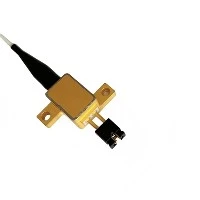
The 1470nm laser module has emerged as a critical component in various modern technological fields. Its unique properties and capabilities have paved the way for innovative applications across multiple industries.
I. Medical Field Applications
(A) Laser Surgery
In dermatology, the 1470nm laser plays a significant role. For instance, in the treatment of vascular lesions, it works by selectively targeting the blood vessels. The principle behind this is that the hemoglobin in the blood has a specific absorption spectrum, and the 1470nm wavelength is well-absorbed by it. As a result, when the laser beam is directed at the affected area, the energy is absorbed by the hemoglobin, leading to the coagulation and destruction of the abnormal blood vessels. This process effectively reduces the appearance of port-wine stains, spider veins, and other vascular abnormalities. In hair removal procedures, the melanin in the hair follicle absorbs the laser energy. The 1470nm laser damages the hair follicle, inhibiting its ability to produce new hair. Compared with traditional methods, it offers precise targeting, minimizes damage to the surrounding skin, and provides long-lasting hair reduction results. Data from clinical studies show that after several sessions of 1470nm laser treatment, a significant percentage of patients achieved a high degree of satisfaction with the improvement in their skin conditions or hair removal outcomes.
In urology, particularly in the treatment of benign prostatic hyperplasia (BPH), the 1470nm laser comes into play. It vaporizes the prostate tissue through a process known as photoselective vaporization. The laser energy is delivered via an optical fiber inserted into the urethra. When it interacts with the prostate tissue, it rapidly heats and vaporizes the cells, creating channels for urine flow. The advantage lies in its excellent hemostasis during the procedure. The coagulative effect of the laser seals the blood vessels immediately, reducing bleeding complications. Moreover, it allows for a shorter operation time and quicker recovery compared to traditional surgical approaches. Successful cases have demonstrated that patients experienced improved urinary symptoms, such as increased urine flow rate and reduced residual urine volume, within a short period after the surgery.
(B) Photodynamic Therapy (PDT)
In cancer treatment, PDT using the 1470nm laser shows great promise. The mechanism involves the administration of a photosensitizer, which accumulates preferentially in tumor tissues. When exposed to the 1470nm laser light, the photosensitizer gets excited and transfers energy to molecular oxygen, generating singlet oxygen. Singlet oxygen is highly reactive and causes oxidative damage to the tumor cells, leading to cell death. In clinical practice, PDT has been used for the treatment of various cancers, including skin cancer, lung cancer, and esophageal cancer. Studies have shown that for early-stage skin cancers, PDT can achieve high cure rates with minimal scarring. In lung cancer treatment, it can be used as an adjuvant therapy to reduce tumor burden and improve patient survival. However, there are still some challenges, such as optimizing the dosage of photosensitizers and improving the penetration depth of the laser light. Ongoing research is focused on addressing these issues to expand the scope and effectiveness of PDT.

II. Industrial Processing Applications
(A) Material Cutting and Welding
For metal materials like stainless steel and aluminum alloys, the 1470nm laser cutting process relies on the high-energy density of the laser beam. The laser melts and vaporizes the material along the desired cutting path. Its precision enables narrow kerf widths, which is crucial for intricate parts manufacturing. In welding, the laser creates a deep and narrow weld pool, resulting in strong joints with minimal distortion. Compared to traditional cutting and welding methods, such as mechanical cutting and arc welding, the 1470nm laser offers higher cutting speeds, better edge quality, and lower heat-affected zones. For example, in the automotive industry, laser-cut body panels have more accurate dimensions and smoother edges, reducing the need for post-processing. In the aerospace field, laser-welded components meet the stringent requirements for strength and reliability. Data indicates that the production efficiency can be increased by a certain percentage when using 1470nm laser processing, while the rejection rate due to quality issues is significantly reduced.
When dealing with non-metallic materials like plastics and ceramics, the 1470nm laser also exhibits unique characteristics. In plastic cutting, it can cut through various types of plastics without causing excessive melting or deformation. For ceramic materials, the laser can precisely shape them, enabling the fabrication of complex geometries. The low thermal impact ensures that the inherent properties of the non-metallic materials are not severely compromised.
(B) 3D Printing Technology
In 3D printing, the 1470nm laser serves as an energy source for sintering or curing powder materials. In selective laser sintering (SLS), the laser scans the powder bed, selectively fusing the particles together based on the digital model. This process allows for the creation of complex-shaped parts with internal structures that would be difficult to achieve with conventional manufacturing methods. In the aerospace industry, lightweight and high-strength components, such as turbine blades with internal cooling channels, can be manufactured using SLS with the 1470nm laser. In medical device manufacturing, customized implants and prosthetics can be produced to match individual patient anatomies. The use of the 1470nm laser in 3D printing has opened up new possibilities for personalized manufacturing and rapid prototyping, revolutionizing product development cycles.
III. Communication Field Applications
(A) Fiber Optic Communication Systems
In fiber optic communication, the 1470nm band is of great importance. It acts as a pump source for erbium-doped fiber amplifiers (EDFAs). EDFAs are widely used to boost signal strength in long-haul, high-capacity data transmission networks. The 1470nm laser excites the erbium ions in the doped fiber, causing them to amplify the optical signals passing through. This amplification compensates for the signal loss over long distances, enabling data to be transmitted thousands of kilometers without significant degradation. According to industry standards, the use of 1470nm pump lasers in EDFA systems can increase the signal gain by a certain decibel range, ensuring reliable and efficient communication. With the continuous advancement of 5G and beyond technologies, the demand for high-performance fiber optic communication systems is increasing, and the 1470nm laser module will continue to play a vital role in meeting these needs.
(B) Free Space Optical Communication
Free space optical communication utilizes the 1470nm laser for information transmission. In satellite communication, it can provide high-bandwidth links between satellites and ground stations. The laser beam propagates through the atmosphere, carrying data at high speeds. Its main advantage is the large bandwidth available, which is much higher than traditional radio frequency communication. Additionally, it is less susceptible to electromagnetic interference. However, atmospheric conditions, such as fog, rain, and turbulence, can affect the signal quality. Researchers are developing adaptive optics and error correction techniques to mitigate these effects. On the ground, free space optical communication can be used for short-range, high-speed data links, such as between buildings in a campus or data center environment. It offers a cost-effective and flexible alternative to wired connections.
IV. Scientific Research and Testing Applications
(A) Spectral Analysis
Raman spectroscopy and fluorescence spectroscopy based on the 1470nm laser are powerful tools in scientific research. In Raman spectroscopy, the laser excites the molecules, causing them to scatter light at different frequencies. This scattered light contains information about the molecular vibrations and rotations, allowing for the identification of chemical compounds and the study of molecular structure. For example, in pharmaceutical research, it can be used to analyze the purity and composition of drugs. In environmental science, it helps detect pollutants in air and water. Fluorescence spectroscopy, on the other hand, measures the emission of light from molecules after they absorb the 1470nm laser energy. It is widely used in biological research, such as studying protein folding and DNA interactions. These spectral analysis techniques provide researchers with valuable insights into the microscopic world, aiding in the discovery of new knowledge and the development of new technologies.

(B) Optical Coherence Tomography (OCT)
In biomedical imaging, OCT using the 1470nm laser enables high-resolution cross-sectional imaging. It works by splitting the laser beam into a reference arm and a sample arm. The light reflected from the sample interferes with the reference light, and the interference pattern is detected and processed to create an image. This technique can visualize the internal structure of biological tissues, such as the layers of the retina in ophthalmology. In material testing, OCT can inspect the internal defects and interfaces in composite materials. Compared to other imaging modalities, OCT offers non-invasive, high-resolution, and real-time imaging, making it an indispensable tool in both medical diagnosis and material characterization.
V. Security and Monitoring Applications
(A) Night Vision Illumination
The infrared characteristic of the 1470nm laser makes it an ideal choice for night vision illumination in security monitoring. In low-light conditions, it provides a covert and effective light source. When combined with an infrared camera, it allows for clear imaging even in complete darkness. The system can detect objects and people moving in the monitored area, and the images can be analyzed by advanced software for object recognition and tracking. For example, in perimeter security, it can distinguish between humans, animals, and other objects, triggering alarms only when necessary. The performance indicators, such as detection range and resolution, depend on the power of the laser and the sensitivity of the camera. High-power 1470nm laser modules can cover larger areas, while high-resolution cameras can provide more detailed images.

(B) Perimeter Protection
Perimeter protection systems based on the 1470nm laser operate by setting up a grid of laser beams. When an object interrupts one or more beams, an alarm is triggered. This method is widely used in important facilities such as airports, prisons, and military bases. The reliability of the system lies in its ability to accurately detect intrusions. Modern systems use advanced algorithms to filter out false alarms caused by environmental factors, such as wind-blown debris. The installation of such systems requires careful alignment and calibration of the laser beams to ensure full coverage and minimal blind spots. With continuous improvements in laser technology and signal processing, perimeter protection systems are becoming more robust and intelligent, providing enhanced security for critical infrastructure.
VI. Conclusion
In conclusion, the 1470nm laser module has found extensive applications in various fields, including medicine, industry, communication, scientific research, and security. Its unique properties, such as precise targeting, high energy density, and good transmission characteristics, have made it an indispensable tool. Looking ahead, as technology continues to advance, we can expect new and exciting applications to emerge. For example, further improvements in laser efficiency and miniaturization may lead to more widespread use in portable devices and personal healthcare. Continued research in materials science and quantum technologies could unlock even more potential for this versatile laser module, solidifying its role as a key driver of innovation in the coming years.
Contact information:
If you have any ideas, feel free to talk to us. No matter where our customers are and what our requirements are, we will follow our goal to provide our customers with high quality, low prices, and the best service.
 Email:info@loshield.com; laser@loshield.com
 Tel:0086-18092277517; 0086-17392801246
 Fax: 86-29-81323155
 Wechat:0086-18092277517; 0086-17392801246


