



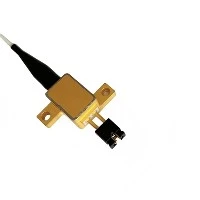
Fiber Laser Cutting, as a laser cutting technology, has become an innovative force in the cutting field. Fiber lasers use optical fibers to transmit laser beams and have excellent beam quality and high power stability. Fiber lasers offer higher efficiency and lower maintenance requirements than traditional solid-state lasers and carbon dioxide lasers. As one of the core components of high-end manufacturing equipment, fiber lasers are in line with the background of industrial manufacturing transformation and are capable of meeting the requirements of difficult and changing multi-dimensional processing applications. The advantages of fiber laser material processing make it very popular in the market, and it effectively solves the pain points of high production costs and low production efficiency, so there is a huge market space.

The advantages of fiber lasers in cutting applications are mainly reflected in the following aspects:
A. High-precision and high-quality cutting
1. Small spot size and superior focusing performance
Fiber lasers are capable of producing a very small spot (beam diameter), which means very fine cuts can be achieved. The small light spot enables high-precision machining, especially for applications that require delicate processing, such as cutting complex patterns or drilling tiny holes.
2. Improve cutting accuracy and reduce heat affected zone
Due to the small spot size and concentrated laser energy, fiber lasers can produce very precise cutting paths in materials. At the same time, due to the localization of the laser action area, the heat-affected zone (HAZ) of the surrounding material is minimized, which helps maintain the original strength of the material and avoid unnecessary thermal deformation. This is particularly important for demanding applications, such as the manufacturing of aerospace components.
B. High efficiency production
1. Fast cutting speed brought by high power density
Fiber lasers have extremely high power density, which means the laser energy is highly concentrated in a small area. This concentrated energy can quickly melt or vaporize material, allowing for fast cutting speeds. Fast cutting not only improves production efficiency, but also reduces the heat exposure time of the material, helping to maintain cut quality.
2. Improve production efficiency and reduce operating costs
Due to its fast cutting speed, fiber lasers can process more workpieces in a short time, significantly increasing the throughput of the production line. In addition, fast cutting also means lower energy and raw material consumption, thus reducing overall operating costs. At the same time, because fiber lasers have low maintenance requirements, this also helps reduce long-term maintenance costs, making fiber lasers a cost-effective cutting tool.
C. Wide adaptability of materials
1. A wide range of materials can be cut, including metals, non-metals and alloys, etc.
Fiber lasers are capable of processing a wide range of material types due to their high power density and good beam quality. This includes, but is not limited to, various metals (e.g. steel, aluminum, copper), non-metallic materials (e.g. plastic, wood, glass), and many alloys. This versatility makes fiber lasers ideal for applications across multiple industries.
2. Adaptability to different material thicknesses
Not only can fiber lasers handle a variety of material types, they can also handle different material thicknesses. From thin plates to thick plates, fiber lasers can achieve high-quality cutting by adjusting parameters such as power, cutting speed and focus position, which makes it adaptable to changing processing needs.
D. Easy to operate and maintain
1. User-friendly control interface
Modern fiber laser cutting systems are often equipped with intuitive user interfaces, making it easy for operators to get started even without a strong technical background. These control systems often provide automated procedures and streamlined operating procedures, helping to reduce operating errors and increase production efficiency.
2. Low maintenance requirements and long life
Another significant advantage of fiber lasers is their low maintenance requirements. The optical components of fiber lasers are less susceptible to contamination than other types of lasers, so maintenance intervals are longer. In addition, fiber lasers typically have a longer service life, reducing the frequency of replacement and upgrades, thereby lowering long-term operating costs.
E. Flexibility and Diversity
1. Supports multiple cutting modes (penetration cutting, surface cutting, etc.)
Fiber lasers can adjust their cutting patterns according to different material properties and thicknesses. For example, penetration cutting is used for thicker materials, while surface cutting is suitable for thin materials or where surface material needs to be removed. This capability allows fiber lasers to cope with complex and changing processing needs.
2. Suitable for customization and small batch production
Because fiber lasers are easy to program and quickly switch between cutting tasks, they are ideal for customized production and low-volume processing. This allows manufacturers to quickly respond to market changes and provide customers with personalized product solutions.
F. Energy saving and environmental protection
1. Lower energy consumption and waste generation
Fiber lasers consume less energy during operation than traditional cutting technologies because their high efficiency results in less wasted energy. In addition, precise cutting reduces material loss and waste generation, which not only reduces material costs but also benefits environmental protection.
2. Meet the production requirements of sustainable development
In the context of the current growing global concern about environmental sustainability, the environmentally friendly properties of fiber lasers are particularly important. It not only helps reduce energy consumption and waste generation, but also meets the increasing requirements for sustainable development in industrial production.
Fiber laser cutting application cases in different industries
A. Metal processing industry
In the metal processing industry, fiber lasers are used to cut a variety of metal materials, including stainless steel, carbon steel, and aluminum alloys. For example, in the construction industry, fiber laser cutting machines can be used to manufacture metal parts of large structures, providing high-precision and efficient cutting.
B. Precision Manufacturing
Precision manufacturing requires extremely high processing accuracy and quality. Applications for fiber lasers in this area include the manufacture of microscopic parts, medical devices and precision tools. For example, fiber lasers can precisely cut thin-walled tubing used in aerospace equipment, ensuring part quality and consistency.
C. Aerospace field
In the aerospace field, there are strict requirements for the strength and weight ratio of materials. Fiber lasers are used to cut superalloys and composite materials that are critical in the manufacture of aircraft and spacecraft. The high-precision cutting capabilities of fiber lasers help reduce material waste and ensure parts meet strict safety standards.
D. Automobile manufacturing
The automotive industry is moving towards lighter and safer vehicles. Applications of fiber lasers in automotive manufacturing include cutting body panels, exhaust systems and engine parts. The high efficiency and flexibility of fiber lasers allow automakers to quickly adjust production lines to suit different vehicle models and designs.
E. Electronics and Semiconductor Industry
In the electronics and semiconductor industries, fiber lasers are used to precision cut silicon wafers, circuit boards and other sensitive materials. Because fiber lasers provide a non-contact cutting method, they avoid mechanical damage to tiny electronic components while maintaining high precision and clean cutting edges.
The advantages of fiber lasers in cutting applications include high-precision and high-quality cutting, high-efficiency production, wide material adaptability, easy operation and maintenance, flexibility and diversity, as well as energy conservation and environmental protection. These advantages make fiber laser cutting technology an important factor in promoting widespread adoption in various industries, helping to improve competitiveness, promote innovation, reduce costs, respond to environmental protection policies, and adapt to future trends.
Contact information:
If you have any ideas, feel free to talk to us. No matter where our customers are and what our requirements are, we will follow our goal to provide our customers with high quality, low prices, and the best service.
 Email:info@loshield.com
 Tel:0086-18092277517
 Fax: 86-29-81323155
 Wechat:0086-18092277517


