

Laser technology, with its high precision and efficiency, has become indispensable in industrial manufacturing, medical aesthetics, scientific research, and defense. As high-power lasers (e.g., multi-kilowatt fiber lasers) proliferate, the demand for robust safety measures has surged. Laser radiation exceeding safe thresholds poses irreversible risks to human eyes, skin, and equipment. This underscores the critical role of specialized safety solutions such as laser protection curtains, which combine advanced materials, rigorous standards compliance, and precision engineering.
I. Laser Applications and Associated Hazards
Core Industrial Applications
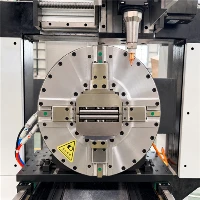
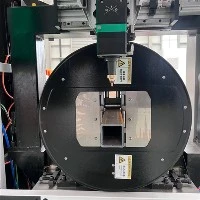
Cutting & Welding: High-power fiber lasers (1070nm wavelength) achieve micron-level precision in automotive and aerospace manufacturing, improving efficiency by over 50%.
Additive Manufacturing: Ultrafast lasers (picosecond/femtosecond pulses) enable 3D metal printing and surface texturing.
Medical Innovations
Ophthalmic Surgery: Excimer lasers (193nm) correct refractive errors with sub-micron accuracy.
Dermatology: Pulsed CO₂ lasers (10.6μm) treat scars and lesions while minimizing thermal damage.
Scientific Research
Nuclear Fusion: Petawatt-class lasers (e.g., NIF) compress hydrogen isotopes to initiate fusion reactions.
Quantum Optics: Ultracold lasers manipulate atoms for quantum computing research.
Hazard ProfilesHuman Injury:
Eyes: Retinal burns occur at ≥1-10 W/cm² (visible/NIR wavelengths).
Skin: Thermal damage thresholds range from 50-100 W/cm² (continuous exposure).
Equipment Damage: Uncontrolled reflections degrade optical components and trigger fires.

II. Laser Safety Standards and Protection Principles
Global Regulatory Frameworks
GB7247 (China), EN60825 (EU), and IEC60825 (International) classify lasers into Class 1 to Class 4, defining permissible exposure limits (MPE/PEL) based on wavelength, duration, and irradiance.
Class 4 Lasers: Highest risk category (e.g., industrial cutting lasers), requiring mandatory shielding and interlocks.
Critical Parameters for Protective EquipmentPEL (Permissible Exposure Limit): Threshold irradiance a barrier can withstand without failure.
Example: PEL >258.09 W/cm² @1070nm, φ1mm, 100s signifies robust protection against high-power fiber lasers.
Material Properties: Low reflectivity (<5%), heat resistance (>1000°C), and structural durability.
III. JTBYShield Laser Safety Curtains: Technical Excellence
Performance Specifications
Wavelength Adaptation: Optimized for 1070nm (industrial fiber lasers) and 10.6μm (CO₂ lasers), reducing stray reflections.
PEL Certification: Exceeds 258.09 W/cm² under standardized testing (1mm spot, 100s exposure), suitable for Class 4 environments.
Multi-Layer Design: Patented triple-layer aluminum alloy structure (e.g., LaserShield4005™) ensures:
Low Reflectivity: <4% surface reflection minimizes secondary hazards.
Thermal Stability: Withstands prolonged laser impact without deformation.
Compliance and Certifications
Standards Adherence: Fully compliant with GB7247, EN60825, and IEC60825 for global applicability.
Third-Party Validation: Certified by CNAS, CMA, and CE, ensuring reliability in military, industrial, and research settings.
Application Scenarios
Industrial Workshops: Isolate 10kW+ fiber laser cutting systems, preventing operator exposure.
Laboratory setups: Shield high-energy pulsed lasers in photonics research.
Military Testing: Contain laser weapon prototypes during field trials.

IV. Operational Best Practices
Risk Mitigation Strategies
Zoning: Designate controlled access areas with warning signage for Class 3B/4 lasers.
Maintenance: Regularly inspect curtains for surface degradation or mechanical wear.
Complementary Protective Measures
Personal Gear: EN207-certified goggles with OD6+ attenuation for 1070nm/10.6μm wavelengths.
System Integration: Pair curtains with beam dumps, interlocks, and real-time power monitors.

V. Industry Trends and Future Outlook
Material Advancements
Nanocomposite coatings enhance reflectivity control and damage thresholds.
Self-healing polymers automatically repair minor laser-induced defects.
Smart Monitoring
IoT-enabled curtains detect irradiance breaches and trigger automatic shutdowns.
Conclusion
JTBYShield laser safety curtains exemplify the synergy between regulatory compliance, material science, and engineering precision. By offering PEL thresholds surpassing 250 W/cm² and multi-standard certifications, they address the escalating safety demands of high-power laser applications. As laser technology evolves, such solutions will remain pivotal in safeguarding human operators and critical infrastructure across industries.