


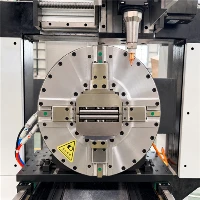
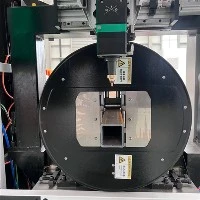
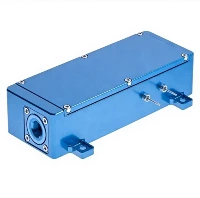
The new scientific research Laser Module has achieved unprecedented ultra -high -precision measurement capabilities through integrated advanced optical technology and precision control systems. This laser module uses innovative light sources and accurate wavelength tuning mechanisms, which can perform non -contact precise detection and data acquisition in a very small range. Its emergence provides new tools for scientific research, especially in the fields of quantum information, material science and biomedicine, so that researchers can conduct experimental observations and analysis with higher resolution and lower errors, thereby promoting Scientific discovery and technological innovation.
As a scientific research tool, the laser module, its versatility and accuracy, make it play a vital role in multiple scientific fields. The following is the importance of laser modules in different scientific research fields and its importance to scientific research:
Physics:
In the field of physics, laser modules are used for precision measurement experiments, such as spectral science, quantum information science and particle physics. High -power laser modules can simulate extreme physical conditions and help scientists study material state equations and high -energy density physical phenomena. In addition, equipment and other equipment such as laser interference instruments use the coherent of laser to accurately measure, such as gravitational wave detection.
Chemical:
Chemical research uses laser modules for reaction dynamic research, molecular structure and chemical reaction path. Flying laser technology allows chemists to observe and control rapid chemical reactions, while single -light and twin -optical spectral technology reveal the molecular energy level and dynamic process.
Biology:
In biology, laser modules are used in streaming cytometer, which is a technology for detecting and sorting single cells. Laser capture microatimonia enables researchers to separate specific cell types from complex tissue samples. In addition, laser scanning co -focusing microscope microscope to provide high -resolution three -dimensional images by laser, which is essential for life science research.
Engineering:
Engineers use laser modules for material processing, such as cutting, welding and marking. In the field of optoelectronics, laser is used to test and debug optical devices, including components in optical fiber communication systems. In addition, the application of Lidar (Lidar) technology in surveying and mapping, autonomous vehicles and archeological excavations shows its diversity in engineering.
The importance of laser modules in scientific research is reflected in experimental accuracy and data analysis. The monochrome, directional and high brightness characteristics of laser make it an ideal choice for precise measurement and fine operations. In terms of data analysis, laser technology provides a means to collect high -quality data, which is essential for verifying theoretical models and promoting scientific discovery.
The advancement of laser module technology has promoted the development of scientific research tools. With the emergence of new technologies, such as ultra -fast laser, adjustable laser and ultra -continuous spectrum laser, researchers are now able to explore the scientific fields that could not be accessed before. These progress not only improves the accuracy and reliability of experiments, but also expands the possibility of research, thereby accelerating the growth of scientific knowledge and technological innovation.
The technical characteristics and advantages of the new scientific research laser module
Technical characteristics:
Ultra -narrow line width: The new laser module uses advanced optical feedback control technology, which can output extremely narrow -line laser, which is essential for the application of extremely high spectrum resolution.
High stability: By optimizing the design and manufacturing process of laser, this laser module has excellent frequency stability and can maintain a constant light frequency output for a long time.
Tuning harmoniousness: The new laser module usually has a wide range of wavelength adjustment capabilities, allowing researchers to adjust the laser wave length according to experimental needs.
Low noise level: Adopt advanced noise suppression technology, these modules show extremely low noise levels during output, which helps improve measurement accuracy.
Integrated design: It integrates a variety of optical components, such as optical isolations, wave division replica, etc., making the system more compact and stable.
Advantage:
Improving measurement accuracy: The width and low noise level of the ultra -narrow line enable the new laser module to provide higher signal quality, thereby improving measurement accuracy and data reliability.
Flexibility and adaptability: The adjustable harmonious allows the same module to be used in different scientific research fields and different experimental conditions, which increases its scope of application.
Long -term stability: High stability ensures the consistency of data in long -term experiments, and reduces the needs of repeated measurement.
System integration: Integrated design simplifies the experimental settings, reduces the complexity of the system, and makes the operation easier.
The difference between scientific laser module and traditional laser module
Although traditional laser modules can also provide stable laser output, there are some limitations in ultra -high -precision measurement. In contrast, scientific research laser modules have made breakthroughs in the following aspects:
Line width is narrower: Compared to traditional laser modules, the width of the new laser module is narrower, which makes them have better performance in spectral science and other high -resolution applications.
Higher frequency stability: The frequency stability of the new laser module far exceeds the traditional module, which is especially important for experiments that require long -term monitoring or continuous measurement.
Stronger wavelength flexibility: The wavelength of traditional laser modules is usually fixed or adjusted, and the new module provides a wider range of wavelength tuning range, suitable for more types of experiments.
Lower noise: The noise suppression technology adopted by the new laser module is more advanced than traditional modules, ensuring lower noise levels, which is essential for sensitive measurement.
Higher system integration: new modules usually integrate more optical components, which not only saves space, but also reduces the needs of additional components, simplifying the complexity of the experiment.
The new scientific research laser module uses advanced technologies and methods such as modular design, absolute detection algorithm, closed -loop self -testing technology, optical non -linear error suppression technology, differential common focus multi -parameter measurement methods, and optical road fusion technology. Measurement. The application of these technologies and methods not only improves the measurement accuracy of laser modules, but also expand its application scope in different scientific research fields.
The way the new scientific research laser module realizes ultra -high precision measurement:
Modular design: Through modular design ideas, the core key components and measurement software of laser interference instruments have been developed, forming a variety of high -precision digital laser interference instruments. This design makes the system more flexible and can be quickly adjusted and optimized according to different measurement needs.
Absolute detection algorithm: On the basis of meeting the relative measurement of high precision, an absolute detection algorithm is proposed. This algorithm can improve the accuracy of measurement, especially in the plane surface shape detection, the accuracy is 5 times.
Closed -loop self -inspection technology: The application of closed -loop self -testing technology ensures that errors in the measurement process can be monitored and corrected in real time, thereby improving the stability and reliability of measurement.
Optical non -linear error suppression: In -depth exploration of high -precision laser stability and stability frequency, and research on accurate suppression of optical non -linear errors, these are key factor to improve measurement accuracy.
Differential co -focus multi -parameter measurement methods: Putting high -level analysis, high resolution, scattered scattering, and anti -interference laser differential mobilization co -coke multi -parameter multi -parameter high -precision base measurement method. This method can effectively improve the accuracy and efficiency of measurement Essence
Light road fusion technology: Further the combination of differential co -focus measurement with the Fedeus interference in the fusion of the light road, realizing the high precision, common benchmark, and high efficiency measurement of the multi -parameter of the spherical component.
The application of the new scientific research laser module in the experiment:
3D scanning and laser radar: In these fields, the new VCSEL laser module has been widely used. Their advantage is that they can provide high -precision distance measurement and fast data collection.
Machine vision and laser medical: The application of these fields requires that laser modules have high resolution and accurate beam control. The new laser module can meet these needs and show its superiority in actual operation.
Quantum computing research: In the field of quantum computing, new scientific laser modules are used to achieve precise control of superconductant quantum bites. For example, by using low -noise and narrow -line laser modules, researchers can carefully control the state of quantum bites, which is essential for realizing quantum logic doors and quantum algorithms.
Biomedical imaging: In the field of biomedical imaging, high -precision laser modules enable conjoined microscopes to provide clearer cells and tissue images. This technology depends on the high resolution and low -toxicity of laser, which helps scientists perform living cell imaging without affecting the normal function of cells.
Material science analysis: In material science, the new laser module is used for spectral analysis to identify and characterize the chemical composition and structure of materials. For example, using adjustable laser can help researchers to accurately detect the molecular vibration mode of the material through technologies such as Raman spectrum or infrared spectrum.
The advantages of new scientific research laser modules in practical applications:
Improving the accuracy of experiment: The ultra -narrow line width and high stability of the new laser module provides higher measurement accuracy, which is essential for precision scientific experiments.
Enhance experimental flexibility: The characteristics of wavelength adjustment enable the same device to be used under different experimental conditions, thereby reducing the demand for multiple laser sources.
Improve data quality: low noise output and high signal stability improve the quality of data collection, reduce the needs of repeated experiments, and improve the repetitiveness of the result.
The challenge of the new scientific research laser module in practical applications:
Technical integration complexity: Integrate these advanced laser modules into existing experimental equipment that may require complex adjustment and additional technical support.
Cost consideration: The cost of developing and manufacturing high -precision laser modules is higher, which may limit their popularity and application in some research fields.
Operation and maintenance requirements: Advanced laser modules may require professional operating skills and maintenance, which may be a challenge for researchers with lack of relevant experience.
Despite some challenges, the advantages of new scientific laser modules have made it a powerful tool for promoting scientific progress, especially in experiments that need to be high -precision and reliability. With the continuous development and cost of technology, these laser modules are expected to play a greater role in future scientific research.
Contact information:
If you have any ideas, feel free to talk to us. No matter where our customers are and what our requirements are, we will follow our goal to provide our customers with high quality, low prices, and the best service.
 Email:info@loshield.com
 Tel:0086-18092277517
 Fax: 86-29-81323155
 Wechat:0086-18092277517


