


As laser technology becomes ubiquitous in industries ranging from manufacturing to scientific research and medical procedures, protecting operators' eyes becomes increasingly important. Laser protective glasses have become an integral part of personal protective equipment (PPE). However, not all operators are familiar with the proper selection and use of this safety gear. Even if laser safety glasses have a high filtration level (e.g. OD6+), improper use can lead to serious consequences.
Learn about laser hazards:
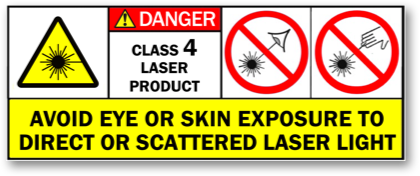
Due to the high energy, monochromatic nature and collimation of lasers, lasers can cause permanent eye damage without proper protection. These injuries may be instantaneous or cumulative, depending on the intensity, wavelength, and length of exposure of the laser.
Laser protective glasses features:
Safety glasses protect the eyes by absorbing or reflecting specific laser wavelengths. Optical Density (OD) measures the filtering ability of glasses; for example, a pair of OD6+ glasses blocks at least 99.9999% of light transmission, effectively protecting against high-power lasers.
What is the correct behavior when using laser protective glasses?
Choosing appropriate protective eyewear should consider the type of laser, wavelength, output power, and working environment. Ensure the glasses comply with the international EN207 safety standard, fit the user's face and are used in conjunction with other personal protective equipment.
Can laser protective glasses be exposed to direct laser radiation for a long time?
In a real-life scenario, an operator wearing theoretical OD6+ protective glasses would suffer damage when exposed to the direct beam of a 5W laser pointer at 450nm wavelength. Continuous high-power laser exposure to the same area can cause the lens to overheat and create burn marks, ultimately compromising its performance. This case shows that even high-quality protective eyewear can fail under extreme conditions.
 |
 |
Precautions and precautions during operation:
To minimize risks during operations, protective eyewear must be inspected and maintained regularly and prolonged continuous exposure to high-power lasers must be avoided. In addition, an emergency plan should be established and all operators should receive laser safety training and education.
Conclusion
Proper laser protection is not just about compliance; This is critical to safeguarding the visual health of the operator. By understanding laser hazards, choosing appropriate eyewear, following proper usage and storage guidelines, and receiving regular professional training, we can enjoy the benefits of laser technology while ensuring personal safety.
As new technologies and standards continue to emerge, we must remain vigilant and constantly update and improve our security measures.