



In the realm of laser technology, precision, safety, and efficiency are paramount. At the heart of every laser application, from industrial cutting to medical surgeries, lie two critical components: laser protection lenses and focusing lenses. While both play indispensable roles in the manipulation and control of laser beams, their functions, designs, and applications diverge significantly.
1: Understanding the Basics of Laser Optics
To comprehend the distinction between laser protection lenses and focusing lenses, it's crucial first to grasp the fundamentals of laser optics. Lasers emit highly concentrated beams of light or electromagnetic radiation, distinguished by their coherence, directionality, and monochromatic nature. Optical elements, such as lenses, mirrors, and filters, are employed to guide, focus, or manipulate these beams to achieve desired outcomes.

2: Laser Protection Lenses: Shielding Against the Unseen Threat
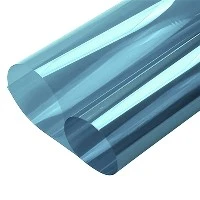
Laser protection lenses, also known as laser safety glasses or goggles, are specifically designed to safeguard users and equipment from potential hazards associated with laser radiation. These hazards can range from mild skin irritations to severe eye damage and even blindness.
① Material and Design Laser protection lenses are typically fabricated from specialized materials that absorb, reflect, or diffuse specific wavelengths of laser light without causing significant attenuation of visible light. Materials like polycarbonates, glass, or specialized dyes are used, often in multiple layers, to create a broad-spectrum defense or targeted protection against particular laser wavelengths. Their design prioritizes comfort, durability, and compatibility with existing eyewear.
② Operational Principle The operational principle of laser protection lenses relies on their ability to attenuate laser energy below the maximum permissible exposure (MPE) levels set by regulatory bodies such as the American National Standards Institute (ANSI) and the International Electrotechnical Commission (IEC). By absorbing or blocking harmful wavelengths while allowing safe light to pass through, they ensure user safety without compromising visibility.
③ Applications Laser protection lenses find application across various sectors where lasers are employed, including manufacturing, medical procedures, research laboratories, and military operations. They are mandatory personal protective equipment (PPE) for personnel working in proximity to Class 3B and Class 4 lasers, which pose significant risks.
3: Focusing Lenses: The Precision Engineers of Laser Beams
On the other hand, focusing lenses are integral to directing and manipulating laser beams to achieve high precision and power density at the point of application. These lenses are designed to converge the parallel rays of a laser beam onto a focal point, thereby enhancing its intensity and utility for cutting, engraving, welding, or medical procedures.
① Material and Design Focusing lenses are typically made from high-quality optical glass or crystalline materials such as fused silica, calcium fluoride, or zinc selenide, chosen for their excellent transmittance across a wide wavelength spectrum, low absorption rates, and minimal distortion properties. Their shape, most commonly plano-convex or meniscus, is optimized for the specific laser wavelength and application to minimize spherical aberrations and maximize focusing efficiency.
② Operational Principle The operation of a focusing lens is based on the principles of refraction. As the laser beam passes through the curved surface of the lens, it changes direction, with all rays converging at a common focal point. The distance from the lens to this point is known as the focal length, a critical parameter determining the spot size and depth of focus. Adjusting the position of the lens relative to the laser source and workpiece allows for fine-tuning of the beam's intensity and precision.
③ Applications Focusing lenses are ubiquitous in laser-based manufacturing processes like laser cutting, welding, drilling, and marking, where tight tolerances and high processing speeds are required. In medical applications, they play a pivotal role in laser surgery, enabling surgeons to perform precise and minimally invasive procedures. Research and development in fields such as spectroscopy, microscopy, and laser physics also heavily rely on focusing lenses for their experiments and analyses.

4: Comparative Analysis: Laser Protection vs. Focusing Lenses
① Purpose
Laser Protection Lenses: Primarily aimed at safeguarding human eyesight and equipment from laser hazards.
Focusing Lenses: Designed to concentrate and manipulate laser energy for enhanced precision and power at the target site.
② Material Selection
Laser Protection Lenses: Focuses on materials capable of absorbing or reflecting specific laser wavelengths without impeding visibility.
Focusing Lenses: Emphasizes high-transmittance, low-absorption materials to ensure minimal energy loss and optimal beam manipulation.
③ Design Complexity
Laser Protection Lenses: Relatively simpler, designed for comfort and universal fit, often as part of PPE.
Focusing Lenses: Requires intricate design considerations to minimize optical distortions and optimize focusing efficiency, tailored to specific laser parameters.
④ Application Breadth
Laser Protection Lenses: Widespread use across all laser-intensive industries and research settings.
Focusing Lenses: Predominantly used in applications demanding high-precision laser manipulation, such as manufacturing, medical, and scientific research.
Conclusion
In conclusion, while laser protection lenses and focusing lenses are both essential components in the world of laser technology, they serve vastly different purposes. Laser protection lenses prioritize safety, shielding users and equipment from harmful radiation, whereas focusing lenses are engineered for precision, harnessing laser energy to achieve unparalleled accuracy and intensity at the point of application. Understanding the fundamental differences between these lenses not only enhances operational effectiveness but also underscores the importance of selecting the right optical elements for specific laser applications. As laser technology continues to advance, so too will the sophistication of these lenses, further pushing the boundaries of what is achievable in terms of safety, precision, and performance.