



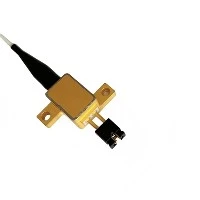
Laser engraving technology, as a precise and versatile processing tool, has become an integral part of modern manufacturing and art. This technology uses a high-energy laser beam from a Laser Engraving Module to carve fine patterns and designs on the surfaces of a variety of materials, from metals and plastics to non-metallic materials such as wood and glass, and can accurately cut, engrave and mark them.
In the manufacturing industry, laser engraving is widely used in areas such as product identification, component manufacturing and personalized product customization. It provides a fast, automated and cost-effective solution for marking and engraving tasks in the production process. For example, the electronics industry uses laser engraving to mark components on circuit boards, while the automotive industry uses it for part identification and customized interiors.

In the field of art, laser engraving opens up new creative possibilities. Artists use this technology to create fine graphic details and deep texture effects that are difficult to achieve with traditional manual methods. Whether it is a fine portrait engraving or a complex landscape picture, laser engraving can provide extremely high detail and depth control.
However, laser engraving modules face significant challenges when dealing with different materials. Each material has different physical and chemical properties, which affects their absorption and reflection of laser energy. Therefore, the correct selection and adjustment of laser parameters (such as power, speed and focal length) is essential to achieve the best engraving results. The operator must have a deep understanding of the material characteristics and be able to adjust according to the material type and the required engraving depth. In addition, safety issues are also an important factor that must be considered when using laser equipment. Protecting the operator and surrounding personnel from harm is a key aspect during operation.

Selecting the appropriate laser engraving module is critical to ensuring processing quality and efficiency, especially when processing different materials. The following discusses in detail how to select the appropriate laser power and wavelength based on material type and thickness, and explains why the module's adjustability is key to adapting to different materials:
A. Selecting laser power
1. Relationship between power and material: The choice of laser power is directly related to whether a specific material can be effectively processed. Different materials have different absorption rates of laser energy, which directly affects the processing effect. For example, non-metallic materials such as wood and leather usually require lower-power CO2 lasers, while hard materials such as metals require higher-power fiber lasers.
2. Material thickness: The thickness of the material is also an important factor in determining the required laser power. Thicker materials require higher power to achieve effective engraving or cutting. This is because the laser needs to penetrate deeper into the material to achieve the desired processing depth.
B. Selecting laser wavelength
1. Wavelength and material absorption: Lasers of different wavelengths are absorbed differently by different materials. For example, the far-infrared laser (about 10.6 micron wavelength) emitted by a CO2 laser is suitable for processing non-metallic materials such as wood and plastic because these materials can better absorb light of this wavelength. For metal materials, it is more suitable to use fiber lasers, whose near-infrared wavelength (about 1 micron) can be better absorbed by metals.
2. The effect of wavelength on engraving effect: The wavelength not only affects the material's absorption rate of the laser, but also affects the fineness and edge smoothness of the engraving. The correct wavelength selection can optimize these parameters and improve the processing quality.
C. Module adjustability
1. The importance of power adjustment: Adjustability allows the operator to adjust the laser power according to the specific material properties and processing needs. This flexibility is the key to adapting to different materials because it ensures the best processing effect in all situations.
2. Speed and focal length adjustment: In addition to power, the adjustability of engraving speed and laser focal length is also extremely important. They work together on the final processing result, allowing the operator to fine-tune according to the specific conditions of the material to achieve the best processing effect.
Choosing a suitable laser engraving module requires a comprehensive consideration of laser power, wavelength, and module adjustability. The right choice depends not only on a deep understanding of the material properties, but also on the specific needs and goals of the processing. Through careful selection and adjustment, the processing efficiency and quality can be significantly improved to meet the needs of modern manufacturing and art for fine engraving.
Comparison table of specific materials and parameters that can be engraved by 450nm laser engraving modules with different laser powers:
| Laser Power (Watts) | Suitable Materials | Wavelength (nm) | Max Processing Thickness (mm) | Engraving Speed (mm/s) | Notes |
| 5 | Paper, Thin Plas tics | 450 | 0.5 | 20-40 | Suitable for thin materials like color printing an d marking |
| 10 | L eather, Cork | 450 | 一 | 15-30 | Medium power, suitable for softer non-metal m aterials |
| 15 | Polycarbonate (PC),Polyimide | 450 | 2 | 10-25 | High power, can be used for some thicker or ab sorbent plastics |
| 20 | Glass, Transpare nt Plastics | 450 | 3 | 5-20 | Highest power, suitable for processing transpar ent or semi-transparent materials, mind cooling |

Notes:
1. Lasers with a wavelength of 450 nm are suitable for applications where the requirements for material color change or fading are low.
The maximum processing thickness increases with increasing power, but 450nm lasers are generally not suitable for processing materials that are too thick.
2. The engraving speed is inversely proportional to the laser power. Higher power can achieve faster engraving speeds, but it may also affect edge clarity.
3. In actual operation, the complexity and precision requirements of the engraved pattern must also be considered, and the parameters must be adjusted appropriately.
4. The parameters provided in this table are for reference only. In actual applications, the parameters may need to be adjusted in detail according to the specific equipment, material quality, and processing environment. 450nm laser engraving modules are usually used for materials that are heat-sensitive or require high-precision processing.
We specialize in manufacturing laser equipment parts such as laser diodes, laser modules, infrared lasers, fiber lasers, and laser engraving/cutting machines, etc.
We accept OEM/ODM for any type of lasers, and we can design and manufacture any type of lasers according to your needs.
If you have any ideas, feel free to talk to JTBYShield. No matter where our customers are and what our requirements are, we will follow our goal to provide our customers with high quality, low prices, and the best service.
Contact information:
 Email:info@loshield.com
 Tel:0086-18092277517
 Fax: 86-29-81323155
 Wechat:0086-18092277517


