



In the industrial field, laser modules are key tools for efficient and precise processing. They are widely used in cutting, welding, marking and other processes, greatly improving production efficiency and product quality. In the medical field, laser modules have become indispensable tools for surgery, treatment and beauty, and their accuracy and non-invasiveness are highly recognized by the medical community. In the field of communications, laser modules support the high-speed operation of modern communication networks with their advantages of high-speed transmission, large capacity and strong anti-interference.

Laser collimation is directly related to the quality of the output beam of the laser module, including parameters such as the parallelism and divergence angle of the beam. Laser modules with high collimation can produce more concentrated and stable beams, thereby improving processing accuracy and efficiency. At the same time, laser collimation also determines the focusing performance of the laser module. Laser modules with high collimation can better focus the beam on a small area to achieve high-precision processing and measurement.
Definition of laser collimation
1. Parallelism and rectilinear propagation characteristics of laser beams
Laser collimation refers to the ability of laser beams to maintain parallelism and rectilinear propagation during propagation. Laser beams with high collimation have almost no divergence and can maintain a small spot size and stable energy distribution over long distances.
2. Quantitative indicators of collimation
Divergence angle: measures the divergence of laser beams. The smaller the divergence angle, the higher the collimation.
Beam diameter change: evaluates the change in the diameter of the beam during propagation. The smaller the change, the better the collimation.
The impact of collimation on laser module performance
1. Beam quality
Collimation directly affects the focusing performance and energy distribution of laser beams. Laser beams with high collimation can achieve smaller focused spots and higher energy density, improving processing accuracy and efficiency.
2. Application effect
Laser processing: High collimation ensures the accuracy and consistency of processes such as cutting, welding, and marking.
Communication: In free-space optical communication, collimation affects the stability and distance of signal transmission.
Measurement: The accuracy of laser ranging and positioning depends on the collimation of the light beam. High collimation can reduce measurement errors.
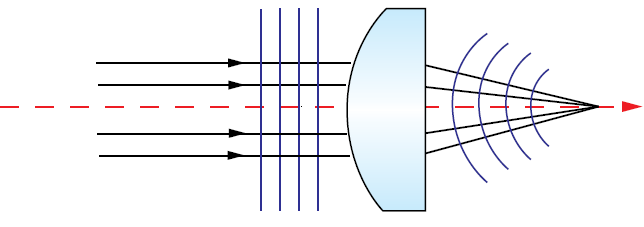
Key factors affecting the collimation during the production of laser modules
1. Light source characteristics
Beam divergence angle: The beam divergence angle of light sources such as laser diodes has a direct impact on the collimation of laser modules. A smaller beam divergence angle means that the energy of the laser beam is more concentrated and the directionality is better during transmission, thereby improving the collimation of the laser module.
Wavelength stability: The wavelength stability of the laser is also an important factor affecting the collimation. A slight change in wavelength may cause the propagation path of the laser beam to shift, thereby affecting the collimation. Therefore, it is necessary to select a light source with high wavelength stability during the production process, and maintain the wavelength stability through precise temperature control and other means.
2. Optical component quality
Processing accuracy: The processing accuracy of optical components such as lenses and reflectors directly determines the collimation of the laser module. High-precision optical components can better focus and collimate the laser beam and reduce the divergence and drift of the beam. In the production process, advanced processing technology and equipment are needed to ensure the processing accuracy of optical components.
Assembly error: The assembly error of optical components will also affect the collimation of the laser module. If the relative position and angle relationship between the optical elements are inaccurate, the laser beam will be deflected and distorted during transmission. Therefore, the position and angle relationship of the optical elements need to be strictly controlled during the assembly process, and precise assembly tools and techniques need to be used to reduce assembly errors.

3. Mechanical structure design
Rigidity: The rigidity of the module housing also has an important influence on the collimation of the laser module. A housing with good rigidity can resist the influence of external vibration and impact, maintain the stability of the internal structure of the laser module, and thus reduce the drift and jitter of the laser beam. During the design process, it is necessary to select high-strength materials and reasonable structural forms to improve the rigidity of the module housing.
Thermal stability: The laser module will generate heat during operation. If the thermal stability of the housing is not good, the internal structure will be deformed due to temperature changes, which will affect the collimation of the laser beam. Therefore, the heat dissipation performance of the housing and thermal compensation measures need to be considered during the design process to maintain the stability of the internal structure of the laser module.
4 Environmental factors
Temperature: Changes in temperature will affect the expansion and contraction of the internal materials of the laser module, thereby affecting the position and angle relationship of the optical elements and the propagation path of the laser beam. During the production process, the production environment needs to be temperature controlled, and temperature compensation technology is used to reduce the impact of temperature changes on the collimation of the laser module.
Humidity: A high humidity environment may cause problems such as condensation or mold growth on the surface of optical components, affecting the transmittance and reflectivity of the optical components, thereby reducing the collimation of the laser module. Therefore, during the production process, the humidity of the production environment needs to be controlled, and moisture-proof measures need to be taken to protect the optical components.
Dust: Impurities such as dust will adhere to the surface of optical components or enter the inside of the module, affecting the propagation and focusing effect of the laser beam. During the production process, the cleanliness of the production environment needs to be maintained, and dust-proof measures need to be taken to prevent contamination by impurities such as dust.

Key technical steps to ensure laser collimation
1. Light source selection and optimization
① Select a laser diode with a low divergence angle
Importance: The beam divergence angle of the laser diode has a direct impact on the laser collimation. Selecting a laser diode with a low divergence angle is the basis for improving laser collimation.
Measures: When purchasing laser diodes, carefully compare the beam divergence parameters of different products and select laser diodes with small divergence angles. At the same time, communicate with suppliers to ensure that the divergence angle of the selected laser diode meets the design requirements.
② Optimize drive current and temperature control
Importance: The output power and wavelength stability of the laser diode are closely related to the drive current and temperature. By optimizing the drive current and temperature control, it can be ensured that the laser diode outputs a stable laser beam, thereby improving the laser collimation.
Measures: Design a reasonable drive circuit to ensure that the laser diode operates at a constant current. At the same time, use temperature control technology, such as using a temperature control chip or a heat sink, to stabilize the operating temperature of the laser diode within an appropriate range. By real-time monitoring and adjustment of the drive current and temperature, the performance of the laser diode can be further ensured to be stable.
2. Optical system design and assembly
① Use high-precision lenses and reflectors
Importance: High-precision lenses and reflectors can better focus and collimate the laser beam and reduce the divergence and drift of the beam.
Measures: In the design of the optical system, lenses and reflectors with high transmittance, good refractive index matching, and low thermal expansion coefficient should be selected. At the same time, ensure the processing accuracy and surface quality of these optical components to meet the requirements of laser collimation.
② Ensure the coaxiality and parallelism of optical components
Importance: The coaxiality and parallelism between optical components are crucial to laser collimation. If the relative position and angle relationship between optical components are inaccurate, the laser beam will be deflected and distorted during transmission.
Measures: During the assembly process, precise assembly tools and techniques should be used, such as using optical instruments for calibration and positioning to ensure the coaxiality and parallelism between optical components. At the same time, the assembled optical system should be inspected and adjusted to ensure that it meets the requirements of laser collimation.
③ Use automated assembly equipment
Importance: Automated assembly equipment can reduce human errors and improve assembly accuracy and efficiency.
Measures: During the production process, automated assembly equipment should be introduced, such as automated lens assembly machines, automated reflector adjustment machines, etc. These devices can be assembled and adjusted according to preset procedures and parameters to ensure that the position and angle relationship of optical components are accurate.
3. Mechanical structure optimization
① Design a module housing with high rigidity and good thermal stability
Importance: The rigidity and thermal stability of the module housing have an important influence on the laser collimation. A housing with good rigidity can resist the influence of external vibration and impact and maintain the stability of the internal structure of the laser module; a housing with good thermal stability can reduce the impact of temperature changes on the performance of the laser module.
Measures: When designing the module housing, high-strength materials and reasonable structural forms should be selected to improve its rigidity and thermal stability. At the same time, simulation tests such as finite element analysis are performed on the housing to ensure that it meets the requirements of laser collimation.
② Reduce the influence of external vibration and thermal deformation
Importance: External vibration and thermal deformation will cause changes in the internal structure of the laser module, thereby affecting the laser collimation.
Measures: During the production process, shock absorption and heat insulation measures should be taken, such as the use of shock absorbers and heat insulation materials. At the same time, the laser module is tested for vibration and thermal deformation to detect and solve problems in time.
4. Environmental Control
① Production in a Clean Workshop
Importance: A clean workshop can provide a clean production environment and reduce the pollution of dust and other impurities to the laser module.
Measures: Establish a clean workshop and clean and disinfect it regularly. Air purification equipment and dust prevention facilities are set up in the workshop to ensure that the cleanliness of the production environment meets the requirements.
② Control temperature and humidity
Importance: Changes in temperature and humidity will affect the performance and collimation of the laser module. By controlling temperature and humidity, the stability of the internal structure and performance of the laser module can be maintained.
Measures: Set up a temperature and humidity control system in the production workshop, such as using air conditioners, humidifiers, dehumidifiers and other equipment. Monitor and adjust the temperature and humidity in real time to ensure that they remain within the appropriate range.
③ Avoid dust pollution
Importance: Impurities such as dust will adhere to the surface of optical components or enter the inside of the module, affecting the propagation and focusing effect of the laser beam.
Measures: During the production process, dust prevention measures should be taken, such as wearing dust caps and using dust cloths. Regularly clean and inspect the production environment to promptly detect and address dust pollution problems.
Detection and calibration method of laser collimation
1. Detection equipment
① Laser Beam analyzer
Principle
The beam analyzer receives the laser beam and analyzes multiple parameters of the laser beam, such as spot size, energy distribution, divergence angle, etc., to evaluate the collimation of the laser. It uses optical sensors and image processing algorithms to convert relevant information of the laser beam into visual data or images for easy analysis and judgment.
Application
During the detection process, the laser beam emitted by the laser module is irradiated to the receiving part of the beam analyzer. The beam analyzer can accurately measure the spot diameter and energy distribution of the laser beam. If the spot shape is regular, the energy distribution is uniform, and the spot diameter is within the expected range, it means that the laser collimation is good; conversely, if the spot shape is irregular, the energy distribution is uneven, or the spot diameter exceeds the expected range, there may be a collimation problem.

② Laser Collimator
Principle
The collimator works based on the principle of optical self-collimation or laser interference. The optical self-collimation collimator generates a reference light through the internal optical system, compares it with the measured laser beam, and determines the collimation of the laser beam by measuring the deviation between the two. The laser interferometer collimator uses the laser interference phenomenon to measure the phase change of the laser beam during propagation, thereby determining the collimation of the laser beam.
Application
When using the collimator, place it at a certain distance from the laser module so that the laser beam passes through the measurement area of the collimator. The optical system or interference system inside the collimator will measure and analyze the laser beam. By reading the indication or output data of the collimator, the collimation of the laser beam can be obtained. If the indication is within the specified range, it means that the laser collimation meets the requirements; if the indication exceeds the range, it needs to be adjusted.
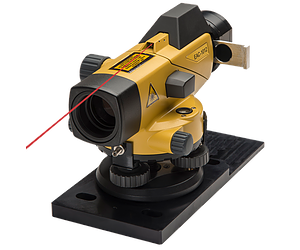
③ Laser Interferometer
Principle
The interferometer uses the interference characteristics of the laser to measure the wavefront error of the laser beam, thereby evaluating the collimation of the laser. When two or more coherent beams of light are superimposed, interference fringes are formed. If the wavefront of the laser beam is an ideal plane wave, the interference fringes will be uniform and parallel; if the wavefront of the laser beam is distorted, the interference fringes will be bent or deformed. By analyzing the shape and distribution of the interference fringes, the wavefront error of the laser beam can be obtained, and then the collimation of the laser can be evaluated.
Application
Place the interferometer in a suitable position so that it interacts with the laser beam emitted by the laser module. The interferometer will produce interference fringes, and the shape and distribution of these fringes reflect the wavefront of the laser beam. By observing and analyzing the interference fringes, the collimation of the laser beam can be understood. If the interference fringes are bent, twisted or irregularly changed, it means that there is a wavefront error in the laser beam and the collimation needs to be further adjusted.

2. Detection method
① Beam divergence angle measurement
Principle
The beam divergence angle is one of the important indicators for measuring the collimation of the laser. By measuring the spot size of the laser beam at different propagation distances, the beam divergence angle is calculated according to a specific geometric relationship. Generally speaking, the smaller the beam divergence angle, the higher the collimation of the laser.
Operation method
Set up a spot receiving device at a certain position (such as 1 meter, 2 meters, etc.) from the laser module, and measure the spot diameter of the laser beam at that position. Then repeat the measurement of the spot diameter at different distances. According to the measured spot diameter and propagation distance, use a mathematical formula to calculate the beam divergence angle. For example, the divergence angle θ can be calculated by the formula θ≈(D2 - D1) / L, where D1 and D2 are the spot diameters at different positions, and L is the distance between the two measurement positions. If the calculated divergence angle is within the specified range, it means that the laser collimation meets the requirements; if it exceeds the range, it needs to be adjusted.
② Spot analysis
Principle
The spot shape of the laser contains information about the laser collimation. An ideal laser spot should be circular or elliptical, and the energy distribution should be uniform. If the spot shape is distorted, such as irregular contours or uneven energy distribution, it may mean that there is a problem with the propagation direction of the laser, resulting in a decrease in collimation.
Operation method
Use a device such as a spot analyzer or a CCD camera to capture the spot image of the laser. The captured spot image is transferred to the computer, and the spot is analyzed using special image processing software. The analysis includes the shape of the spot, energy distribution, center of gravity position, etc. The collimation of the laser is evaluated by comparing the characteristics of the actual spot with the ideal spot. If the spot shape is close to the ideal shape, the energy distribution is uniform, and the center of gravity position is stable, it means that the collimation is good; if the spot shape is abnormal, the energy distribution is uneven, or the center of gravity position is offset, the collimation may be problematic.
③ Interference measurement
Principle
The collimation is evaluated by measuring the wavefront error of the laser beam using an interferometer. When the laser beam passes through the interferometer, interference fringes are formed inside the interferometer. If the wavefront of the laser beam is an ideal plane wave, the interference fringes will be uniform and parallel; if the wavefront of the laser beam is distorted, the interference fringes will be bent or deformed. By analyzing the shape and distribution of the interference fringes, the wavefront error of the laser beam can be obtained, and then the collimation of the laser can be evaluated.
Operation method
Place the interferometer in a suitable position and adjust the interferometer to align it correctly with the laser beam. Start the laser module and interferometer and observe the interference fringes. If the interference fringes are uniform, parallel straight lines or curves, it means that the wavefront error of the laser beam is small and the collimation is high; if the interference fringes are bent, twisted or otherwise irregular, it means that the laser beam has a large wavefront error and the collimation needs to be further adjusted.
3. Calibration method
① Adjust the position and angle of the optical element
Principle
The position and angle of the optical element have an important influence on the collimation of the laser. By precisely adjusting the position and angle of the optical element, the propagation direction and focusing effect of the laser beam can be changed, thereby optimizing the collimation of the beam.
Operation method
First, it is necessary to determine the optical elements that need to be adjusted, such as lenses, reflectors, etc. Use precision adjustment mechanisms, such as fine-tuning screws, adjustment brackets, etc., to make detailed adjustments to the optical elements. During the adjustment process, the feedback information from the detection equipment can be combined to monitor the changes in the laser collimation in real time. For example, if the detection finds that the laser beam deviates from the ideal direction to the right, the horizontal position of the lens or reflector can be adjusted to move the laser beam to the left to achieve the purpose of correction. After the adjustment is completed, use the detection equipment again for verification to ensure that the collimation meets the requirements.
② Use the automatic calibration system
Principle
The automatic calibration system uses advanced sensor technology, electronic control systems and algorithms to automatically detect the collimation deviation of the laser, and automatically adjust the position and angle of the optical components according to the preset program to achieve fast and accurate calibration.
Operation method
Configure the relevant parameters of the automatic calibration system, such as calibration range, sensitivity, calibration speed, etc. After starting the automatic calibration system, the system will automatically detect and analyze the laser module. If it is found that the collimation deviation exceeds the set range, the system will automatically start the adjustment mechanism to adjust the position and angle of the optical component. During the adjustment process, the system will monitor the changes in collimation in real time until the collimation meets the predetermined requirements. Using the automatic calibration system can improve the efficiency and accuracy of calibration and reduce the impact of human factors on the calibration results.
In short, laser collimation is a key indicator for measuring the performance of laser modules, and its optimization involves light sources, optical systems, mechanical structures, etc. With the advancement of materials science, manufacturing processes, and intelligent control technology, the control of laser collimation will be more precise and efficient, which will promote the widespread application of laser modules in many fields.
Contact information:
If you have any ideas, feel free to talk to us. No matter where our customers are and what our requirements are, we will follow our goal to provide our customers with high quality, low prices, and the best service.
 Email:info@loshield.com
 Tel:0086-18092277517
 Fax: 86-29-81323155
 Wechat:0086-18092277517


