



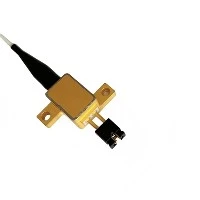
The application of Laser Modules in dust monitoring provides a high-precision and high-sensitivity monitoring solution. By utilizing the scattering principle of laser beams, these modules can detect and measure the concentration and particle size distribution of suspended particles in the air.
Compared with traditional monitoring technologies, laser modules have faster response times, higher resolutions, and lower maintenance costs. They are very suitable for real-time monitoring of air quality, especially in industrial working environments, mines, urban atmospheric environment monitoring and other scenarios. They play an important role in preventing air pollution and protecting public health.
Necessity of customizing dust monitoring laser modules
1. Specific needs of dust monitoring in different industries
The needs of dust monitoring vary significantly in different industries, and these differences are mainly reflected in monitoring accuracy, environmental conditions, monitoring frequency and specific types.
Industrial manufacturing: In industries such as steel, cement, and chemicals, dust is generated in huge quantities and of various types, requiring monitoring tools with high durability and the ability to adapt to harsh environments such as high temperature and high humidity.
Mining: The monitoring of dust in mines needs to take into account the risk of explosion, and the monitoring equipment needs to have explosion-proof design and real-time monitoring functions.
Environmental protection: Environmental protection agencies prefer to use portable and real-time monitoring equipment to facilitate continuous monitoring of air quality in a wide range of areas.
Public health: In public places, such as schools and hospitals, there is a higher sensitivity to fine suspended particles (such as PM2.5), requiring monitoring equipment to provide high-precision data.
The specific needs of each industry put forward specific requirements for the technical parameters and performance of monitoring equipment, and standard products are often difficult to fully meet these diverse needs.
2. Standardized products cannot meet all monitoring scenarios
Although standardized dust monitoring laser modules can meet general needs, they have many limitations in specific scenarios:
Environmental adaptability: Standardized products may not be optimized for extreme environments (extremely high or low temperatures, high humidity, corrosive gases, etc.).
Monitoring accuracy: Different occasions have different requirements for detection accuracy, and the detection range and accuracy of standardized products may not meet the high requirements of some special occasions.
Data processing: The data output and processing methods of standard products may not be sufficient for integration with existing systems in specific industries, or may not support customized data analysis and reporting functions.
Maintenance and operation: Standardized products may not fully adapt to the actual needs of specific industries in terms of ease of use and maintenance, such as simple operation interface, self-cleaning ability, etc.
In summary, the dust monitoring tasks in the context of specific industry applications are complex and changeable, making customized laser modules a necessary choice in order to respond to various monitoring needs more accurately, stably and effectively.
Key elements of custom dust monitoring laser modules
1. Accuracy requirements: How to select appropriate laser wavelengths and detection limits according to monitoring targets
Accuracy is one of the core requirements of dust monitoring laser modules. The key is to select appropriate laser wavelengths and detection limits according to the different characteristics of the monitoring targets.
Laser wavelength selection: The scattering and absorption characteristics of dust particles of different substances to lasers vary depending on the wavelength. For example, for fine particles, using short-wavelength lasers can obtain stronger scattering signals, thereby increasing the sensitivity of monitoring. According to the composition of dust (such as metals, minerals, organic compounds, etc.), selecting the wavelength that is most sensitive to the laser scattering effect can greatly improve the accuracy of monitoring.
Detection limit setting: The detection limit needs to be set according to actual environmental standards and regulatory requirements. In environmental monitoring, the detection limit can be different for air quality standards in different regions to ensure that it can accurately reflect the exceeding of the standard. In the workplace, it is necessary to set more stringent detection limits according to occupational health standards.
2. Environmental adaptability
Environmental factors have a significant impact on the stability and accuracy of laser modules, so environmental adaptability is an important factor that must be considered when customizing laser modules.
High temperature and high humidity environment: Laser modules working in high temperature and high humidity environments need to use high temperature resistant and waterproof materials, and ensure that optical components do not lose accuracy due to changes in temperature and humidity. Heat dissipation and moisture-proof measures need to be considered during design to ensure continuous and stable operation.
Corrosive gases: In industries such as chemical industry that produce corrosive gases, laser modules need to use anti-corrosion materials and have appropriate sealing measures to prevent gases from corroding optical and electronic components.
Mechanical stability: In environments with frequent vibrations (such as factories and vehicles), the module needs to have good vibration resistance to avoid measurement inaccuracies or damage caused by vibration.
In summary, by carefully selecting laser wavelengths and detection limits and ensuring that the module can adapt to specific environmental conditions, the application value and measurement accuracy of dust monitoring laser modules can be greatly improved to meet customized needs in different scenarios.
JTBYShield Laser Technology Co., Ltd We are a professional manufacturer of laser modules.
Our laser module has the characteristics of small size, high compatibility, low cost and easy integration, and can provide the most convenient, fast and high-precision collimation positioning.
Laser module wavelength, spot, power, lens angle, shell size and other parameters can be customized according to your requirements. At the same time, a variety of standard products are available, with conventional point, line and crossline spots optional.
If you are interested, we will be very happy to talk to you further. We look forward to your reply and hope to be your reliable partner.
Contact information:
If you have any ideas, feel free to talk to us. No matter where our customers are and what our requirements are, we will follow our goal to provide our customers with high quality, low prices, and the best service.
 Email:info@loshield.com
 Tel:0086-18092277517
 Fax: 86-29-81323155
 Wechat:0086-18092277517


