



A laser engraving machine is a precision device, and its performance and effect largely depend on the lens used. Choosing the right lens is essential to achieve high-quality engraving results. If the choice is inappropriate, it will not only affect work efficiency, but may even cause damage to the machine itself, so choosing the right laser engraving machine lens is particularly important.
Understand the basic parameters of the lens
Before choosing a laser engraving machine lens, you first need to understand some basic parameters:
1.1 Focal length
The focal length refers to the distance at which the lens focuses the laser to a point. A shorter focal length produces a smaller spot, which is suitable for fine engraving; a longer focal length is suitable for deeper engraving or cutting.
1.2 Spot diameter
The spot diameter is the minimum spot size formed by the laser at the focal point. A smaller spot diameter can achieve higher precision and finer details.
1.3 Working distance
The working distance refers to the distance between the lens and the surface of the material being engraved. A longer working distance can provide a larger operating space, which is suitable for engraving uneven surfaces or thicker materials.
1.4 Field of view
The field of view refers to the size of the working area that the lens can cover. A larger field of view can process a larger area at one time, improving work efficiency.

Consider engraving needs
Choosing the right lens needs to be determined based on the specific engraving needs:
2.1 Material type
Different materials have different absorption rates for lasers, so it is necessary to choose a lens suitable for a specific material. For example, metal materials usually require higher-power lasers and shorter focal length lenses, while materials such as wood or acrylic can use longer focal length lenses.
2.2 Engraving accuracy requirements
If high-precision engraving is required, such as making microcircuit boards or fine artworks, a lens with a short focal length and small spot diameter should be selected. For large-area, low-precision engraving tasks, a lens with a long focal length and a large field of view can be selected.
2.3 Engraving depth
If deep engraving or cutting of thick materials is required, a long focal length lens should be selected to obtain a deeper depth of focus. For surface engraving or cutting of thin materials, a short focal length lens is more suitable.
2.4 Work efficiency
For mass production or large-area engraving, choosing a lens with a large field of view can improve work efficiency. But the relationship between accuracy and efficiency needs to be weighed.
Selection of lens material
The material of the lens has an important impact on its performance and life:
3.1 Magnesium fluoride (MgF2) lens
Advantages: high transmittance, suitable for most wavelengths of lasers
Disadvantages: low hardness, easy to scratch
3.2 Silicon (Si) lens
Advantages: suitable for infrared lasers, high temperature resistance
Disadvantages: not suitable for visible light lasers
3.3 Zinc selenium (ZnSe) lens
Advantages: suitable for CO2 lasers, high transmittance
Disadvantages: high price, easy to oxidize
3.4 Quartz (SiO2) lens
Advantages: high temperature resistance, good chemical stability, suitable for ultraviolet laser
Disadvantages: high absorption rate of lasers of certain wavelengths
3.5 Gallium arsenide (GaAs) lens
Advantages: suitable for far-infrared lasers, high transmittance
Disadvantages: expensive, fragile
When choosing lens materials, factors such as laser type, wavelength, power, and use environment need to be considered.

The importance of lens coating
Lens coating can improve transmittance, reduce reflection loss, and protect the lens surface:
4.1 Single-layer coating
Advantages: low cost, suitable for a single wavelength
Disadvantages: limited reduction in reflectivity
4.2 Multi-layer coating
Advantages: can significantly reduce reflectivity, suitable for multiple wavelengths
Disadvantages: high cost, complex manufacturing process
4.3 Broadband coating
Advantages: suitable for a wide range of wavelengths, stable performance
Disadvantages: expensive
4.4 Anti-reflection coating
Advantages: can significantly improve transmittance
Disadvantages: limited effect on certain wavelengths
Choosing a suitable coating can improve laser utilization, extend lens life, and improve engraving quality.
Selection of lens shape
Lenses of different shapes are suitable for different engraving needs:
5.1 Plano-convex lens
Advantages: simple structure, low cost
Disadvantages: spherical aberration exists, not suitable for high-precision engraving
5.2 Biconvex lens
Advantages: can reduce spherical aberration, suitable for medium-precision engraving
Disadvantages: difficult to make and high cost
5.3 Aspheric lens
Advantages: can effectively eliminate spherical aberration, suitable for high-precision engraving
Disadvantages: expensive and complicated manufacturing process
5.4 Flat field lens
Advantages: can ensure uniform focus in a large field of view, suitable for large-area engraving
Disadvantages: complex design and high price
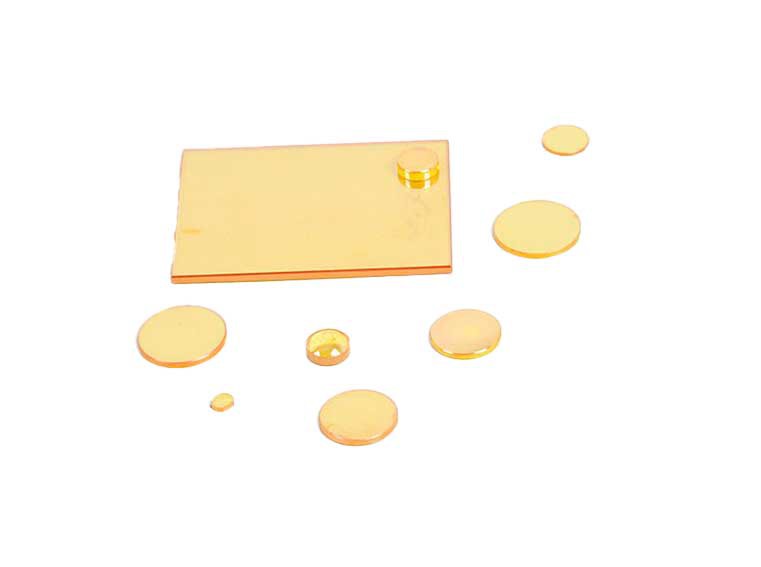
Choice of lens aperture
Lens aperture affects the utilization rate of laser energy and the quality of the spot:
6.1 Small aperture lens
Advantages: low cost and light weight
Disadvantages: low energy utilization, which may lead to a decrease in the quality of the spot
6.2 Large aperture lens
Advantages: high energy utilization and good spot quality
Disadvantages: high cost and heavy weight
Selecting the appropriate aperture requires considering the laser power, beam diameter and engraving accuracy requirements.
Application of lens combination
Sometimes a single lens cannot meet complex engraving requirements. In this case, you can consider using a lens combination:
7.1 Zoom lens group
Advantages: Flexible adjustment of focal length to meet different engraving requirements
Disadvantages: Complex structure and high cost
7.2 Beam expansion lens group
Advantages: Can expand the laser beam diameter and improve energy utilization
Disadvantages: Requires precise adjustment, increasing system complexity
7.3 Focusing lens group
Advantages: can achieve smaller spot diameter and improve engraving accuracy
Disadvantages: requires fine adjustment and high cost
When choosing a lens combination, you need to weigh various factors, such as cost, complexity, performance, etc., to find the solution that best suits your needs.
Maintenance and care
The laser engraving machine lens is a precision optical component and requires regular maintenance and care:
8.1 Regular cleaning
Use dust-free paper or cotton swabs dipped in alcohol to gently wipe the mirror surface to avoid scratches.
8.2 Dust prevention measures
Keep the working environment clean and use dust covers or airflow to protect the lens.
8.3 Avoid high temperature and humidity
The lens is easily affected by high temperature and high humidity environments and should be avoided from long-term exposure.
8.4 Regular inspection
Regularly check the lens surface for damage, stains, etc., and repair or replace it in time.
Summary
Choosing a suitable laser engraving machine lens is the key to improving engraving quality and efficiency. When choosing a lens, you need to comprehensively consider parameters such as focal length, spot diameter, working distance, field of view, etc., and make a choice based on specific engraving needs. At the same time, attention should be paid to factors such as lens material, coating, shape, and maintenance. Through scientific and reasonable lens selection and maintenance, users can give full play to the performance potential of the laser engraving machine and obtain ideal engraving effects.