



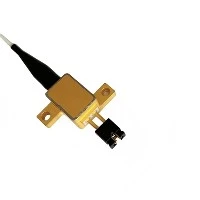
1550nm Semiconductor Laser, as a light source with superior performance, has been widely used in the field of optical fiber communication as early as the 1980s, and was subsequently used in optical fiber sensing systems. It was gradually used in Lidar in the early 21st century, including wind-measuring Lidar, distance-measuring Lidar, Lidar for vehicle obstacle avoidance, and Lidar for unmanned driving systems.

Radar, as an important means of vehicle obstacle avoidance, has now developed from only ultrasonic radar to the stage of complementary coexistence of ultrasonic radar, millimeter-wave radar and lidar. Lidar, with its high resolution advantage, ushered in a period of rapid growth. Unmanned driving technology has become the general trend, and vehicle-mounted lidar has experienced explosive growth in recent years.
At present, the light source of the vehicle-mounted lidar is the same as the lidar in the sweeper. Most of them use 905 nm lasers, which have human eye safety problems. Especially when the working distance reaches more than 150 m and the optical power of the 905 nm laser exceeds the threshold of human eye safety, lasers in the human eye safety band must be used. Compared with 905 nm lasers, 1550 nm lasers with the same power are 100,000 times safer for human eyes. Typically, under the same spot size and pulse width, the maximum allowable exposure and maximum allowable peak optical power of 1550 nm laser are several orders of magnitude higher than those of 905 nm laser.
Compared with 905nm, the advantage of 1550nm laser is that the 1550nm laser has strong atmospheric penetration ability and higher detection accuracy, and can increase the detection distance to 250 meters or even 300 meters. The 1550nm wavelength laser has strong anti-interference ability, better beam collimation, and high brightness of the light source. These advantages also make the emission and reception of the laser more efficient, and can achieve finer object recognition. At the same time, the 1550nm wavelength laser has weak divergence and small spot, and the spot diameter is only a quarter of that of 905nm at a distance of 100 meters.

The 1550nm laser has a longer wavelength, resulting in lower scattering and absorption, making it a suitable choice for long-distance transmission over fiber. Also, it is less affected by atmospheric turbulence and weather conditions, making it more reliable and efficient in outdoor applications.
Compared with other lasers, 1550nm lasers are more energy efficient and consume less power, thereby reducing operating costs. This makes it ideal for industrial and medical applications.
Another advantage of the 1550nm laser is its ability to penetrate tissue for medical purposes such as surgery and therapy. It is also used in ophthalmology to treat diseases such as glaucoma and diabetic retinopathy.

Additionally, 1550nm lasers are used in military applications such as laser ranging and target designation due to low visibility. It is also used in consumer electronics such as DVD players and optical data storage devices.
Overall, 1550nm lasers offer many advantages over other lasers in terms of efficiency, reliability, and versatility. Its unique features make it an important tool in various fields and continues to have a major impact on technology and innovation.
Contact information:
If you have any ideas, feel free to talk to us. No matter where our customers are and what our requirements are, we will follow our goal to provide our customers with high quality, low prices, and the best service.
 Email:info@loshield.com
 Tel:0086-18092277517
 Fax: 86-29-81323155
 Wechat:0086-18092277517


