



The performance, stability, service life and beam quality of laser modules are fundamentally determined by the quality of internal core components. In the global laser industry market, massive price differences among finished laser modules mainly stem from material grade, machining precision, coating process, electronic stability and assembly tolerance of discrete laser parts, including laser diodes, optical lenses, heat dissipation structures, circuit control chips and mechanical shells. Uneven quality of upstream components directly triggers divergent output performance, thermal failure, beam distortion and premature attenuation of integrated modules, which profoundly affects industrial processing, precision positioning, medical detection and intelligent equipment applications.

Core Component Quality Differentials & Corresponding Module Effects
1. Laser Diode (LD): The Core Light Source
As the fundamental emission unit of all semiconductor laser modules, laser diode quality ranks first in influencing module performance.High-grade laser diodes feature consistent wavelength output, ultra-low power fluctuation, stable mode transmission, high anti-attenuation chips and strict wafer-level quality screening. Modules assembled with premium LD maintain stable optical power, standard Gaussian beam profile, low M² beam quality factor (close to 1), narrow divergence angle and long continuous working life without obvious power decay.Low-quality inferior diodes suffer from defective epitaxial wafers, impure internal materials and unstable current response. Modules equipped with such parts present random power drift, irregular multi-mode beam splitting, enlarged light spot divergence, severe wavelength deviation and rapid luminous attenuation. Long-time operation easily causes internal thermal breakdown and complete module failure.

2. Optical Optics: Lenses, Mirrors & Aperture Elements
Optical components dominate beam shaping, collimation and light transmission efficiency inside modules.Premium optical parts adopt high-purity K9 optical glass, ultra-precision surface polishing, multi-layer anti-reflection coating, micron-scale dimensional tolerance and low light loss rate. High-precision aspherical lenses effectively suppress spherical aberration, coma aberration and edge light diffusion, forming uniform, sharp light spots or linear beams with consistent intensity from center to edge.By contrast, low-cost plastic lenses and uncoated ordinary glass lenses bring severe optical distortion, blurry light spots, uneven light intensity distribution, curved deformed laser lines and massive energy loss. Poorly processed optical pieces also aggravate stray light interference, drastically reducing module positioning accuracy and effective working distance.

3. Thermal Management Components & Mechanical Structures
Heat dissipation base plates, aluminum/copper shells and thermal conductive materials determine the thermal stability of integrated modules.High-quality modules are matched with high-thermal-conductivity copper substrates, precision-machined aluminum housings and professional thermal grease. Efficient heat conduction suppresses thermal lens effect, keeps internal junction temperature within safe range, and avoids beam distortion caused by heat accumulation under continuous operation.Low-grade parts use thin low-conductivity metal shells and inferior thermal media. Heat cannot dissipate timely during operation, leading to continuous temperature rise, power decline, optical element thermal deformation, increased beam divergence and accelerated aging of internal circuit components.
4. Circuit Control Components & Auxiliary Parts
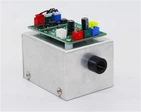
Drive chips, current stabilizing circuits and protective components guarantee safe and steady electrical operation of laser modules.High-standard electronic components integrate precise constant-current drive, overvoltage, overcurrent and overheating protection circuits. They stabilize input current, shield electromagnetic interference and extend overall module cycle life.Poor-quality circuit parts lack effective protection mechanisms, with unstable voltage output and weak anti-interference ability. They easily cause sudden power surge, LD burnout, frequent module shutdown and hidden safety hazards during continuous operation.

Industrial Industry Conclusion
From the perspective of laser module integrated manufacturing, component quality is the bottom-line foundation of finished product performance. Although low-cost inferior components reduce initial production cost, they sacrifice module beam precision, power stability, durability and application reliability, bringing higher later maintenance and replacement costs for downstream users.Global optoelectronics manufacturers are increasingly prioritizing full-chain component quality control. Selecting certified high-precision laser parts, strict incoming material inspection and refined assembly calibration have become core competitiveness to produce high-performance industrial-grade laser modules, adapting to high-precision demands in advanced manufacturing, intelligent measurement and optoelectronic integration fields.
Contact information:
If you have any ideas, feel free to talk to us. No matter where our customers are and what our requirements are, we will follow our goal to provide our customers with high quality, low prices, and the best service.
 Email:info@loshield.com; laser@loshield.com
 Tel:0086-18092277517; 0086-17392801246
 Fax: 86-29-81323155
 Wechat:0086-18092277517; 0086-17392801246


