



Laser technology has become increasingly widespread in the field of cosmetic medicine, with Er:YAG and Nd:YAG lasers being two of the most commonly used types. Due to their unique optical properties and therapeutic effects, these lasers are extensively applied. However, as their use becomes more prevalent, safety protection issues have become more prominent. We will delve into the common wavelengths, applications, differences, and safety protection measures of these two lasers to provide a comprehensive reference for professionals in the field.
1. Common Wavelengths of Er:YAG Laser and Nd:YAG Laser
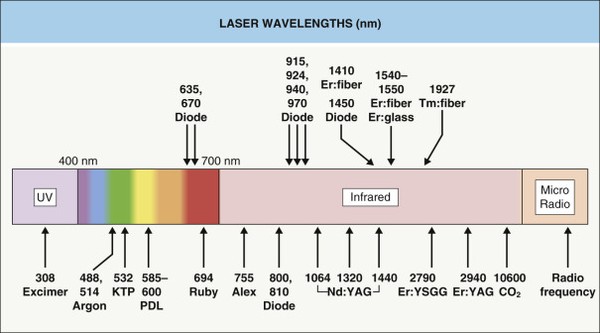
Er:YAG Laser: The primary wavelength is 2940 nanometers (nm), which falls within the mid-infrared spectrum. Its high absorbency makes it excel in skin treatments.
Nd:YAG Laser: The primary wavelength is 1064 nanometers (nm), which falls within the near-infrared spectrum. Its longer wavelength allows it to penetrate deeper tissues, making it suitable for various deep treatments.
2. Specific Applications in Cosmetic Medicine
Er:YAG Laser:
Skin Regeneration: Stimulates collagen regeneration to improve skin texture.
Wrinkle Removal: Effectively removes fine lines and wrinkles, restoring skin elasticity.
Scar Repair: Promotes remodeling of scar tissue, reducing its visibility.
Teeth Whitening: Decomposes pigments through laser energy to achieve whitening effects.
Nd:YAG Laser:
Vascular Lesion Treatment: Such as spider angiomas, hemangiomas, etc.
Pigmented Lesion Treatment: Such as freckles, melasma, etc.
Hair Removal: Destroys hair follicles through selective photothermolysis, achieving permanent hair removal.
Facial Rejuvenation: Stimulates collagen regeneration to improve skin laxity.
3. Differences Between Them
The following are the main differences between Er:YAG and Nd:YAG lasers:
| Characteristic | Er:YAG Laser | Nd:YAG Laser |
|---|---|---|
| Wavelength | 2940 nm | 1064 nm |
| Absorption Characteristics | Mainly absorbed by water | Mainly absorbed by hemoglobin and pigments |
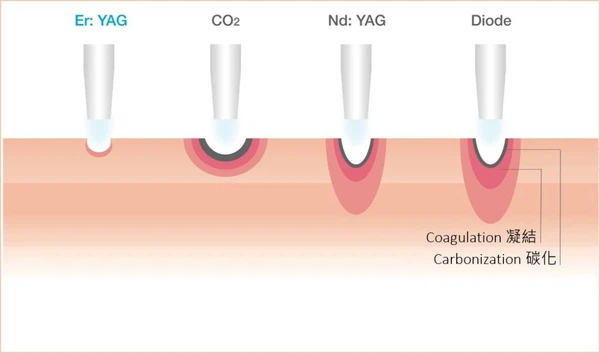
| Treatment Depth | Shallower (about 1-2 mm) | Deeper (up to 5-6 mm) |
| Thermal Damage Zone | Smaller | Larger |
| Recovery Time | Shorter | Longer |
| Applicable Procedures | Skin regeneration, wrinkle removal, etc. | Vascular lesions, pigmented lesions, etc. |
4. Differences in Laser Safety Protection
Due to the different physical properties and application fields of Er:YAG and Nd:YAG lasers, their safety protection measures also differ:
Er:YAG Laser:
Eye Protection: Although the penetration of Er:Y8AG laser is weak, laser safety glasses must still be worn to prevent reflected light from entering the eyes.
Skin Protection: Appropriate protective clothing and gloves must be worn to prevent accidental contact.
Environmental Protection: Ensure good ventilation in the laser operation area to prevent heat accumulation.
Nd:YAG Laser:
Eye Protection: Due to the strong penetration of Nd:YAG laser, high-protection-level laser safety glasses must be worn to prevent retinal damage.
Skin Protection: High-protection-level protective clothing and gloves must be worn to prevent skin burns.
Environmental Protection: Special attention must be paid to isolating the laser operation area to prevent laser leakage and harm to surrounding personnel.

5. Specific Laser Safety Protection Measures
Personal Protective Equipment:
Laser Safety Glasses: Choose appropriate protective glasses based on the wavelength of the laser to ensure eye safety.
Protective Clothing and Gloves: Select protective clothing and gloves that meet safety standards to prevent skin contact with the laser.
Masks and Face Shields: Wear masks and face shields during certain high-risk operations to prevent inhalation of dust and smoke generated by the laser.
Environmental Protection:
Laser Safety Signs: Set up prominent laser safety signs in the laser operation area to remind personnel to be cautious.
Isolation Measures: Use laser isolation screens or barriers to prevent laser leakage.
Ventilation Equipment: Ensure good ventilation in the laser operation area to prevent heat and harmful gas accumulation.
Operational Standards:
Training and Education: Provide comprehensive laser safety training to operators to ensure they understand the hazards and protection measures of lasers.
Operational Procedures: Develop detailed laser operation procedures to ensure every step of the operation meets safety standards.
Regular Inspections: Regularly inspect laser equipment and protective gear to ensure they are in good condition.
6. Conclusion
Er:YAG and Nd:YAG lasers have their unique applications in the field of cosmetic medicine, but their safety protection issues cannot be overlooked. Medical personnel must take appropriate protective measures according to the characteristics of these lasers to ensure the safety of both operators and patients. Through strict personal protection, environmental protection, and operational standards, the risks associated with laser operations can be effectively reduced, ensuring medical safety.