


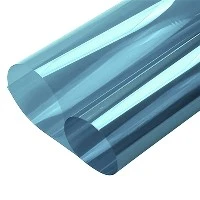

The core advantage of Laser Protection Curtains is that they are unique among many protective devices, and their unparalleled flexibility, excellent high protection performance, and high compatibility with the diverse needs of various industries.
This flexibility is not only reflected in the customizability of the product structure, which allows rapid adjustment and adaptation according to different working environments and specific needs, but also contains the flexibility of technological innovation, which can be continuously upgraded and iterated with market changes and technological evolution to meet potential new needs in the future.
|
|
|
|
|
|


The diversification of industry needs has opened up a broad space for the application of laser protective curtains. Whether it is high-precision laser experiments in scientific research laboratories or laser processing links on industrial production lines; whether it is laser treatment protection in the medical field or laser weapon defense in military defense, laser protective curtains can provide tailor-made solutions for all walks of life with their flexible adaptability and strong protection capabilities.
Core features driven by market demand
1. High protection performance and safety
Materials and processes: The laser protection curtain adopts a multi-layer composite structure, with a high-density polycarbonate (PC) or polyimide (PI) substrate on the outer layer and a nano-scale light-absorbing material (such as indium tin oxide ITO or carbon nanotubes) on the inner layer, which can absorb 99.9% of the laser energy. Through vacuum sputtering coating technology, ultra-low reflectivity (≈4%) is achieved to avoid the harm of secondary reflection.
Certification standards: Comply with EU CE EN60825/IEC60825, and pass military-grade impact resistance tests (such as MIL-STD-810G), and can withstand continuous laser power density up to 543W/cm² (such as 1064nm fiber laser).
Industry adaptability: The medical field needs to pass ISO 13485 certification, and the industrial field needs to meet the mandatory standard of GB 7247-2012 "Radiation Safety of Laser Products".
2. Flexibility and customized design
Size and shape: Supports full-size customization from micro components (such as 10cm×10cm sensor protection cover) to large fences (such as 3m×6m industrial workshop partitions). In addition to the standard sizes of 1.52x2.05m and 1.52x2.52m, customized sizes can also be cut as required, providing professional protection design solutions for rapid deployment and expansion.
Installation method: Provides a variety of solutions such as hoisting (suitable for window fixing), floor bracket (with counterweight base), mobile (integrated universal wheel and brake system), etc., to adapt to space-constrained scenarios such as laboratories and equipment matching. For example, the mobile design of the welding protection curtain (with pulleys) also reflects the need for flexibility.

3.Lightweight and portability optimization
Material innovation: The basic version uses ultra-thin aramid fiber composite materials (weight 0.65kg/m², thickness 1.2mm), and the reinforced version uses carbon fiber reinforced polymer (CFRP) to achieve high strength and lightness (weight 1.7kg/m², tensile strength>500MPa).
Application scenarios: Scientific research laboratories or temporary processing sites often need to temporarily build protective barriers. The lightweight design is easy to install and move, supports single-person operation, and is suitable for scenarios where the protection range is frequently adjusted; portable protective curtains can be integrated into handheld laser equipment (such as laser cleaning guns) to improve operational flexibility.
4.Multifunctional additional features
Environmental adaptability:
Ultra-low reflectivity: The protective curtain has ultra-low reflectivity (≈4%)
High temperature resistant type: Silicone resin coating is used to withstand instantaneous temperatures of 800°C (such as laser welding spark sputtering).
Anti-static type: Surface resistance <10⁶Ω, suitable for dust-free workshops (such as semiconductor wafer processing).
Flame retardant type: UL94 V-0 certified, meeting the needs of high-risk environments such as aerospace.
Aesthetics and logos:
Supports customized corporate LOGO, warning signs, taking into account both function and brand display.

5.Cost-effectiveness and product grading strategy
NORMAL Version (XL-SC010L/011L): for low-power scenarios (medical beauty, education), laser safety standard GB7247/ EN60825/ IEC60825, laser protection exposure limit PEL>258.09W/cm² (1070nm φ=1mm T=100s).
PRO Version (XL-SC012H/013H): adapted to industrial high-power lasers (such as 6kW fiber laser cutting machines), laser safety standard GB7247/EN60825/ IEC60825, laser protection exposure limit PEL=543.348W/cm² (1070nm r=2.509mm T=100s).
Testing guarantee: passed the accelerated aging test (simulated 5-year service life) of the CNAS certified laboratory, reducing the user's purchasing risk and providing options at different prices.

Application scenarios
1. Industrial laser processing
Scenario: High-power operations such as laser welding, cutting, and cleaning.
Demand: Protective curtains are often used for local protection of equipment, such as isolating laser processing heads or protecting precision parts. Enhanced protective curtains (such as PEL>543W/cm²) can withstand long-term direct exposure to industrial-grade lasers.
Case: Handheld laser processing equipment requires flexible small protective curtains to avoid limited operating space.
2. Scientific research and laboratories
Scenario: optical experiments, laser research, etc.
Demand: The laboratory space is limited, and customized size (such as 1.5m×2m) and modular installation are required, while low reflectivity is required to reduce light interference.

3. Medical and beauty
Scenario: laser surgery, skin treatment, etc.
Demand: The basic version of the protective curtain (PEL>258W/cm²) is suitable for low-power medical laser equipment to ensure the safety of medical staff and patients. The anti-static version can be adapted to the clean operating room environment.
4. Automobile and electronic manufacturing
Scenario: LiDAR protection, precision electronic component processing.
Demand: With the development of smart cars, LiDAR needs to be protected from sulfide corrosion (such as silver reflector protection), and small pieces of protective curtains can be integrated into sensors or on-board equipment. Fivote's nano-coating technology also shows the demand trend for micro-protection components.
5. Education and public safety
Scenario: university experimental teaching, public facility laser equipment protection.
Demand: Low-cost, easy-to-install standardized products, such as basic protective curtains with Velcro or track components for quick deployment.
Market demand trends and technology outlook
1. Intelligence and integration
IoT integration: protective curtains are embedded with fiber optic sensors to monitor laser penetration in real time and stop the equipment through PLC linkage.
AI optimization: machine learning algorithms analyze historical data, predict the life of protective curtains and automatically trigger maintenance orders.
2. Environmental protection and sustainability
Material innovation: bio-based polylactic acid (PLA) composite materials replace traditional petroleum-based PC, reducing carbon footprint by 30%.
Circular economy: establish a recycling system for old curtains, and achieve a material reuse rate of >85% through hot pressing regeneration technology.
3. Industry penetration and policy drive
Market data: The current penetration rate of laser protection products is low (less than 5%).
Policy support: industrial upgrading and standard improvement, national policies clearly require that high-risk laser operation scenes be equipped with protective facilities, driving demand growth.
4. Emerging fields
Space laser communication protection (radiation-resistant type), deep-sea laser detection (high-pressure sealing design) and other market segments have great potential.
As the core component of the laser safety system, laser protection curtains have become an essential safety barrier in industrial manufacturing, medical research and other fields with their high protection performance, flexible adaptability and multifunctional characteristics. From high protection to meeting the needs of complex environments such as anti-static and high temperature resistance, its technological evolution has always revolved around the balance between safety and efficiency.
With the application of intelligent and environmentally friendly materials and the expansion of emerging fields (such as space communications and deep-sea exploration), laser protection curtains are upgrading from passive protection to active safety systems. In the future, the industry needs to focus on material innovation and intelligent integration, while strengthening standard construction and market education to cope with the challenges of global competition and diversified market segments, and continue to protect the safety boundaries and innovative applications of laser technology.
Contact information:
If you have any ideas, feel free to talk to us. No matter where our customers are and what our requirements are, we will follow our goal to provide our customers with high quality, low prices, and the best service.
 Email:info@loshield.com
 Tel:0086-18092277517
 Fax: 86-29-81323155
 Wechat:0086-18092277517


