


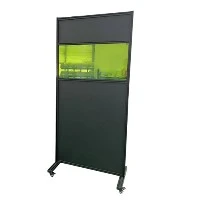

As laser technology continues to advance across industrial manufacturing, healthcare, scientific research, and semiconductor production, workplace laser safety has become a growing focus worldwide. According to recent industry analyses, the increasing adoption of high-power laser systems is driving steady demand for certified laser safety glasses and other laser protective equipment.
Organizations responsible for workplace safety are paying greater attention to laser eye protection as governments, industry associations, and safety professionals continue emphasizing compliance with internationally recognized laser safety standards.
Unlike conventional safety eyewear, laser safety glasses are specifically designed to reduce laser radiation at designated wavelengths while maintaining sufficient visible light transmission (VLT). Selecting the correct protective eyewear has become an essential part of Environmental, Health and Safety (EHS) management in facilities where laser systems are routinely operated.

Workplace Eye Safety Remains a Critical Concern
Laser radiation can cause irreversible eye injuries within milliseconds if adequate protection is not used. Depending on the wavelength, power output, and exposure duration, accidental laser exposure may result in retinal burns, corneal damage, or permanent vision loss.
Safety guidance published by organizations such as the Laser Institute of America (LIA), ANSI, and OSHA consistently recommends implementing appropriate engineering controls, administrative procedures, and wavelength-specific personal protective equipment (PPE) to minimize laser hazards.
A common misconception is that dark-tinted safety glasses provide laser protection. In reality, lens tint only reduces visible brightness and does not necessarily block hazardous laser wavelengths. Without certified optical filtering technology, ordinary safety glasses cannot provide reliable laser eye protection.
Industrial Automation Continues to Drive Market Growth
The rapid expansion of smart manufacturing is one of the primary drivers behind the global laser safety equipment market.
Modern production facilities increasingly rely on fiber lasers, CO₂ lasers, UV lasers, and other high-energy laser systems for applications including:
- Laser cutting
- Laser welding
- Laser engraving
- Laser marking
Additive manufacturing (3D printing)
As laser power and processing precision continue to improve, the risk of scattered and reflected laser radiation has also increased. Consequently, certified laser safety goggles are becoming standard equipment in manufacturing plants, electronics factories, automotive production lines, and aerospace facilities.
Industry safety specialists generally agree that improperly selected or uncertified laser protective eyewear may create a false sense of security rather than providing effective protection. Matching eyewear to the operating laser wavelength remains one of the most important safety requirements.
Medical and Research Applications Continue to Expand
Beyond industrial manufacturing, healthcare and scientific research have become significant contributors to demand for professional laser protective eyewear.
Medical professionals performing dermatology procedures, ophthalmic surgery, cosmetic treatments, and dental laser therapy frequently work with multiple laser wavelengths throughout the day. Even low-level scattered laser radiation may present cumulative risks during long-term exposure, making specialized laser eye protection an important component of clinical safety protocols.
Research laboratories, universities, and photonics institutes also require wavelength-specific laser safety glasses for optical experiments and precision laser systems. These environments often demand higher optical clarity, stable optical density, and comfortable designs suitable for extended laboratory work.

Choosing the Right Laser Safety Glasses
There is no universal pair of laser safety glasses suitable for every laser application. Effective protection depends on selecting eyewear that matches the technical specifications of the laser system being used.
Key selection factors include:
- Laser Wavelength (nm): Protection must correspond to the exact operating wavelength of the laser. Eyewear designed for one wavelength may provide little or no protection against another.
- Optical Density (OD): Indicates the lens's ability to attenuate laser energy. Higher-powered lasers generally require higher OD ratings.
- Laser Operating Mode: Continuous Wave (CW) and Pulsed lasers have different energy characteristics and may require different protective specifications.
- Laser Power and Exposure Conditions: Higher output power and longer exposure durations typically require stronger protection.
- Visible Light Transmission (VLT): Adequate VLT helps maintain clear vision while reducing operator fatigue.
- Certification and Compliance: Products should comply with recognized international standards and provide complete technical documentation.
Experts also emphasize that lens color alone should never be used to judge protective performance. Laser protection depends on certified optical filtering technology rather than appearance.
International Standards Help Ensure Reliable Protection
Selecting certified laser safety eyewear is essential for maintaining workplace safety and regulatory compliance.
Commonly recognized standards include:
- EN 207 – European standard for laser protective eyewear used during laser operation.
- EN 208 – European standard for laser alignment and adjustment eyewear.
- ANSI Z136 – Widely referenced U.S. laser safety guideline covering hazard assessment and protective equipment selection.
- CE Certification – Indicates compliance with applicable European health and safety requirements.
Manufacturers should provide detailed specifications including protected wavelength ranges, Optical Density values, testing information, and product certification to help users select appropriate protection.
Market Outlook
Market analysts expect continued growth in the global laser safety equipment industry as advanced manufacturing, semiconductor fabrication, medical technology, and photonics research continue expanding.
At the same time, manufacturers are introducing lighter lens materials, anti-fog and anti-scratch coatings, improved frame ergonomics, and broader wavelength coverage to enhance both safety and user comfort.
As workplace safety regulations become more comprehensive worldwide, certified laser safety glasses are increasingly being included as standard equipment with laser systems across many industries.

Conclusion
As laser applications continue to expand across manufacturing, healthcare, research, and education, effective eye protection remains a fundamental component of workplace safety.
Industry safety professionals recommend selecting laser safety glasses based on laser wavelength compatibility, Optical Density (OD), certified performance, and compliance with recognized international standards rather than appearance or price alone.
Using properly certified, wavelength-specific laser protective eyewear can significantly reduce the risk of laser-related eye injuries while helping organizations support safer operations and meet applicable safety requirements.