



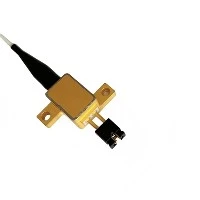
Laser engraving technology has been widely used in many fields due to its advantages of high precision, high efficiency and non-contact processing. Whether it is traditional materials such as metal, wood, plastic, or high-hardness materials such as glass and ceramics, laser engraving can achieve fine patterns and text engraving. With the advancement of science and technology, laser engraving technology has been continuously innovated, providing strong support for various industries.
Ceramic materials are favored in industrial manufacturing and artistic creation due to their high hardness, high temperature resistance, and high brittleness. However, these characteristics also bring many challenges to the processing of ceramic materials. Traditional mechanical processing methods are prone to cracks and breakage of ceramic materials, while chemical corrosion processing has problems of environmental pollution and difficult to control processing accuracy. Therefore, it is particularly important to find an efficient, accurate and environmentally friendly ceramic processing method.

Technical characteristics of 450nm laser
1. Wavelength and energy characteristics
Short wavelength and high energy: 450nm belongs to blue laser, which is in the blue-violet region of the visible spectrum and has high photon energy. Compared with some common laser types, such as CO2 laser (10.6μm) and fiber laser (1064nm), its wavelength is shorter and its energy is higher. This enables 450nm laser to achieve higher energy absorption and conversion efficiency when interacting with materials. For example, in metal processing, short-wavelength blue laser can be better absorbed by free electrons in metals, thereby quickly raising the temperature of the material and achieving efficient processing.
High-precision processing: Due to its short wavelength, 450nm laser can achieve a smaller spot size, and after focusing, it can obtain extremely high energy density, thereby achieving high-precision processing. Its accuracy can reach the micron level, which is suitable for projects with extremely high processing accuracy requirements, such as electronic chip manufacturing, precision machining and other fields.
2. Typical power range
Common power range: The typical power range of 450nm laser engraving machine is generally between 1W-20W. This power range can meet the shallow engraving needs of most non-metallic materials, such as wood, plastic, acrylic, leather and other materials. For some thinner metal materials, such as stainless steel, copper and other non-ferrous metals, a certain degree of engraving and marking can also be performed within this power range.
3. Applicable material types
Metal materials: It can be used to process non-ferrous metals such as stainless steel, copper, aluminum and some other metals. Although the processing ability of 450nm laser for metal is relatively not as strong as CO2 laser or fiber laser, it is still effective for engraving, marking and some fine processing tasks of thin metal plates.
Non-metallic materials: It has a good processing effect on organic materials such as wood, plastic, acrylic, leather, paper, fabric, etc., and can achieve exquisite pattern engraving, text marking, etc. In addition, for hard and brittle materials such as ceramics and glass, engraving can also be performed at a certain power, mainly used to make exquisite patterns and patterns.

Laser processing characteristics of ceramic materials
1. Physical and chemical properties of ceramic materials
High melting point and high hardness: Ceramic materials have extremely high melting points, mostly above 2000℃ (such as the melting point of zirconium oxide is around 2700℃), and at the same time, the hardness of ceramics is also very high.
Brittleness: A notable feature of ceramic materials is high brittleness, low tensile strength, poor plasticity and toughness. This characteristic causes ceramics to break easily when subjected to impact or tensile force.
2. Traditional ceramic processing methods
Mechanical engraving: Use high-hardness tools or grinders to engrave on the surface of ceramics, which is suitable for simple patterns and text engraving.
Sandblasting: Use high-speed sprayed sand particles to impact the surface of ceramics and remove materials to form the desired pattern or shape. This method is suitable for large-area surface treatment.
High-power laser ablation: Use high-energy laser beams to irradiate ceramic materials to quickly melt or vaporize the materials, thereby achieving fine processing. This method is suitable for processing complex shapes and high-precision requirements.
3. Interaction between laser and ceramics
Absorption rate: The absorption efficiency of ceramics for lasers of different wavelengths varies significantly. Generally speaking, ceramics have low absorption efficiency in the visible and near-infrared regions, but strong absorption in the ultraviolet region. This absorption characteristic affects the effect of laser processing of ceramics.
Thermal effect: When the laser is irradiated on the ceramic material, the material absorbs the light energy and converts it into heat energy, causing the temperature to rise. Local high temperature may cause the ceramic material to crack or melt. Therefore, the power and irradiation time of the laser need to be controlled during laser processing to avoid excessive heating.
Phase change: In some cases, the high temperature induced by the laser can cause the ceramic material to undergo a phase change, such as from solid to liquid or gas. This phase change may change the properties of the material or cause damage to the material.
Applicable scenarios for 450nm laser engraving ceramics
1. Shallow marking (such as text, LOGO) rather than deep engraving
Daily ceramics: On daily ceramic products, such as tableware, tea sets, etc., 450nm lasers can be used to engrave exquisite patterns or text on their surfaces to increase the decorative and artistic value of the products. These engravings usually do not need to be too deep, so as not to affect the practicality of the product.
Craft ceramics: On craft ceramic products, such as vases, sculptures, etc., 450nm lasers can be used to engrave delicate textures or patterns on their surfaces to enhance the ornamental and artistic value of the products. Similarly, these engravings are also mainly limited to shallow markings.
2. Thin-layer ceramic or ceramic coating processing
① Thin-layer ceramic processing
Electronic ceramic substrates: When manufacturing electronic ceramic substrates, if the substrate is thin and has high precision requirements, 450nm lasers can be used for shallow marking or micro-machining. This helps to form fine circuit patterns or logos on the substrate without damaging the overall structure of the substrate.
Thin film ceramic materials: For thin film ceramic materials, such as thin film coatings for sensors or catalyst carriers, 450nm lasers can perform surface micromachining or marking without penetrating the coating. This helps maintain the integrity and functionality of the thin film material.
|
|
|


② Ceramic coating processing
Wear-resistant coatings: On wear-resistant ceramic coatings coated on the surface of mechanical parts, shallow marking or micromachining can be performed using 450nm lasers to form specific patterns or logos. This helps improve the wear resistance and aesthetics of the parts.
Insulation coatings: On ceramic insulation coatings coated on parts that require insulation, shallow marking or micromachining can also be performed using 450nm lasers. This helps add additional functions or logos to the parts without affecting the insulation performance.
In summary, 450nm laser engraving ceramics is particularly suitable for shallow marking (such as text, LOGO) and the processing of thin layers of ceramics or ceramic coatings. These application scenarios make full use of the advantages of 450nm lasers in shallow marking while avoiding its limitations in deep engraving.
Contact information:
If you have any ideas, feel free to talk to us. No matter where our customers are and what our requirements are, we will follow our goal to provide our customers with high quality, low prices, and the best service.
 Email:info@loshield.com
 Tel:0086-18092277517
 Fax: 86-29-81323155
 Wechat:0086-18092277517


