



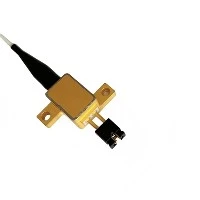
The application of visible fiber lasers in laser biosensors, with its high sensitivity and precision, provides new possibilities for the detection and analysis of biomolecules. By utilizing the unique wavelength tunability and high light brightness of visible fiber lasers, these laser biosensors can achieve efficient identification and quantitative determination of specific biomarkers, thereby promoting the development of fast, accurate and portable detection methods in fields such as medical diagnosis, environmental monitoring and biotechnology.

Laser biosensors are efficient analytical devices that combine laser light sources and biorecognition elements to detect specific chemicals or biomolecules. The working mechanism of these sensors is usually based on changes in optical properties, such as fluorescence, absorption or scattering, when the laser interacts with biomolecules in the sample. The high energy output and monochromaticity of the laser make this type of sensor highly sensitive and specific, enabling real-time and continuous monitoring.
1. Application Examples
Medical diagnosis: used to detect pathogens, biomarkers and protein concentrations to help diagnose diseases such as cancer, diabetes, etc.
Environmental monitoring: monitoring harmful substances in water quality, such as heavy metals and organic pollutants.
Food safety: detecting harmful substances in food, such as bacteria and pesticide residues.
Biotechnology: Used for rapid identification and quantification of biomolecules in drug development and laboratory research.
2. Limitations
Although laser biosensors have many advantages, they also face some challenges and limitations:
Complexity: The design and operation of some laser biosensors may be relatively complex and require expertise.
Cost: High-performance laser systems may be costly, limiting their popularity and application.
Stability: The long-term stability of biorecognition elements may affect the performance and reliability of the sensor.
Interference: Interference from other components in the sample may cause false alarms or signal attenuation, affecting the accuracy of detection.
In general, laser biosensors are valued for their high sensitivity and real-time monitoring capabilities, but their application and optimization are still under continuous research to overcome existing limitations and expand their application range.
The application of visible fiber lasers in the field of biosensors has brought significant advantages and progress to biodetection technology with its unique optical properties and flexible fiber transmission capabilities. These advantages not only improve the sensitivity and specificity of biodetection, but also provide strong support for innovation and development in medical diagnosis, environmental monitoring, food safety and other fields.
1. Advantages
High sensitivity: Visible fiber lasers provide high-intensity and highly focused beams, allowing biosensors to detect extremely low concentrations of biomarkers.
Wavelength tunability: By adjusting the wavelength of the laser, the sensor's absorption or fluorescence response to specific biomolecules can be optimized, enhancing the selectivity of detection.
Compatibility and integration: The small size and flexibility of fiber lasers make them easy to integrate with other optical components, making it easy to build portable and miniaturized biosensing systems.
Low loss and high light brightness: Fiber lasers have high light transmission efficiency and low loss, and can achieve long-distance transmission without losing their intensity, making them suitable for building remote monitoring systems.
2. Improve sensitivity and specificity
Enhanced detection of fluorescent markers: Using visible fiber lasers as excitation sources, for specific fluorescent markers (such as fluorescent dyes or fluorescent proteins), the fluorescence signal can be greatly enhanced to achieve high-sensitivity detection of low-abundance biomolecules.
Surface plasmon resonance (SPR) technology: Combining visible fiber lasers with SPR technology, interactions between biomolecules, such as antigen-antibody binding, can be monitored by measuring changes in light absorption, thereby achieving highly specific biological detection.
Raman spectroscopy: Raman scattering measurements using visible fiber lasers can identify specific biomolecules by analyzing the chemical fingerprint of samples. This method is particularly valuable for studying complex biological systems.
The application of visible fiber lasers has shown great potential in the field of biosensors. It not only improves the sensitivity and specificity of biological detection, but also promotes the development of new biosensors, which have important application prospects in many fields such as disease diagnosis, environmental monitoring, and food safety. With the continuous advancement of technology, it is expected that visible fiber lasers will play a more critical role in biosensing technology in the future.
Practical applications of visible fiber lasers in the field of biosensing:
Case 1: Fiber laser biosensor for early detection of cancer
Application field: Medical diagnosis
Description: A research team has developed a biosensor based on visible fiber lasers for detecting cancer biomarkers in the blood. By using lasers of specific wavelengths, the sensor is able to excite fluorescent tags marked on biomarkers, thereby achieving high-sensitivity detection of cancer markers.
Success impact: The technology has been successfully applied in clinical trials, showing higher sensitivity and specificity than traditional methods, providing new possibilities for early diagnosis and treatment monitoring of cancer.
Case 2: Fiber laser biosensor in environmental monitoring
Application area: Environmental monitoring
Description: An environmental monitoring project uses visible fiber laser technology to detect heavy metal pollution in water bodies. Researchers designed a sensor that uses laser-induced fluorescence spectroscopy to identify and quantify heavy metal ions such as copper and mercury in water.
Successful impact: The sensor has been applied to multiple water monitoring points, demonstrating its real-time and continuous monitoring capabilities, effectively assisting environmental protection agencies in water quality monitoring and management.
Case 3: Portable fiber laser biosensor for food safety detection
Application area: Food safety
Description: In the field of food safety, an innovative portable fiber laser biosensor has been developed for rapid detection of pathogens such as E. coli and Salmonella in food. This sensor combines specific biometric elements with visible fiber laser technology to complete detection within minutes.
Successful impact: This portable sensor has been used in the food production and processing industry, improving the efficiency and accuracy of food detection and ensuring consumers' food safety.
Case 4: Application of fiber laser biosensors in biotechnology research
Application area: Biotechnology
Description: In the field of biotechnology, visible fiber lasers are used to develop a new type of biosensor for real-time monitoring of metabolic activity in cell culture. By measuring the fluorescence signal of specific compounds in the culture medium, researchers can understand the growth status and metabolic changes of cells.
Success impact: This sensor provides a powerful tool for biomedical research and drug development, allowing scientists to better understand cell physiology and pharmacological processes.
These case studies show that the application of visible fiber lasers in the field of biosensing has a wide range of potential and practical effects, from improving the accuracy of medical diagnosis to promoting environmental monitoring and food safety, to promoting the development of biotechnology research, they are becoming a key component of modern biosensing technology.
Contact information:
If you have any ideas, feel free to talk to us. No matter where our customers are and what our requirements are, we will follow our goal to provide our customers with high quality, low prices, and the best service.
 Email:info@loshield.com
 Tel:0086-18092277517
 Fax: 86-29-81323155
 Wechat:0086-18092277517


