

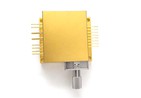


The laser multi-wavelength beam combiner is an advanced optical device that can combine laser beams of different wavelengths into a single beam output. Through precise optical design, it allows two or more lasers of different wavelengths to overlap in space and achieve common transmission without losing their respective characteristics. This technology plays a key role in improving the functional flexibility and application range of laser systems.

Laser multi-wavelength beam combiners allow different wavelength beams emitted by multiple laser sources to act on a target at the same time or be transmitted through the same optical system, achieving wavelength diversity and selective utilization; enhancing the accuracy and efficiency of laser processing, and by precisely controlling lasers of different wavelengths, more sophisticated operations and better processing effects can be achieved in scenarios such as material processing, optical communications, and medical treatment.
The technical principle of laser multi-wavelength beam combiners is mainly based on optical filtering and interference technology. It uses specific optical components, such as beam splitters, gratings, or interference filters, to separate lasers of different wavelengths and guide them into the same optical path. These components can selectively reflect or transmit light of different wavelengths, thereby achieving the purpose of merging multiple wavelengths of light into a single beam. For example, a dichroic mirror can transmit light of a certain wavelength range and reflect other wavelengths, so that light of different colors can be combined. In addition, by precisely controlling the angle and phase of each beam, it can be ensured that they can maintain coherence when combined, which is crucial for certain high-precision applications (such as interferometry).
JTBYShield laser combiner main features:
- Combines four different color laser beams into one beam, and can choose a fiber-coupled output or free-space output.
- Each laser can be individually controlled on/off by a TTL signal up to 20 MHz. High-speed digital modulation allows rapid switching of laser wavelengths in arbitrary patterns for complex experiments;
- Analog control options are available to control the output power level of each laser.
- Proprietary thermal management technology enables Nordic combiners to provide stable output for multiple lasers and achieve low power consumption in a compact housing. Single-mode fiber-coupled systems can achieve 2% stable output within 24 hours
- For special requirements for combining multiple wavelengths from UV visible light to infrared lasers, please contact us directly.
Laser multi-wavelength combiner in application areas:
1. Biophotonics and metrology applications
Nordic combiner laser engine: This laser engine is designed to support biophotonics research, such as microscopy, cell counting, and DNA sequencing and other high-precision applications. By providing multiple wavelengths of laser output, researchers can perform multiple experiments on the same device, improving experimental efficiency and data processing flexibility.
Application value and practical impact: In metrology, such as scatterometry and ellipsometry, the use of multi-wavelength laser beam combiners can enhance the accuracy of measurements and multi-dimensional analysis capabilities, which is particularly important for detailed analysis of materials science and biological samples.
2. Confocal microscopy
Specific uses and benefits: Confocal microscopy relies on multi-wavelength lasers to obtain images of different fluorescent markers of samples. The use of multi-wavelength beam combiners allows the microscope to excite and detect multiple fluorescent markers at the same time, greatly improving the clarity of the image and the speed of analysis.
Application value and practical impact: This technology is particularly suitable for biomedical research that requires high-resolution and multi-channel imaging, such as detailed observation of cell structure and tissue.
3. Flow cytometry
Specific uses and benefits: The multi-wavelength beam combiner in flow cytometry can use lasers of different wavelengths to distinguish and count different types of cells at the same time, which is critical for disease diagnosis and treatment monitoring.
Application value and practical impact: Improved processing speed and data accuracy, making cell analysis and classification more efficient and reliable.
4. Fluorescence, optogenetics and neuroscience
Specific uses and benefits: In fluorescence labeling and optogenetics experiments, multi-wavelength beam combiners can precisely control lasers of different wavelengths to activate specific genes or track neural activity.
Application value and practical impact: These technologies are of great significance for understanding brain function and developing related treatments.
5. Genomics, photosensitive localization microscopy and other imaging technologies
Specific uses and benefits: The use of multi-wavelength beam combiners can achieve fast, multi-color DNA mapping in genomics research, while in photosensitive localization microscopy systems, the spatial resolution of images can be improved.
Application value and practical impact: It provides scientific research with higher-level imaging technology and gene analysis tools, and promotes the progress of scientific research and medical diagnosis.
6. Rhodopsin stimulation, drug research and white light holography
Specific uses and benefits: In rhodopsin stimulation experiments, multi-wavelength beam combiners can precisely control the wavelength and intensity of light to study the response of the visual system. In drug research, different wavelengths of light can be used to activate or inhibit the response of specific drugs.
Application value and practical impact: These applications help to deeply understand the human body's response to light and the effects and safety of new drugs, providing a powerful tool for medical research and new drug development.
The technology of laser multi-wavelength beam combiner has demonstrated its significant application value and far-reaching practical impact in many fields. First, in the field of communication technology, the device enhances the ability of data transmission through wavelength division multiplexing (WDM) technology, greatly improving the efficiency and capacity of the network while reducing the cost of operators. Second, in environmental monitoring, laser multi-wavelength beam combiner makes it possible to monitor multiple pollutants at the same time, providing more comprehensive environmental data, and providing strong support for the formulation of environmental protection policies and countermeasures. Finally, in medical treatment, especially in photodynamic therapy (PDT), the application of this device improves the accuracy and efficiency of treatment, reduces the impact on healthy tissue, and has the potential to shorten the recovery time of patients.
As one of the industry's leading laser manufacturers, JTBYShield can provides lasers with multiple wavelength models to meet the needs of different customers. Whether in the fields of communication, environmental monitoring or medical treatment, JTBYShield's products can provide solutions that match the different needs of customers. If you are interested, we will be very happy to talk to you further and hope to become your reliable partner.
Contact information:
If you have any ideas, feel free to talk to us. No matter where our customers are and what our requirements are, we will follow our goal to provide our customers with high quality, low prices, and the best service.
 Email:info@loshield.com
 Tel:0086-18092277517
 Fax: 86-29-81323155
 Wechat:0086-18092277517


