



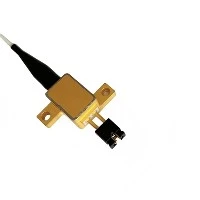
1550 nm fiber lasers is a mid-infrared laser based on Erbium-doped Fiber (EDF) or Er/Yb Co-doped Fiber (Er/Yb Co-doped Fiber). Because its wavelength is within the eye-safe range and highly matches the lowest loss window (~0.2 dB/km) of quartz fiber, 1550 nm lasers are widely used in optical communications, lidar, medical treatment, industrial processing, and national defense.
In recent years, with the rapid development of fiber laser technology, 1550 nm lasers have made significant breakthroughs in power, beam quality, and tunability. This article systematically introduces the technical principles and core advantages of 1550 nm fiber lasers, and discusses in detail its specific applications in various industries. Finally, it looks forward to future development trends.

Technical principles and advantages of 1550 nm fiber lasers
1. Working principle
1550 nm fiber lasers usually use erbium-doped fiber as the gain medium and 980 nm or 1480 nm laser diodes (LDs) as pump sources. When erbium ions (Er³⁺) absorb the energy of pump light, energy level transitions occur and emits laser light with a wavelength of 1550 nm during relaxation. Its energy level transition process can be simplified as follows:
Ground state (⁴I₁₅/₂) → excited state (⁴I₁₃/₂): 1550 nm photons are generated through non-radiative transitions.
In erbium-ytterbium co-doped fibers, ytterbium ions (Yb³⁺) can enhance pump absorption efficiency and increase laser output power.
2. Technical advantages
Compared with other wavelength lasers (such as 1064 nm, 10.6 μm CO₂ lasers), 1550 nm fiber lasers have the following advantages:
Eye safety
The retinal hazard factor (MPE, Maximum Permissible Exposure) of 1550 nm lasers is much lower than that of visible light and near-infrared lasers (such as 1064 nm), making it safer in open environments (such as lidar, military applications).
Low fiber transmission loss
1550 nm is located in the third transmission window of quartz fiber (C band, 1530-1565 nm), with a loss of only about 0.2 dB/km, which is suitable for long-distance optical communications.
High beam quality and stability
The waveguide structure of the fiber laser gives it a beam quality close to the diffraction limit (M²≈1), which is suitable for precision machining and optical sensing.
Tunability and narrow linewidth
Through fiber Bragg grating (FBG) or tunable filter, wavelength tuning (such as 1520-1620 nm) and kHz-level narrow linewidth output can be achieved, which is suitable for coherent optical communication and laser spectroscopy.
High power scalability
Using the master oscillator power amplifier (MOPA) structure, the 1550 nm fiber laser can achieve watt-level to kilowatt-level output, meeting the needs of industrial cutting, lidar, etc.
Main applications of 1550 nm fiber lasers
1. Fiber-optic communication and data transmission
1550 nm is the core wavelength of optical communication, and its main applications include:
(1) Long-distance fiber-optic communication
The low loss characteristics of 1550 nm lasers make it the preferred light source for submarine optical cables and intercontinental communications. For example, the trans-Pacific submarine optical cable system mainly uses dense wavelength division multiplexing (DWDM) technology in the C band (1530-1565 nm), and the single-fiber transmission capacity can reach more than 100 Tbps.
(2) Dense wavelength division multiplexing (DWDM)
In data centers and 5G networks, DWDM technology uses multiple wavelength channels (such as 40/80/160 channels) near 1550 nm to achieve high-speed data transmission and improve fiber bandwidth utilization.
(3) Coherent optical communication
Narrow linewidth 1550 nm lasers (linewidth <100 kHz) combined with high-order modulation formats (such as QPSK, 16-QAM) can achieve a single-wavelength transmission rate of more than 100 Gbps, and are widely used in backbone networks and metropolitan area networks.
2. LiDAR and remote sensing
(1) Autonomous driving LiDAR
Compared with 905 nm LiDAR, 1550 nm LiDAR has stronger atmospheric penetration and eye safety, and has become the mainstream choice for high-end autonomous driving (such as Waymo and Luminar). For example, Luminar's IRIS LiDAR uses a 1550 nm fiber laser with a detection distance of up to 250 meters.
(2) Atmospheric remote sensing and meteorological monitoring
Differential absorption LiDAR (DIAL) uses 1550 nm lasers to detect water vapor (H₂O) and carbon dioxide (CO₂) concentrations in the atmosphere for climate research and pollution monitoring.
3. Medical and bio-imaging
(1) Laser beauty and skin treatment
1550 nm non-ablative fractional lasers (such as Fraxel) can stimulate collagen regeneration and are used for cosmetic applications such as wrinkle removal and scar repair.
In vascular treatment, 1550 nm lasers can selectively heat hemoglobin for closed treatment of spider veins and varicose veins.
(2) Optical coherence tomography (OCT)
1550 nm OCT systems (such as ophthalmic OCT) have a deeper tissue penetration depth (~2 mm) and can be used for early diagnosis of retinal diseases and glaucoma.
4. Industrial processing and sensing
(1) Precision material processing
1550 nm lasers are suitable for fine cutting and marking of plastics and polymer films and are widely used in electronic packaging and flexible circuit manufacturing.
(2) Fiber optic sensing
1550 nm sensors based on fiber Bragg gratings (FBGs) can be used to monitor strain and temperature changes in structures such as bridges, aircraft, and oil pipelines to achieve structural health monitoring (SHM).
5. Defense and security
(1) Free space optical communication (FSO)
The anti-interference and low probability of intercept (LPI) characteristics of 1550 nm laser make it an ideal choice for military confidential communications.
(2) Infrared countermeasures and laser blinding
High-power 1550 nm laser can be used to interfere with infrared-guided missiles or as a non-lethal laser dazzling weapon.
Future Development Trends
Ultrafast Fiber Lasers
1550 nm femtosecond lasers have broad application prospects in nonlinear optics (such as terahertz generation) and micro-nano processing.
Photonic Integration and Silicon Photonics
1550 nm laser chips based on silicon photonics can reduce the cost of optical communication modules and promote the development of optical interconnection in data centers.
Quantum Communication and Computing
1550 nm single photon sources are of great value in quantum key distribution (QKD) and optical quantum computing.
1550 nm fiber lasers have become key technologies in optical communications, lidar, medical and defense fields due to their advantages such as eye safety, low loss and high beam quality. In the future, with the development of ultrafast lasers, photonic integration and quantum technology, the application scope of 1550 nm fiber lasers will be further expanded, promoting continuous innovation in the optoelectronics industry.
Contact information:
If you have any ideas, feel free to talk to us. No matter where our customers are and what our requirements are, we will follow our goal to provide our customers with high quality, low prices, and the best service.
 Email:info@loshield.com
 Tel:0086-18092277517
 Fax: 86-29-81323155
 Wechat:0086-18092277517


