



Choosing the right laser diode for red light therapy (RLT) requires understanding the balance between clinical efficacy, safety, practicality, and cost. For most personal/at-home RLT devices, high-powered 660nm (deep red) and 850nm (near-infrared) laser diodes are the gold standard combination.

Key Parameters for RLT Laser Diodes:
Wavelength: This is the most critical factor. It determines the depth of penetration and the specific cellular mechanisms activated.
630-660nm (Visible Red): Excellent for skin surface issues, wound healing, and anti-inflammatory effects. Absorbed by mitochondria, stimulating ATP (energy) production.
810-850nm (Near-Infrared - NIR): Penetrates much deeper (into muscles, joints, and bones). Ideal for deep tissue pain, muscle recovery, and systemic effects.
Dual Wavelength (e.g., 660nm + 850nm): Most modern, high-end devices use this combination to target both superficial and deep tissues simultaneously.
Power Output: Measured in milliwatts (mW) per diode. For laser therapy, you need sufficient power to deliver a therapeutic dose (measured in Joules or J/cm²) in a reasonable time.
Typical Range: 50mW to 200mW per diode is common in consumer devices. Higher power (e.g., 500mW+) is used in professional/clinic devices.
Why it matters: A 100mW diode delivers energy twice as fast as a 50mW diode. Time (seconds) = Dose (J/cm²) / Power Density (W/cm²).
Beam Type & Coherence: True lasers are coherent (light waves are in sync). Many cheaper "red light" devices use LEDs, which are incoherent.
Laser Diode Advantage: Coherent light may have superior tissue penetration due to less scattering (the "laser vs. LED" debate is ongoing, but lasers are generally considered more potent for targeted therapy).
Important: The beam from a bare laser diode is highly focused and dangerous to the eyes. It must be diffused or scattered before reaching the skin to create a safe, even treatment area.
Recommended Laser Diodes for RLT Applications:
Here's a breakdown by use case:
1. For Professional/Clinic-Grade Devices:
Wavelength: 808nm or 850nm (for deep tissue), often combined with 660nm arrays.
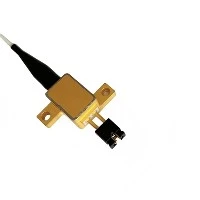
Power: High-power single-emitter diodes, 1W to 5W+. These are often fiber-coupled for precise delivery in handheld wands or probes.
Example Parts: Osram PLTB450B (450mW, 808nm) or similar high-reliability industrial diodes.
Note: These require serious heatsinking, driver circuitry, and safety interlocks. Not for DIY beginners.
2. For High-End Consumer/At-Home Devices (e.g., belts, panels, handheld units):
Wavelength: Dual 660nm & 850nm is the ideal combination.
Power: 100mW to 200mW per diode is a sweet spot. Diodes are arranged in arrays or clusters to cover larger areas.
Example Parts: Common 5.6mm or 3.8mm diode packages from manufacturers like Luminous or Kingbright.
For 660nm: L660P200 (200mW, 660nm)
For 850nm: L850P200 (200mW, 850nm)
Why they're good: They offer a balance of power, size, and cost, are readily available, and are designed for integration into PCB arrays.
3. For Low-Cost/Entry-Level Consumer Devices:
These often mix 660nm laser diodes with 850nm LEDs (or use all LEDs) to keep costs down.
Power: Typically 50mW to 100mW per laser diode.
Example: Common 3W, 5W, or 10W LED-style packages that actually contain multiple low-power laser diode chips. Be cautious, as specs can be exaggerated.
Critical Safety & Design Considerations (MOST IMPORTANT SECTION)
Eye Safety: 660nm and 850nm laser light is INVISIBLE or barely visible to the eye and can cause permanent retinal damage. Any device must:
Use a diffuser lens or scattering film to break up the coherent beam.
Include safety goggles rated for the specific wavelength (e.g., OD6+ for 808-850nm).
Have a design that prevents direct eye exposure.
Driver Circuitry: Laser diodes are current-driven devices, not voltage-driven. They require a constant current driver with proper feedback to prevent thermal runaway (which destroys the diode instantly).
Heatsinking: Laser diodes generate heat. Inadequate heatsinking leads to rapid power loss (droop) and short lifespan. A thermoelectric cooler (TEC) is used in high-power professional devices.
Dosage: This is the cornerstone of effective therapy. It depends on:
Power Density (mW/cm²)
Treatment Time
Formula: Energy Density (J/cm²) = [Power Density (mW/cm²) × Time (seconds)] / 1000
The therapeutic window is generally 4-60 J/cm², with common doses for pain relief around 10-20 J/cm².
Final Recommendation Table:
| Use Case | Best Wavelength(s) | Typical Diode Power | Key Feature | Example Application |
|---|---|---|---|---|
| Deep Tissue / Pain Relief | 850nm (or 810nm) | 100mW - 1W+ | Deep penetration (>2cm) | Joint pain, muscle recovery |
| Skin & Wound Healing | 660nm | 50mW - 200mW | Superficial absorption | Acne, cuts, anti-aging, inflammation |
| Full-Body / Systemic | Dual: 660nm + 850nm | 100mW - 200mW each | Combines surface & deep benefits | Panels for whole-body wellness |
| Professional Targeted | 808nm (fiber-coupled) | 500mW - 5W+ | High power, precise delivery | Chiropractic, veterinary, sports med |
Bottom Line:
For a safe and effective personal red light therapy device, seek out products that use true laser diodes (not just LEDs) at 660nm and/or 850nm, with a stated output power per diode (e.g., 100mW), and that provide clear dosage guidelines (J/cm²).
Contact information:
If you have any ideas, feel free to talk to us. No matter where our customers are and what our requirements are, we will follow our goal to provide our customers with high quality, low prices, and the best service.
 Email:info@loshield.com; laser@loshield.com
 Tel:0086-18092277517; 0086-17392801246
 Fax: 86-29-81323155
 Wechat:0086-18092277517; 0086-17392801246


