



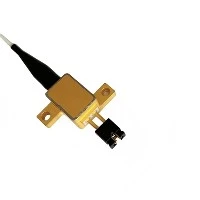
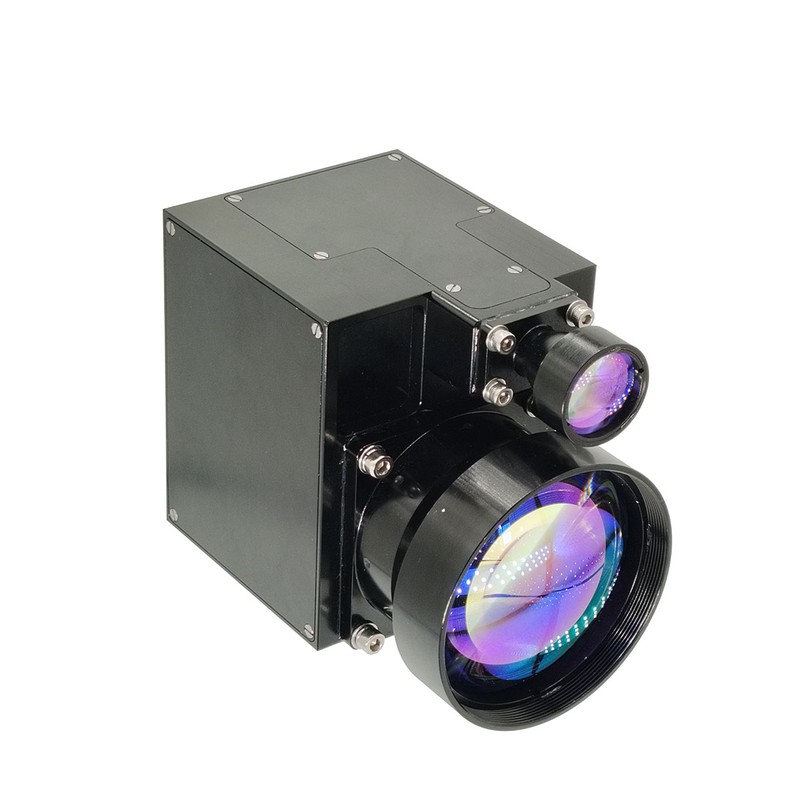
The 1535nm laser rangefinder module uses the principle of time-of-flight measurement to calculate the distance between the module and the target. The laser emits a short pulse of light with a wavelength of 1535nm towards the target. This pulse of light reflects off the target and returns to the module. The module then measures the time it took for the light to travel to the target and back using a high-speed clock. By calculating the time difference between the emitted pulse and the received pulse, the module can accurately determine the distance between itself and the target.
The 1535nm laser rangefinder module is designed to be highly accurate and reliable, making it an ideal solution for a variety of applications, such as surveying, mapping, and remote sensing. Its high accuracy and ability to measure distances over long ranges make it a valuable tool for industries ranging from construction and engineering to military and aerospace.
The 1535nm wavelength belongs to the near-infrared region.
There are several advantages to choosing this specific wavelength:
- Good atmospheric penetration: Compared with visible light, it has better penetration ability in certain weather conditions (such as fog or light haze).
- Eye safety: 1535nm is in the range where the human eye has very low sensitivity, so it is relatively safe even at relatively high power.
- Suitable for fiber optic communications: This wavelength is also one of the operating wavelengths of many fiber optic communication systems, which is convenient for integrating related technologies to improve performance.
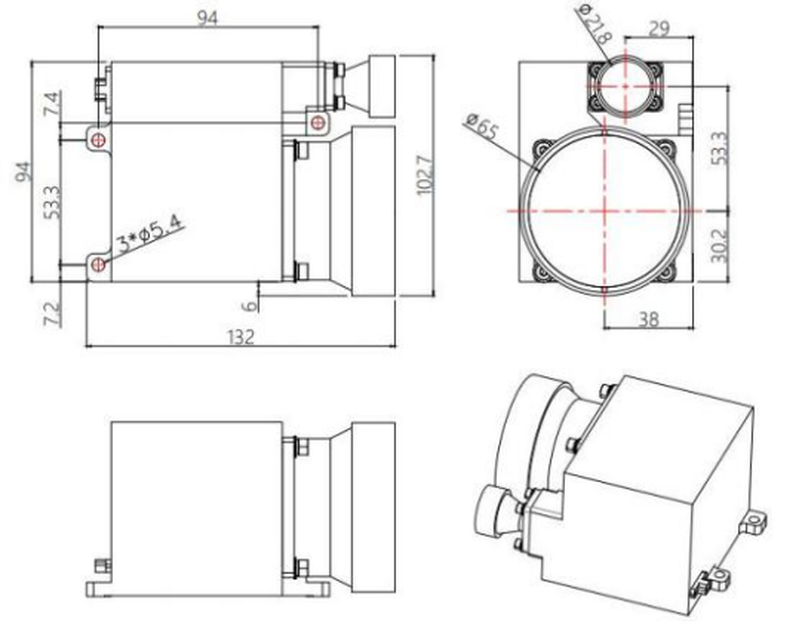
1535nm laser rangefinder module Dimensions (unit: mm):
Components:
- Laser Source:
A diode-pumped solid-state (DPSS) laser or fiber laser capable of generating stable 1535nm pulses.
- Receiver:
A highly sensitive photodetector, often an avalanche photodiode (APD) or a PIN diode, to detect the reflected laser signal.
- Timing Electronics:
Time-to-digital converter (TDC) or phase comparator to accurately measure the time-of-flight (ToF) of the laser pulse.
- Data Processing Unit:
Microcontroller or DSP to process the raw data and output the calculated distance.
- Optics:
Lenses and beam expanders to focus and collimate the laser beam, and to collect the returning signa
Applications:
- Geological Surveys:
Mapping large areas and measuring distances between geological features.
- Construction and Engineering:
Precise alignment and positioning of structures.
- Aerospace:
Ranging for aircraft and spacecraft navigation.
- Military and Defense:
Target acquisition and reconnaissance.
Conclusion:
In summary, the principle of the 1535nm laser rangefinder module is based on time-of-flight measurement, which involves emitting a short pulse of light towards the target and measuring the time it takes for the light to reflect off the target and return to the module. With its high accuracy and reliability, this module is an essential tool for many industries and applications.
If you have any ideas, welcome to talk with us. No matter where our customers are and what our requirements are, we will follow our goal to supply high quality, low price, and best service for our customers.
 Email: info@loshield.com
 Tel: 0086-18092277517
 FAX : 86-29-81323155
 WhatsApp:0086-18092277517
 Facebook
 LinkedIn
 Twitter
 Youtube
 Instagram