


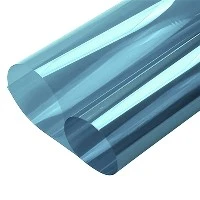

The Optical Filters is a device that selectively transmits light of different wavelengths, usually a flat glass or plastic device in the optical path, that is stained or has an interference coating. The optical properties of filters are described entirely by their frequency response, which specifies that the amplitude and phase of each frequency component of the input signal are modified through the filter.
Optical filters selectively transmit light in a specific wavelength range, that is, different colors while blocking the rest of the wave. They can usually block longer and shorter wavelengths (bandpass) only through long wavelengths (long pass), short wavelengths (short pass), or wavelength bands. The passband can be narrower or wider; The transition between max and min peaks can be sharp or gentle.
They are commonly used in photography (where special effects filters and absorption filters are occasionally used), in many optical instruments, and in color stage lighting. In astronomy, optical filters are used to limit the transmission of light in spectral bands of interest, and filters are also required in fluorescence applications such as fluorescence microscopy and fluorescence spectroscopy.

Classification of optical filters
It can be made in a variety of ways. The filter is one of them. Filters can also be made of gas or solution. The filter is a common filter, according to the spectral characteristics divided into passband filter and cut-off filter; Spectral analysis is divided into absorption filter and interference filter. It is mainly used as an auxiliary dispersion, such as in grating spectrometers used as a spectral level separator to eliminate the spectral overlap of lower order. The monochromator uses an interference filter to separate light in a very narrow band range.
Absorption filter
Absorption filters are usually made of glass with various inorganic or organic compounds added. These compounds absorb some wavelengths of light and transmit others. Compounds can also be added to plastics (usually polycarbonate or acrylic) to produce gel filters, which are lighter and cheaper than glass-based filters.
Dichroic filter (interference filter)
Dichroic filters (also known as "reflective" "thin film" or "interference" filters) can be made by coating a glass substrate with a series of optical coatings. Dichroic filters usually reflect the unwanted portion of light and transmit the rest.
Dichroic filters adopt the principle of interference. Their layers form a continuous series of reflective cavities resonant with the desired wavelength. When peaks and troughs overlap, other wavelengths are destructively eliminated or reflected.
Dichroic filters are particularly suited to precise scientific work because their precise color range can be controlled by the thickness and order of the coating. They are usually much more expensive and more delicate than absorption filters. They can be used in devices such as dichroic prisms for cameras to separate light beams into different colored components.
The Fabry-Perot interferometer is based on this principle. It uses two mirrors to create a resonator. The wavelength through which it passes is a multiple of the cavity resonant frequency. Another variation is a transparent cube or fiber whose polished end forms a mirror tuned to resonate with a specific wavelength. These are commonly used to separate channels in telecommunications networks using WDM over long-distance optical fibers.
Bandpass filter
Band-pass filters transmit only one wavelength band and block the others. The width of the filter is expressed as the range of wavelengths it is allowed to pass through and can be anything from much less than angstroms to several hundred nanometers. This filter can be made by combining an LP filter and an SP filter.
Examples of bandpass filters are the Lyot filter and the Fabry-Perot interferometer. The two filters can also be made into tunable filters so that the central wavelength can be selected by the user. Bandpass filters are often used in astronomy to make it easier for people to observe spectral lines that have associations.
Short pass filter
A short-pass (SP) filter is an optical interference or colored glass filter that attenuates longer wavelengths and transmits (through) shorter wavelengths within the effective range of the target spectrum (usually the ultraviolet and visible regions). In fluorescence microscopy, short-pass filters are often used in dichroic mirrors and excitation filters.
Long pass filter
Long pass (LP) filters are optical interference or colored glass filters that attenuate shorter wavelengths and transmit (through) longer wavelengths over the effective range of the target spectrum (ultraviolet, visible, or infrared). In fluorescence microscopy, long-pass filters are often used in chromatic mirrors and blocking (emission) filters.
Filters are distinguished by spectral bands
Filters are divided into: by the length of the spectrum distribution (i.e. the region of the spectrum) :
Ultraviolet filter
Visible light filter
Near-infrared filter
Infrared filter
Far infrared filter
The spectral wavelength range is as follows:
Uv filters 180~400nm
Visible light filter 400~700nm
Near-infrared filter 700~3000nm
Infrared filter 3000nm~10um
The Role of Filters in visual imaging
1. Improve color recognition and object discrimination.
2. Enhance the contrast to better see the required features.
3. Improve lens resolution by shortening the wavelength range of imaging.
4, can eliminate the bright light and hot spots produced by high-reflection surface
Contact information:
If you have any ideas, feel free to talk to us. No matter where our customers are and what our requirements are, we will follow our goal to provide our customers with high quality, low prices, and the best service.
 Email:info@loshield.com
 Tel:0086-18092277517
 Fax: 86-29-81323155
 Wechat:0086-18092277517


