



In modern manufacturing, Laser Cutting Machine technology is increasingly indispensable. It has the characteristics of high precision, fast speed and strong flexibility, and is widely used in many fields. CO₂ laser cutting machines stand out among many cutting technologies with their excellent performance and wide range of uses, becoming an indispensable core tool in modern manufacturing technology. The development of CO₂ laser cutting technology dates back to the 1960s, when it was mainly used in laboratories. With the advancement of technology, this cutting method is gradually accepted by the industry. Since the 21st century, with the rapid development of electronics and computers, the accuracy and speed of CO₂ laser cutting machines have been significantly improved. They can more accurately cut a variety of materials, including metals, non-metals and composite materials, to meet a variety of production needs.
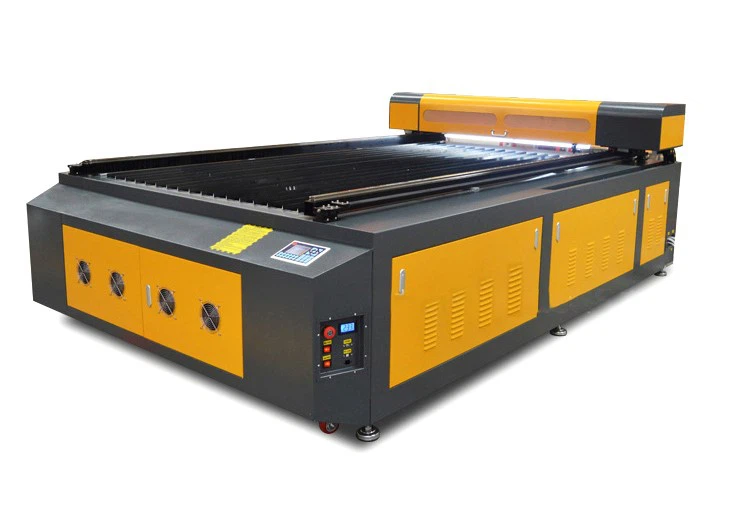
Basic principles of CO₂ laser cutting
CO₂ laser cutting is an advanced processing technology that generates a laser beam through CO₂ mixed gas under specific conditions and focuses and controls its movement to achieve precise cutting of materials. The technology is known for its high efficiency, high precision and adaptability and is widely used in modern industry.
Basic components of a CO₂ laser cutting machine
Laser generator: the core component of the machine. It uses electrical energy to excite CO₂ gas molecules to emit constant or pulsed laser light.
Optical system laser cutting machine: It includes components such as reflectors and lenses, which are used to transmit, guide and focus the laser beam onto the surface to be cut.
Machine tool laser head: It supports the material to be cut and is equipped with a precise drive system (such as a servo motor) to ensure that the laser head moves according to the intended path.
Control system: It is used to accept and design files, convert graphic information into cutting instructions, and at the same time monitor and adjust the operating status of the equipment.
Cooling system laser generator: maintain the operating temperature of the laser generator and other high-temperature components and maintain stable operation of the equipment.
Smoke exhaust and dust removal device: used to deal with smoke and waste generated during the cutting process to protect the working environment.
Process steps
The interior of the laser generator is filled with many mixed gases, such as CO₂, helium and nitrogen. Under the action of a high-voltage electric field, gas molecules absorb energy and transition to an excited state. High-energy gas molecules release photons as they return to their basic state, forming an intense laser beam. The optical system focuses these laser beams on an extremely fine spot, so that the beam on the focused spot has extremely high energy density. When the focused laser beam contacts the surface of the material, the instantaneous high temperature can quickly melt or even vaporize the material, allowing for precise cutting.
Materials compatible with CO₂ cutting
Metal Materials: Steel, Aluminum and Copper (special configuration required).
Non-metals: such as wood, plastic, glass, paper, cloth.
Composite materials such as carbon fiber and fiberglass.
Learn about the precision of CO₂ lasers
The accuracy of CO₂ laser cutting depends on the quality of the laser beam, the performance of the focusing system and the positional accuracy of the machine tool. Its high precision relies on the laser beam being able to focus on a very small spot, and the area affected by heat during the cutting process is smaller, thereby achieving micron-level cutting accuracy and high-quality trimming effects.

Types of CO₂ Lasers: Continuous Wave Lasers and Pulsed Lasers
According to the different laser emission methods, CO₂ laser cutting machines can be divided into two types:
Continuous wave emits laser continuously with stable power, suitable for situations where continuous cutting of thicker materials or high-speed continuous production is required.
Pulse laser emits laser light in the form of short, high-intensity energy pulses, which is particularly suitable for fine processing and cutting of thin materials. It can reduce energy input and reduce heat-affected areas while maintaining cutting quality.
Advantages of CO₂ laser cutting
Precision and accuracy
One of the advantages of CO₂ laser cutting technology is its extremely high precision and accuracy. The laser beam can be focused on a very small focus point, making the cutting width very narrow, the heat-affected area small, and micron-level cutting accuracy achieved. This high-precision feature not only ensures the smoothness and verticality of the cutting edge, but also excels in the manufacturing of complex shapes and fine parts, meeting the stringent requirements of aerospace, automotive parts and other precision manufacturing fields.
Diversity of materials and applications
CO₂ laser cutting machines can be applied to a variety of materials, including metals (such as stainless steel, carbon steel, aluminum, etc.) and non-metallic materials (such as wood, plastic, glass, leather, cloth). This flexibility makes CO₂ laser cutting technology widely used in multiple industries, from machine manufacturing and advertising and decoration industries to handicraft production. In addition, CO₂ laser cutting can easily handle whether it is large-scale production or small-scale production, providing a wealth of solutions for modern manufacturing.
Efficiency and speed
CO₂ laser cutting offers significant speed advantages compared to traditional cutting methods. High-power laser can instantly melt or evaporate materials, greatly improving cutting efficiency. At the same time, the CO₂ laser cutting machine can continuously run work items at high speed and complete long-term batch production tasks without supervision. In addition, its ability to quickly change between different cutting modes also reduces the time spent changing blades and adjusting tools, further improving overall work efficiency. CO₂ laser cutting has great advantages in improving efficiency, reducing labor and saving costs.
Limitations and considerations
Material limitations
CO₂ lasers mainly produce infrared light and are suitable for most metal and non-metal materials, such as stainless steel, carbon steel, aluminum, wood, leather, plastic, etc. For some highly reflective metals (such as copper and aluminum) or some extremely thin or thick materials, there will be problems such as low energy absorption efficiency and large heat-affected areas, which will affect the cutting effect and equipment life. Additionally, transparent or translucent materials are not suitable for CO₂ laser cutting because it is difficult for the laser to penetrate.
Safety and Operations
Safety and correct operation of CO₂ laser cutting are key to ensuring smooth production. The laser power is powerful and the focus is precise. If not properly protected, it can cause harm to the human body, especially the eyes. Therefore, operators must wear specialized protective glasses and ensure that the work area is free of physical barriers and smoke purification systems to reduce potential hazards and environmental pollution. At the same time, strict compliance with operating procedures, regular maintenance and inspection of equipment, and strengthening of safety training for operators are all important measures to ensure the safety of laser cutting operations.
Cost Analysis: Investment vs. Output
The introduction of CO₂ laser cutting technology means a relatively large initial investment, including equipment purchase, supporting system installation, consumable costs, and daily operation and maintenance costs. However, this technology can significantly improve production efficiency, optimize production accuracy, and reduce scrap rates. These advantages can be converted into long-term economic benefits. When enterprises evaluate whether to adopt CO₂ laser cutting, they should conduct a detailed cost-benefit analysis based on their own production capacity, product characteristics, market positioning and other factors, determine the investment cycle, ensure the ideal investment-output ratio relationship, and maximize utilization. This advanced technology creates value.
CO₂ laser cutting applications in various industries
Applications in aerospace
In the aerospace field that requires high technology and high precision, CO₂ laser cutting technology plays a decisive role. Its exceptional ability to carry out and accurately realize complex shape designs makes it ideal for manufacturing aircraft components and spacecraft structures. For example, CO₂ laser cutting is used to precisely manufacture titanium alloys, aluminum alloys and other aviation-specific materials to produce lightweight and high-strength fuselage parts, wing skins, engine parts, etc. At the same time, the laser cutting process is highly automated, which can effectively improve production efficiency, reduce manual errors, and ensure the high quality and consistency of aerospace products.
Role in automobile manufacturing
CO₂ laser cutting also plays an important role in automotive manufacturing, especially in body building and component processing. Due to its fast cutting speed, high precision and small heat-affected area, it can efficiently cut automotive steel plates, stainless steel plates and other metal plates, and can be used to generate various complex three-dimensional structural components, such as car doors, roofs, bumpers, etc. In addition, advanced laser cutting technology can help reduce material waste and optimize process flows, thereby reducing production costs while ensuring product quality, in line with the automotive industry's pursuit of lean production and sustainable development.
Use of Art and Design
CO₂ also excels in the creative fields of art and design. Designers can use this advanced technology to transform two-dimensional graphics into beautiful three-dimensional works. Whether it is metal sculptures, wooden crafts, leather goods or glass art, it can all be realized with precise and fine laser cutting. It gives designers unprecedented freedom to achieve fine and complex patterns and geometric shapes on a variety of materials, pushing artistic creation to new heights. In addition, with the trend of miniaturization and personalization of laser cutting equipment, more and more artists and designers are beginning to introduce this technology into their studios and regard it as an important tool to improve work quality and innovation capabilities.

CO₂ compared to other laser technologies
CO₂ laser cutting technology
The core component of CO₂ laser cutting technology is the CO₂ gas laser, which operates at a wavelength of 10.6 microns. Due to its relatively long wavelength, this laser has a high absorption rate for non-metallic materials. It works well on wood, plastics, acrylics, textiles and many other organic materials. CO₂ laser cutting can provide high-quality cutting edges with small and smooth cuts, especially suitable for applications requiring fine processing and direct welding. However, compared with solid-state lasers, its electrical conversion efficiency is lower and maintenance costs are higher. It has good performance, but is not as efficient as a fiber laser when cutting thicker metal plates, especially thin to medium thickness steel and stainless steel plates.
Fiber laser cutting technology
Fiber laser cutting This technology uses a solid-state fiber laser with a wavelength of 1.06 microns, which is more easily absorbed by metal materials and exhibits extremely high efficiency and speed when cutting metal plates. Fiber lasers have compact structures and high energy conversion rates, up to 30%, which is much higher than the 10% of CO₂ lasers, thus greatly reducing operating costs and consumption. However, when it comes to non-metal cutting tasks or thick metal cutting, the penetration capabilities of fiber lasers are no better than CO₂ lasers.
YAG laser cutting technology
YAG (Neodymium-doped Yttrium Aluminum Garnet) laser cutting machine is also a type of solid laser with relatively high peak power and is suitable for micro-machining and hard material cutting. However, because YAG lasers have relatively small average power in continuous cutting operations, they are not as efficient as fiber lasers. Especially in high-volume industrial applications, its market share is gradually replaced by fiber laser cutting machines.
In short, when choosing laser cutting technology, many factors such as actual application scenarios, cutting material type, thickness, accuracy, and operating costs should be considered. CO₂ laser cutting machines are heavier in non-metal material processing, while fiber laser cutting is more suitable for the large-scale, high-speed and high-precision requirements of metal sheets. With the development and advancement of technology, various laser technologies have been optimized and improved, providing customers with more solutions.
Contact information:
If you have any ideas, feel free to talk to us. No matter where our customers are and what our requirements are, we will follow our goal to provide our customers with high quality, low prices, and the best service.
 Email:info@loshield.com
 Tel:0086-18092277517
 Fax: 86-29-81323155
 Wechat:0086-18092277517


