



Active optical detection technology – 850nm near-infrared (NIR) laser modules have become a key tool in modern fire protection systems. Their unique combination of functions can directly solve the limitation that visible light is scattered and absorbed by smoke particles, while thermal imaging often fails to provide clear contrast in smoke environments with minimal temperature differences.

Core Technology: Why the 850nm Laser?
The effectiveness of 850nm laser modules is rooted in their distinct physical properties:
The "Eye-Safe" Window: Operating in the near-infrared spectrum, 850nm light is invisible to the human eye. While not as inherently safe as longer wavelengths like 1550nm, it offers a superior balance between performance, cost-effectiveness, and maturity of silicon-based detector technology, making it suitable for widespread deployment.
Superior Penetration Power: The key advantage is its ability to penetrate smoke and dust. Smoke particles cause Mie scattering, which affects shorter wavelengths (like visible light) more severely. The 850nm wavelength is less scattered, allowing it to pass through obscurants more effectively and maintain visibility in conditions where visible light fails completely.
Perfect Match for Silicon Sensors: Silicon-based CMOS and CCD image sensors, the foundation of most modern cameras, have a peak sensitivity around the 850nm range. This synergy allows for the development of highly sensitive, yet cost-effective, NIR imaging systems without requiring exotic and expensive detector materials.
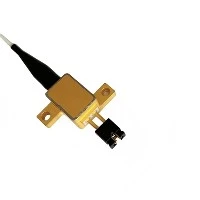
A typical 850nm laser module consists of a laser diode, a collimating lens assembly to create a focused beam, a drive circuit for power management, and an integrated heat sink or thermoelectric cooler (TEC) to ensure stable performance.

Application Scenarios: Building a Comprehensive Fire Safety Barrier
1. Fire Prevention: Stopping Fires Before They Ignite
Enhanced Very Early Smoke Detection Apparatus (VESDA): Traditional aspirating smoke detectors use LED light sources. By integrating an 850nm laser, these systems can create a more stable and sensitive active detection network. Minute smoke particles entering the sampling chamber cause a measurable attenuation or scattering of the powerful laser beam, enabling alarm triggering at the pre-combustion or very early smoldering stage, long before a flame is visible.
Linear Beam Smoke Detectors: In vast, open spaces such as aircraft hangars, warehouses, and sports arenas, point detectors are impractical. 850nm laser-based beam detectors project a line-of-sight beam across hundreds of meters. When smoke obscures the beam, the receiver detects the drop in intensity and triggers an alarm. Laser-based systems offer significantly longer range, higher stability, and greater resistance to ambient light interference compared to their LED-based predecessors.
2. Emergency Response: Illuminating the Path to Survival
Firefighter Vision Enhancement Systems: The most critical application is equipping first responders. Firefighting helmets and handheld scouting cameras integrated with 850nm laser illuminators act as powerful, invisible spotlights. When paired with IR-sensitive cameras, they provide firefighters with clear visual intelligence in zero-visibility, smoke-logged environments, enabling them to navigate, locate the seat of the fire, and identify victims more quickly and safely.
Robotic Search and Rescue: Unmanned Ground Vehicles (UGVs) and drones equipped with 850nm laser modules can be deployed into structurally unsound or extremely hazardous areas. These systems provide real-time video feed back to command centers, offering a crucial bird's-eye view and situational awareness without risking human lives.
Vital Signs Detection: Advanced systems can use 850nm laser scanning coupled with sophisticated algorithms to detect subtle micromovements, such as the chest rise and fall of a breathing person, even through light smoke. This allows for non-contact detection and localization of unconscious victims.
3. Investigation and Monitoring: Insight into Every Detail
24/7 All-Weather Security Surveillance: Integrating 850nm laser illuminators with standard security cameras creates a powerful, always-on monitoring solution. These systems deliver high-definition video in total darkness, low-light conditions, and light smoke, ensuring continuous oversight and providing vital forensic evidence from the very inception of an incident.
Post-Fire Scene Analysis and 3D Reconstruction: After a fire, the scene is often unstable and filled with residual smoke and dust. Survey equipment equipped with 850nm LiDAR (Light Detection and Ranging) scanners can penetrate these obstructions to rapidly capture precise 3D point clouds of the damaged structure. This data is invaluable for investigators, helping them determine the origin and cause of the fire and assess structural integrity with unparalleled accuracy.

Advantages and Challenges
Core Advantages Summarized:
Exceptional Smoke Penetration: Provides visual capability where visible light is useless.
Superior Night Vision: Enables clear imaging in complete darkness.
High Brightness and Directivity: Allows for long-range, targeted illumination and detection.
Cost-Effectiveness: Leverages mature, widely available silicon-based camera technology.
Covert Operation: The invisible beam is ideal for security and tactical operations.
Current Challenges and Limitations:
Physical Limits: In extremely dense, thick smoke, even 850nm light will experience significant attenuation.
Environmental Durability: Prolonged exposure to extreme heat can challenge the stability and lifespan of the modules, requiring specialized designs.
Algorithm Dependency: To unlock its full potential, the raw data from the laser system must be processed by advanced image enhancement and AI algorithms.
Market Awareness and Standardization: Wider adoption requires greater industry education and the development of unified standards for integration into fire safety codes.
Future Trends
The future of 850nm laser technology in fire safety is pointed toward greater integration and intelligence:
AI and Machine Learning Fusion: Coupling 850nm imaging with AI enables automated fire detection, human shape recognition, behavioral analysis, and predictive alarm triggering, reducing false positives and accelerating response.
Miniaturization and Smart Modules: Laser modules will become smaller, more power-efficient, and incorporate intelligent drivers for adaptive power output and built-in diagnostics.
Multi-Spectral Sensor Fusion: The most significant trend is the fusion of 850nm laser imaging with thermal imaging. This combines the deep smoke penetration of NIR with the heat-signature detection of thermal, creating a comprehensive and redundant perception system that is reliable in virtually any condition.
Standardization and IoT Integration: As a key enabling technology, 850nm laser modules will become a standardized component deeply embedded within the broader Internet of Things (IoT) ecosystem of smart buildings and cities, contributing data to a centralized safety and security platform.
The 850nm laser module, through its unique optical properties, is revolutionizing fire safety capabilities. It has proven its value as an indispensable technology across the entire spectrum of fire management-from providing the earliest possible warning, to safeguarding responders and victims during a crisis, and delivering precise data for post-incident analysis. As technology continues to advance, the role of 850nm laser modules will only expand, becoming a cornerstone of the intelligent, proactive, and data-driven fire safety systems of the future, ultimately saving lives and protecting property on a greater scale than ever before.
Contact information:
If you have any ideas, feel free to talk to us. No matter where our customers are and what our requirements are, we will follow our goal to provide our customers with high quality, low prices, and the best service.
 Email:info@loshield.com; laser@loshield.com
 Tel:0086-18092277517; 0086-17392801246
 Fax: 86-29-81323155
 Wechat:0086-18092277517; 0086-17392801246


