



The wide application of laser technology in industry, medical treatment, scientific research and other fields has made laser protective glasses an important equipment for protecting human eye safety. However, the market is flooded with a large number of cheap laser protective glasses. These products often fail to provide effective laser protection due to substandard materials, processes or designs, thus causing serious harm to the eyes. The hazards of cheap laser protective glasses and their countermeasures will be comprehensively analyzed from the common problems of cheap laser protective glasses, specific harm to the eyes, actual cases, methods to avoid harm and industry recommendations.
1. Common problems of cheap laser protective glasses
The main problems of cheap laser protective glasses are concentrated on insufficient protective performance, poor material quality, design defects and lack of certification. First of all, insufficient protective performance is the most prominent problem of cheap glasses. Optical density (OD value) is a key indicator to measure the protective ability of laser protective glasses. The higher the OD value, the stronger the lens's ability to block lasers. However, cheap glasses may not have been rigorously tested, and the OD value is not enough to block lasers of a specific wavelength, causing laser energy to penetrate the lens and hurt the eyes. In addition, some cheap glasses may only be effective for some wavelengths and cannot fully protect against multi-wavelength laser environments, which poses a great safety hazard in actual use.
Secondly, poor material quality is another major problem with cheap glasses. Cheap glasses usually use low-cost plastics or ordinary glass as lens materials, which have poor resistance to laser penetration and are easily damaged by high-power lasers. In addition, inferior materials may discolor, crack, or reduce light transmittance after long-term use, affecting the protective effect. The frame material is also often low-cost plastic or metal, which is uncomfortable to wear, easy to slip or press on the face, affecting the user experience.
Design defects are the third major problem of cheap glasses. Cheap glasses may be designed unreasonably and cannot fit the face completely, causing lasers to enter the eyes from the sides or gaps. This light leakage problem is particularly dangerous in high-power laser applications such as industrial laser processing. In addition, cheap glasses are usually less comfortable, with inferior frame materials, uncomfortable to wear, easy to slip or press on the face, affecting the user experience.
Finally, lack of certification is another important problem with cheap glasses. Cheap glasses may not be certified by international safety standards such as ANSI Z136 and EN 207, and their protective performance cannot be guaranteed. These safety standards have strict requirements on the materials, design, and protective performance of laser protective glasses. Products that have not passed the certification have great safety hazards in actual use.
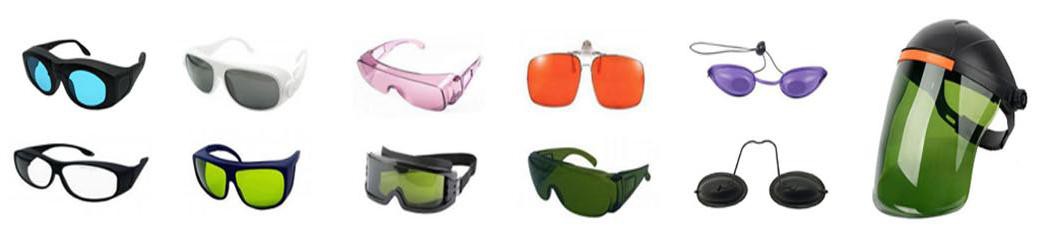
2. Specific hazards of cheap laser protective glasses to the eyes
The hazards of cheap laser protective glasses to the eyes are mainly reflected in retinal damage, corneal and lens damage, photochemical damage, and psychological effects. First of all, retinal damage is one of the most serious hazards. After the laser energy penetrates the lens, it will focus on the retina, causing burns, bleeding, and even permanent vision loss. High-power lasers (such as CO2 lasers and Nd:YAG lasers) are particularly harmful to the eyes. Once the retina is damaged, the possibility of vision recovery is extremely low.
Secondly, corneal and lens damage are also possible hazards caused by cheap glasses. Lasers may burn the cornea, causing pain, tears, and blurred vision. Long-term exposure to low-quality protective glasses may cause lens diseases such as cataracts. The cornea and lens are important parts of the eye. Once damaged, vision will be seriously affected.
Photochemical damage is another possible hazard caused by cheap glasses. Lasers of certain wavelengths (such as ultraviolet lasers) may trigger photochemical reactions and damage eye tissue. Cheap glasses cannot effectively block these harmful wavelengths, increasing the risk of eye damage. Photochemical damage is usually irreversible and has long-term effects on eye health.
In addition, cheap glasses may also have an impact on the user's psychology. Using cheap glasses may cause users to underestimate laser protection and ignore safe operating specifications, further increasing the risk of accidents. Although the psychological impact is not as direct as physiological damage, long-term neglect of safety issues may lead to more serious accidents.

3. Actual cases of cheap laser protective glasses
In actual applications, the hazards of cheap laser protective glasses have caused many accidents. For example, in industrial laser processing, workers wearing cheap glasses caused laser burns to the retina, causing permanent vision damage. In laser cosmetic surgery, doctors or patients use inferior protective glasses, causing laser damage to the eyes, causing medical disputes. In scientific research laboratories, researchers suffer irreversible eye damage during laser experiments due to insufficient protection from cheap glasses, affecting their careers. These cases fully illustrate the hazards of cheap laser protective glasses.
4. How to avoid the hazards of cheap laser protective glasses
In order to avoid the hazards of cheap laser protective glasses, users should take the following measures: First, choose regular brands. Purchase laser protective glasses that have passed international safety standard certification (such as ANSI Z136, EN 207), choose well-known brands, and ensure product quality and after-sales service. Second, check the protective performance. Confirm whether the OD value and wavelength coverage of the glasses meet the use requirements, and ask the supplier to provide a test report or certification document before purchasing. Third, pay attention to comfort and design. Choose glasses that fit the face and are comfortable to wear, avoid light leakage and slipping problems, ensure that the frame material is durable, and the lenses are clear and flawless. Finally, replace them regularly. Even high-quality glasses will age due to long-term use, and need to be checked and replaced regularly.

5. Industry recommendations and specifications
In order to reduce the hazards of cheap laser protective glasses, the industry should take the following measures: First, strengthen market supervision. Relevant departments should strengthen supervision of the laser protective glasses market, crack down on inferior products, and protect consumer rights. Second, improve user safety awareness. Through training and publicity, users can be more aware of the importance of laser protection and avoid choosing inferior products for cheapness. Secondly, promote the popularization of industry standards. Promote international safety standards (such as ANSI Z136, EN 207) to promote the standardized development of the industry.
Conclusion
Cheap laser protective glasses may not provide effective laser protection due to substandard materials, processes or designs, causing serious harm to the eyes, including retinal damage, corneal burns, photochemical damage, etc. In order to avoid these hazards, users should choose regular brands, check the protective performance, pay attention to comfort and design, and replace glasses regularly. At the same time, the industry should strengthen market supervision and user education to promote the standardized development of the laser protective glasses industry. Safety is no small matter, and choosing high-quality laser protective glasses is an important guarantee for eye health.