




12+
years
Providing professional laser safety solutions for industrial, medical and research applications worldwide.
50+
Countries Served
Trusted by customers across Europe, North America, Asia and other global markets.
500+
Custom Projects
Custom laser safety windows, acrylic panels and protective films designed for different wavelengths and applications.
Modern manufacturing relies heavily on fiber lasers, robotic welding stations, laser cleaning tools, and automated production cells. As these high-power laser systems become standard across automotive, battery, and metal fabrication facilities, one operational challenge keeps popping up for plant managers and safety teams.
How can shop floor teams monitor live laser processing closely, without repeatedly opening laser enclosures and creating unnecessary safety risks?
This real-world operational demand is driving steady growth for laser safety window film and professional laser viewing protection solutions in 2026.
Unlike earlier years, when factories simply used generic tinted windows for laser stations, today's industrial buyers prioritize hard technical parameters. Sourcing decisions now focus on exact laser wavelength, certified optical density (OD), visible light transmission, on-site installation feasibility, and compatibility with existing machine windows. Generic visual shading is no longer enough to meet industrial laser safety standards.
Why Laser Safety Window Film Has Become a Top Industrial Safety Solution in 2026
Industrial laser equipment continues to advance in two key directions: higher power output and full automation. Traditional fully enclosed metal laser guards deliver reliable isolation but eliminate process visibility, forcing frequent enclosure openings that disrupt production and expose operators to laser radiation hazards.
Near-infrared fiber lasers dominate modern industrial applications, covering core processes such as laser welding, laser cutting, laser cleaning, and laser marking. These lasers are foundational to battery manufacturing, automotive component production, precision electronics fabrication, and robotic laser processing lines.
For daily production, operators need clear visibility to check workpiece positioning, robotic movement, and real-time processing quality. Professionally engineered laser safety viewing windows and laser protective window film strike a critical balance: blocking hazardous laser radiation while retaining functional process visibility.
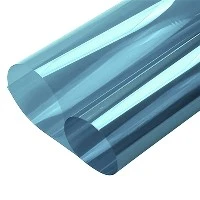
The biggest practical advantage of laser safety window film lies in equipment retrofitting. Instead of replacing entire enclosures, window frames, or observation panels, factories can upgrade existing transparent surfaces with targeted laser protection, cutting renovation costs and downtime significantly.
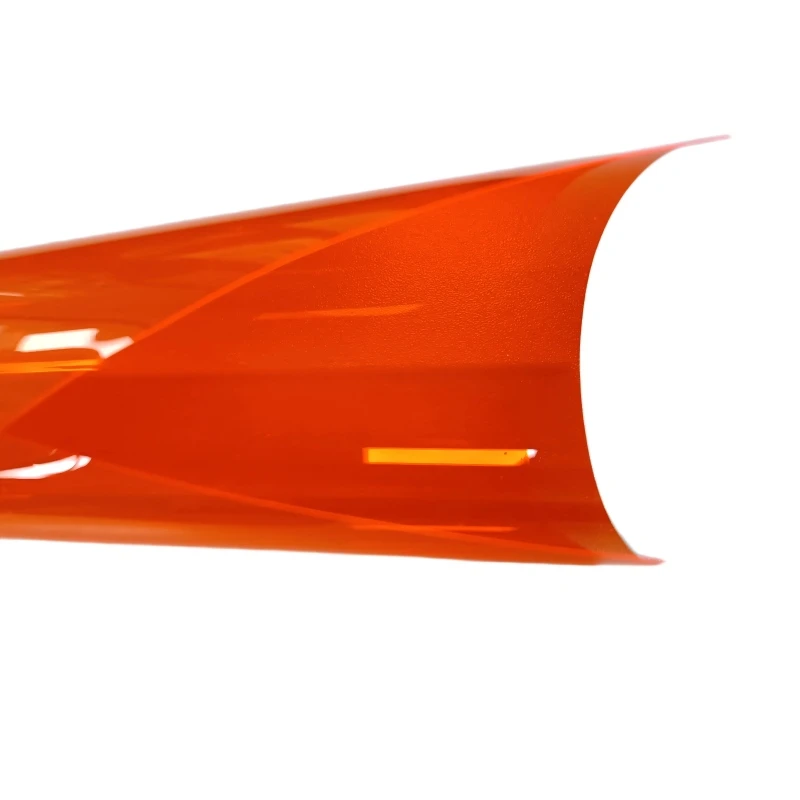
Trend 1: Factory Retrofit Upgrades Drive Rising Demand for Laser Safety Window Film
Most manufacturing plants already have fully operational laser workstations equipped with standard transparent panels. Glass viewing windows, acrylic observation panels, polycarbonate safety doors, and modular transparent partitions are extremely common in laser processing zones and laboratory testing areas.
Completely rebuilding laser enclosures is costly, time-consuming, and unnecessary for most production lines. For majority of on-site upgrade scenarios, installing customlaser safety window film is the most cost-effective and flexible solution to add wavelength-specific laser protection while preserving original equipment structure.
This makes protective film the preferred choice for equipment retrofits, laboratory laser station upgrades, custom automated laser cells, and small-batch production lines.
It is critical to note that regular architectural tinted film or automotive window film offers zero laser protection. True industrial laser protective film is engineered for specific laser wavelengths and power levels, and must be selected based on actual on-site laser exposure conditions.
Trend 2: Optical Density (OD) Becomes the Core Purchasing Benchmark
Today's professional buyers no longer choose laser protection products by appearance. Optical Density (OD) has become the primary technical indicator for screening laser safety window film, laser acrylic panels, and laser viewing glass.
In simple terms, OD values reflect a material's ability to attenuate laser radiation at a designated wavelength. Higher OD means lower laser transmittance and stronger protective performance for that specific spectrum.
The most common sourcing mistake factories make is judging OD performance as a universal parameter. In reality, optical density is strictly wavelength-specific. A film with excellent protection for 1064nm fiber lasers may provide almost no defense for 532nm green lasers or 10600nm CO₂ lasers.
Smart buyers no longer ask general questions like "What is the OD of this film?" The correct industrial inquiry is: "What exact OD rating does this laser safety window film deliver for my equipment's laser wavelength?"
Suppliers that provide detailed wavelength-matched OD test data and technical specifications stand out in industrial procurement and project auditing processes.
Trend 3: High-Power Fiber Laser Applications Fuel Market Growth
Fiber lasers remain the mainstream equipment for modern industrial laser processing. Most industrial fiber laser systems operate within the 1030nm to 1080nm near-infrared spectrum, with 1064nm being the most widely used wavelength for welding, cutting, and surface cleaning tasks.
A unique safety risk of near-infrared lasers is invisibility to the human eye. Operators cannot visually detect leaked or scattered laser radiation, making targeted laser protection non-negotiable for compliant production.
This industry characteristic directly boosts market demand for fiber laser safety windows, wavelength-specific laser protective films, laser enclosure viewing panels, and laser safety acrylic barriers.
Demand is especially strong in automated robotic welding cells. Production teams rely entirely on external viewing windows to monitor robotic arm movement, workpiece alignment, and real-time welding quality without entering the high-risk laser working zone.
Trend 4: In-Depth Comparison of Laser Safety Film, Acrylic and Glass Solutions
No single laser viewing material fits all industrial scenarios. Professional machine builders and safety engineers always compare three mainstream solutions to match on-site needs: laser safety window film, laser safety acrylic, and laser safety glass.
Laser Safety Window Film: Ideal for equipment retrofits and on-site upgrades. It features flexible sizing, easy installation, and perfect compatibility with existing glass, acrylic, and polycarbonate surfaces, delivering targeted wavelength protection without large-scale equipment modifications.
Laser Safety Acrylic: Widely used for new laser enclosure fabrication. It is easy to cut and customize into various shapes and sizes, suitable for standardized automated laser stations and fixed protective barriers.
Laser Safety Glass: Provides superior optical clarity and mechanical stability for high-standard industrial scenarios. Its drawbacks are heavier weight, higher cost, and more complex installation and fixing requirements.
The optimal solution depends on actual laser wavelength, operating power, installation environment, visibility requirements, and overall safety system design, rather than price or material thickness alone.
Key Technical Checks Before Buying Laser Safety Window Film
To avoid safety loopholes and procurement errors, manufacturers need to verify core technical indicators before purchasing industrial laser protective window film:
- Exact laser operating wavelength of the equipment
- Required optical density (OD) matching safety standards
- Laser working mode: continuous-wave or pulsed output
- Rated laser power and on-site radiation exposure conditions
- Visible light transmission rate to guarantee normal process monitoring
- Substrate compatibility (glass, acrylic, polycarbonate)
- Professional installation specifications and operating limits
- Official test reports and complete technical documentation
The most frequent industrial mistake is selecting film based on color shading. Dark red, green, or orange tinting only changes visual appearance and cannot represent actual laser blocking performance.
Industrial Safety Standards Become Non-Negotiable for Procurement
In 2026, industrial laser safety procurement is increasingly standardized and audit-focused. Authoritative industry standards have become essential evaluation basis for laser protective products.
The IEC 60825-4 international standard regulates all laser guard components, including transparent viewing screens, enclosure windows, and protective barriers. For North American projects, the ANSI Z136 series of laser safety standards serves as the core compliance guideline for equipment testing and product labeling.
End users, system integrators, and OEM machine builders no longer accept vague "laser safe" marketing claims. Professional suppliers must provide verifiable spectral transmission data, OD test records, material parameters, and standard compliance documents to support customer safety audits.
Is Laser Safety Window Film Suitable for All Laser Scenarios?
Definitely not. While laser safety window film offers unmatched flexibility for retrofits and low-to-medium risk scattered radiation protection, it is not a universal solution.
For high-power laser equipment with direct beam exposure risks, standalone window film cannot meet safety requirements. Such scenarios require rigid customized laser safety windows, professional protective barriers, and integrated enclosure safety systems.
All laser protection solutions must be evaluated according to on-site laser hazard levels, rather than applied blindly across all production lines.
How to Select the Best Laser Safety Viewing Solution for Your Facility
The most reliable laser protection solution is never the darkest, thickest, or most expensive option. It is the one that perfectly matches your actual laser equipment and production environment.
When choosing between laser safety window film, laser safety acrylic, and laser safety glass, focus on these core factors: wavelength compatibility, certified OD performance, practical visible light transmission, installation adaptability, mechanical durability, and complete technical certification documents.
For OEM equipment design and custom laser workstation projects, confirming viewing window materials in the early design phase effectively avoids costly secondary modifications and safety upgrades later.

Need Custom Laser Safety Window Film Recommendations?
Matching the right laser protective window film to fiber laser welding, laser cleaning, laser marking, and custom enclosure systems can be confusing without professional technical support.
Our team provides one-stop laser safety evaluation services, covering wavelength confirmation, OD level matching, window size customization, substrate compatibility inspection, and on-site application guidance.
Share your exact laser wavelength, equipment power, and window dimensions, and we will deliver a fully compliant, application-specific laser safety solution for your production line.
Conclusion
Driven by the rapid popularity of high-power fiber lasers, automated robotic welding lines, and factory equipment retrofit demands, laser safety window film has become a mainstream flexible laser protection solution in 2026. It solves the core pain point of balancing reliable laser radiation protection and real-time production visibility.
As industrial laser safety standards grow stricter, procurement decisions are becoming more technical and standardized. Appearance and price are no longer the main evaluation criteria. Wavelength matching, accurate OD performance, standard certification, and application adaptability define qualified laser protective products.
Whether you are building a new laser enclosure or upgrading existing viewing windows, always consult a professional laser safety team before finalizing materials. Accurate, scenario-based laser protection is the foundation of compliant and efficient industrial production.