



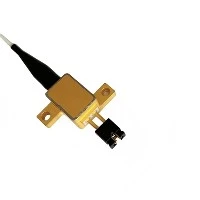
The main difference between Semiconductor Lasers and Fiber Lasers is the dielectric material used to emit laser light. The gain medium used in semiconductor lasers is semiconductor material, usually gallium arsenide, etc. The gain medium used in fiber lasers is optical fiber. The two lasers also work differently. Semiconductor lasers can directly achieve electro-optical conversion, that is, directly stimulate semiconductor materials to emit laser light through current. However, fiber lasers cannot directly achieve electro-optical conversion. They require the use of light (usually from a laser diode) to pump the gain medium to achieve optical-to-optical conversion. In terms of heat dissipation, fiber lasers show significant advantages. Generally speaking, fiber lasers only require air cooling, which greatly reduces their operation and maintenance costs. But whether it is optical fiber or solid-state laser, their core technology comes from the development of semiconductor laser. Therefore, understanding the working principle and performance of semiconductor lasers is of great significance to understanding the development of the entire laser technology.
The following is an introduction to the differences between semiconductor lasers and fiber lasers.
1. Different dielectric materials. The difference between fiber lasers and semiconductor lasers is that they use different dielectric materials for emitting lasers. The gain medium used by fiber lasers is optical fiber, and the gain medium used by semiconductor lasers is semiconductor materials, generally gallium arsenide, indium gallium arsenide, etc.
2. Different luminescence mechanisms. The luminescence mechanism of semiconductor lasers: it is the transition of particles between the conduction band and the valence band to produce photons. Because it is a semiconductor, electrical excitation can be used, which is a direct electro-optical conversion. Optical fiber cannot directly realize electro-optical conversion, and needs to use light to pump the gain medium (generally pumped with a laser diode). What it realizes is light-to-optical conversion.
3. The heat dissipation performance is different. Fiber lasers have good heat dissipation and are usually air-cooled. Semiconductor lasers are greatly affected by temperature. When the power is high, water cooling is required.
4. Main characteristics The main characteristics of different fiber lasers are small size and flexibility of the device. The laser output spectrum has many lines, good monochromaticity and wide tuning range. And its performance has nothing to do with the polarization direction of light, and the coupling loss between the device and the optical fiber is small. The conversion efficiency is high and the laser threshold is low. The fiber geometry has a very low volume and surface area, plus the laser and pump can be fully coupled in a single-mode state. Semiconductor lasers are easy to integrate with other semiconductor devices. Its characteristics are that it can be directly electrically modulated; it is easy to realize optoelectronic integration with various optoelectronic devices; it is small in size and light in weight; it has low driving power and current; it has high efficiency and long working life; it is compatible with semiconductor manufacturing technology; and it can be produced in large quantities.
5. Applications of different fiber lasers are mainly used in laser fiber communications, laser space long-distance communications, industrial shipbuilding, automobile manufacturing, laser engraving, laser marking, laser cutting, printing rollers, metal and non-metal drilling, cutting and welding (brazing, quenching) , cladding and deep welding), military defense and security, medical equipment and equipment, large-scale infrastructure, as a pump source for other lasers, etc. Semiconductor lasers are widely used in laser ranging, lidar, laser communications, laser simulation weapons, laser warning, laser guidance and tracking, ignition and detonation, automatic control, detection instruments, etc.
The above is the difference between semiconductor lasers and fiber lasers. Like traditional solid-state and gas lasers, fiber lasers are also composed of three basic elements: pump source, gain medium, and resonant cavity. The pump source generally uses a high-power semiconductor laser, and the gain medium is a rare earth doped optical fiber or an ordinary nonlinear optical fiber. The resonant cavity can be composed of optical feedback components such as fiber gratings to form various linear resonant cavities, or couplers can be used to form various ring-shaped resonators. resonant cavity. The pump light is coupled into the gain fiber through an appropriate optical system. After absorbing the pump light, the gain fiber forms particle number inversion or nonlinear gain and generates spontaneous emission. The generated spontaneous emission light undergoes excitation amplification and mode selection of the resonant cavity, and finally forms a stable laser output.
The biggest application of semiconductor lasers is as a pump source for fiber lasers and solid-state lasers. When a semiconductor laser is used as a fiber laser pump source, the structure of the pump system can be fundamentally simplified and the pump power level can be increased by increasing the unit power. As fiber lasers and solid-state lasers have increasingly higher requirements for output power, higher requirements are also placed on the power of semiconductor pump sources.
Due to the limitation of beam quality, traditional semiconductor lasers are difficult to be directly used for metal cutting. In recent years, with the improvement of semiconductor coupling technology and the gradual maturity of new beam combining technology, some fiber-output semiconductor lasers with a kilowatt or higher level can also meet the beam quality requirements for cutting. In addition, due to the diversity of semiconductor laser wavelengths, the wavelength of short-wavelength semiconductor lasers is very close to the wavelength absorption maximum of aluminum. Therefore, in the automotive industry, high-power semiconductor lasers are very suitable for welding aluminum automobile bodies. At present, semiconductor lasers with laser output powers between 2KW and 6KW have been widely used in the production process of the automobile industry.
In the field of direct material processing, the beam quality of semiconductor lasers is difficult to surpass that of fiber lasers. However, semiconductor lasers are very suitable for thin plate welding and cutting applications. The development of high-power semiconductor lasers has made many important applications possible. These lasers have replaced many traditional technologies and brought us many new products.
Generally speaking, due to the continuous development of technology, the application fields of semiconductor lasers are constantly changing, and these changes are still happening. Generally speaking, semiconductor lasers are developing towards shorter emission wavelengths and higher emission powers to adapt to current market needs.
Contact information:
If you have any ideas, feel free to talk to us. No matter where our customers are and what our requirements are, we will follow our goal to provide our customers with high quality, low prices, and the best service.
 Email:info@loshield.com
 Tel:0086-18092277517
 Fax: 86-29-81323155
 Wechat:0086-18092277517


