





X-rays are a form of ionizing radiation, meaning they carry enough energy to remove electrons from atoms, potentially damaging DNA and increasing the risk of cancer or tissue injury with excessive exposure. Because of these hazards, strict radiation safety precautions are required in medical, dental, industrial, and research settings.
Below are the core safety principles and practical measures based on international standards (e.g., ICRP, NCRP, OSHA, and IAEA guidelines).
1. ALARA Principle: The Foundation of X-Ray Safety
All x-ray safety practices follow ALARA - "As Low As Reasonably Achievable" - meaning radiation doses should be kept as far below regulatory limits as possible, considering economic and operational factors.
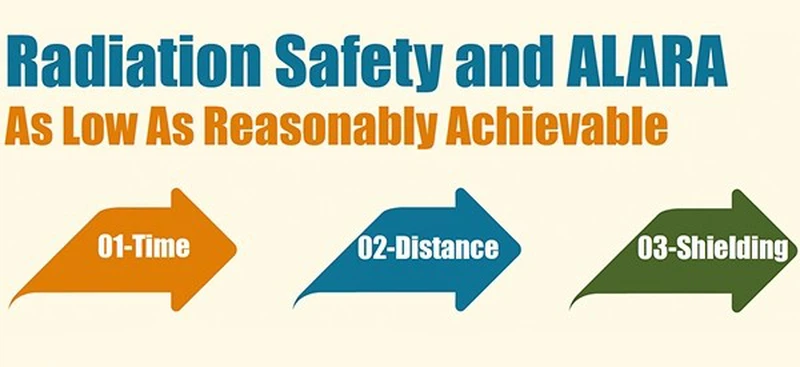
2. Time – Minimize Exposure Duration
Reduce time spent near an active x-ray source.
Only activate the x-ray beam when absolutely necessary.
In medical imaging: Use pulsed fluoroscopy instead of continuous mode when possible.
Never hold patients during exposure-use mechanical restraints instead.
⏱️ Rule: Dose = Dose Rate × Time → Less time = lower dose.
3. Distance – Maximize Distance from the Source
Radiation intensity decreases with the square of the distance (Inverse Square Law).
Stand as far away as practical during exposures (e.g., behind a control barrier or at least 6 feet away if no shield is available).
Use long-handled tools in industrial radiography.
In interventional radiology: Staff should step back when not actively needed near the patient.
📏 Example: Doubling your distance reduces exposure to ¼ of the original dose.
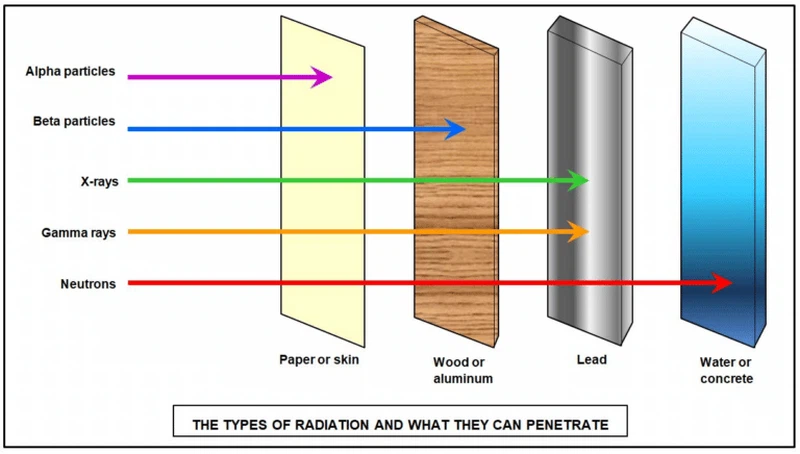
4. Shielding – Use Appropriate Protective Barriers
Personal Protective Equipment (PPE)
For personnel who must remain in the room:
Lead aprons (typically 0.25–0.5 mm lead equivalent) - protect torso and radiosensitive organs.
Thyroid shields - especially important for frequent exposures (e.g., dentists, cath lab staff).
Lead glasses - protect the lens of the eye (cataract risk).
Lead gloves - used cautiously (can increase dose if placed in primary beam due to automatic exposure control).
❗ Note: PPE does not protect against the primary x-ray beam-only scattered radiation. Never place any body part in the direct beam.
Structural Shielding
Lead-lined walls, doors, and windows in x-ray rooms.
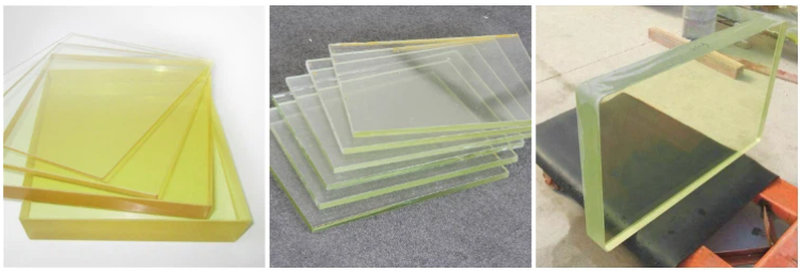
Control booths with lead glass for operators.
Mobile lead barriers for staff in fluoroscopy suites.

5. Equipment and Operational Safety
Collimation: Restrict the x-ray beam to only the area of clinical interest.
Filtration: Use aluminum or copper filters to remove low-energy x-rays that contribute to skin dose but not image quality.
Regular maintenance and calibration: Ensure accurate output and prevent unnecessary repeat exposures.
Beam-on indicators: Visible (light) and audible signals must activate during exposure.
6. Personnel Monitoring
Wear dosimeters (e.g., film badges, TLDs, or OSL dosimeters) to track cumulative radiation exposure.
Dosimeters should be worn at collar level (to estimate eye/thyroid dose) and under the apron at waist level (for whole-body dose).
Records must be reviewed regularly; annual dose limits must not be exceeded:
Occupational limit: 50 mSv/year (whole body), 150 mSv/year (lens of eye), 500 mSv/year (skin/hands).
Public limit: 1 mSv/year above background.
7. Special Considerations
Pregnant Workers
Declare pregnancy to radiation safety officer (RSO) for voluntary fetal dose monitoring.
Fetal dose limit: ≤ 5 mSv during entire pregnancy (often managed to < 0.5 mSv/month).
Patients
Justify every exam: Is the x-ray medically necessary?
Optimize technique: Use lowest dose that provides diagnostic quality (e.g., pediatric protocols).
Shield radiosensitive areas (e.g., gonads, thyroid) when it does not interfere with diagnosis.
Industrial & Security Settings
Use interlocks and warning signs ("Caution: X-Ray").
Restrict access during operation.
Never bypass safety systems.

8. Training and Safety Culture
Only trained and authorized personnel may operate x-ray equipment.
Annual radiation safety training is required in most jurisdictions.
Facilities must have a Radiation Safety Officer (RSO) and a written radiation protection program.
Summary: Key X-Ray Safety Rules
✅ Time: Keep exposure time short
✅ Distance: Stay as far away as possible
✅ Shielding: Use lead aprons, barriers, and room shielding
✅ Justification: Never perform unnecessary exams
✅ Optimization: Use the lowest dose possible (ALARA)
✅ Monitoring: Wear dosimeters and review exposure records
By rigorously applying these precautions, risks from x-ray exposure can be reduced to negligible levels, ensuring safety for patients, workers, and the public alike. Always follow your facility's radiation safety protocols and consult your Radiation Safety Officer (RSO) with any concerns.