



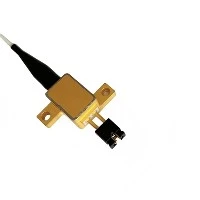
There are four common classifications of lasers, which are distinguished by gain medium, output power, working mode, and pulse width.
Classification by Gain Medium (Working Substance): the gain medium of the laser includes gas, liquid and solid, and the specific gain medium determines the laser wavelength, output power, and application field. CO2 gas lasers are representative of gas, and ruby lasers, semiconductor lasers, fiber lasers, and YAG lasers are representative of solids.
Classified by Output Power: can be divided into low power (0-100W), medium power (100-1KW), and high power (above 1KW); but sometimes the range of 100-1.5KW is defined as medium power. Lasers with different powers are suitable for different application scenarios.

Classified by Work Style: It can be divided into continuous laser and pulse laser. The continuous laser can output continuously for a long period of time, with stable operation and high thermal effect. Pulsed lasers output in the form of pulses, the main features are high peak power and small thermal effect; according to the length of the pulse, pulsed lasers can be further divided into milliseconds, microseconds, nanoseconds, picoseconds and femtoseconds, generally speaking, the shorter the pulse time, the higher the single pulse energy, the narrower the pulse width, the higher the machining accuracy.
Classified by Output Wavelength: It can be divided into infrared lasers, visible light lasers, ultraviolet lasers, etc. Materials with different structures can absorb different wavelength ranges of light, for example, metals have a higher absorption rate for near-infrared light.