



This article includes the methods of Laser Safety Protection in university laboratories, including the standard production and layout of laser warning signs, the selection of laser safety protection equipment, especially the selection and use of laser safety glasses.
Engineering Control
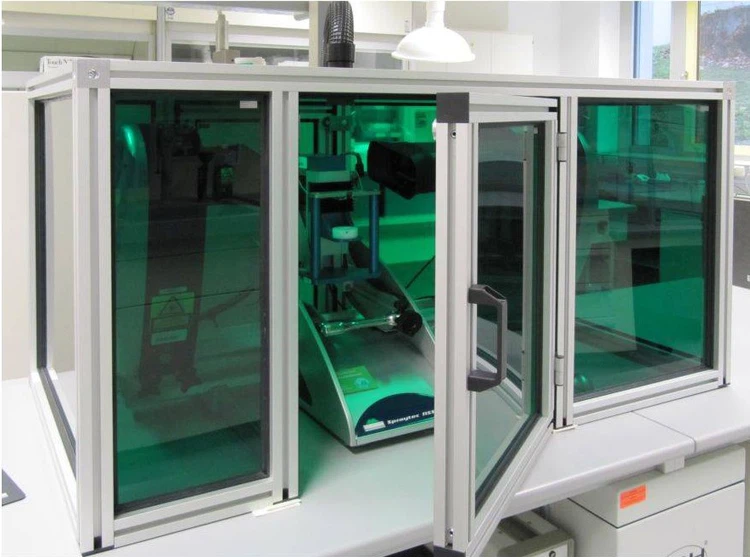
Engineering control refers to the safety measures taken on the structure of the laser source and the system of transmitting and focusing the laser beam, mainly including: protective cover, baffle and safety interlock, safety optical path, beam terminator, etc. The safety optical path refers to the optical path that closes the laser radiation that may cause combustion or secondary radiation, and a protective cover and control device must be installed on each laser device. Beam stoppers or attenuators can be used to prevent the laser beam from extending beyond the controlled work area. Any laser system belonging to classes 3B and 4 must have one or more permanent additional attenuation devices.
Personal Protection
Personal protective equipment includes protective glasses, protective clothing and protective gloves. For workers who may be exposed to radiation in excess of the Maximum Permissible Exposure (MPE) to the skin, suitable protective clothing needs to be provided wherever possible. Laser protective clothing is generally made of suitable fire-resistant and heat-resistant materials and covers all skin areas. Laser safety goggles can prevent or reduce laser damage to human eyes, and are a kind of efficient and safe goggles. The following is a detailed introduction to the main indicators and types of laser protective materials and the selection of protective glasses.
Laser Protection Material
The key to laser protective equipment is laser protective materials, and its main indicators include:
(1) The laser wavelength targeted by the protective material, that is, the protective wavelength;
(2) Optical density (OD), which measures the laser radiation at the protected wavelength
The physical quantity of the degree of attenuation of energy, the calculation formula of optical density is
OD =log10(1 / Tλ ) =log10(Ii/It), where Tλ is the laser transmittance at the protection wavelength, Ii is the incident laser intensity, It is the outgoing laser intensity;
(3) Visible light transmittance (VLT), which is related to the user's observability of the surrounding environment;
(4) The viewing angle range of the protective laser, that is, the protective angle;
(5) The minimum laser energy density required for the material to be destroyed, that is, the destruction threshold;
(6) The shortest time that the material can play a protective role after being irradiated by the laser, that is, the response time.
There are many types of laser protection materials, and the mainstream ones are as follows: absorbing protection materials, reflection protection materials, composite protection materials, coherent protection materials and holographic protection materials. Laser protection materials are developing in the direction of multi-band protection, expanding the protection angle, and increasing the visible light transmittance.
Laser Safety Glasses
At present, the main types of laser protective materials maturely used in laser protective glasses are absorption type, reflective type and composite type. Absorbing protective materials are mainly mixed with a medium that absorbs light of a specific wavelength in the lens to reduce the light transmittance of the protected wavelength. Because of its wear resistance, large protective angle range and low cost, it has become the mainstream at present. commercial laser safety goggle material. Adding different compatible absorbers with strong absorption effects on specific wave bands to polycarbonate or glass can produce laser protective glasses that can protect multiple wave bands.
When choosing laser protective goggles, you need to pay attention to the following points:
(1) Select the appropriate protection wavelength, and select laser protective glasses with corresponding protection bands according to the laser;
(2) Select the appropriate laser protection level. For non-class 4 lasers, generally choose laser protective glasses with an OD value of 4 and above. If it is a class 4 laser, choose laser protective glasses with a higher OD value for the corresponding band;
(3) Choose an appropriate visible light transmittance, if the visible light transmittance is too low, it may affect the observation of the surrounding environment. Usually, the protective glasses are aimed at a certain wavelength, and one lens should not be used for multiple purposes.

Other Laser Protective Equipment
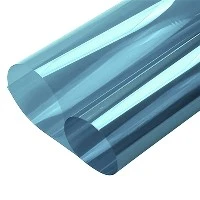
A laser protective screen or laser protective curtain can be placed in the area around the laser. Its surface often has a black light-absorbing coating to absorb the emitted or reflected laser and prevent multiple reflections of the laser from causing difficulties.
with foreseeable consequences. Strictly speaking, high-power lasers can emit light only in closed areas. Usually the actual area is not closed. Wear protective clothing to avoid damage from scattered high power laser light.

|
|
|


Laser Warning Sign
Laser products with different hazard levels should post corresponding warning signs. Warning signs should be posted outside the laser control area or at the entrance of the laboratory to warn of possible dangers in advance. The laser warning sign consists of a warning mark and an explanatory mark. The frame of the warning sign graphic is an equilateral triangle, the middle is a concentric circle radiating to the surrounding, the frame and symbols are black, and the background is yellow. The border of the explanatory mark is a rectangle with textual explanatory inside, as shown in Figure 1. The description marks are divided into laser product description marks, window marks, baffle marks, safety interlock marks, etc. In addition, in addition to Class 1 laser products, the radiation output and standard description of the laser product shall be attached on the instruction mark or on the laser product, which may include the maximum output power of the laser, pulse width, emission wavelength, and laser product classification. Standards based on and date of publication, etc.

Laser products must be affixed with laser warning signs. If necessary, multiple signs can be posted, including laser product warning signs, radiation window warning signs, baffle warning signs, etc. Safety classification instructions signs should also be posted in places where Class 3B and Class 4 laser products work. Warning signs should be posted where the human eye can clearly see them and where they will not be harmed by laser light. In permanent laser protection areas, warning signs should be installed at the entrances and exits. Play the most effective danger warning role.
In laser safety management, first of all, it is necessary to improve the safety awareness and protection knowledge of laser users, and carry out necessary safety knowledge lectures and assessment access; secondly, to do a good job in laser engineering control facilities, post laser warning signs and explanatory signs, and equip personal protective equipment. supplies; Finally, relevant laser use and management systems must be established to institutionalize and normalize safety work and continue to improve with changes in products and workplaces.
Contact information:
If you have any ideas, feel free to talk to us. No matter where our customers are and what our requirements are, we will follow our goal to provide our customers with high quality, low prices, and the best service.
 Email:info@loshield.com
 Tel:0086-18092277517
 Fax: 86-29-81323155
 Wechat:0086-18092277517


