



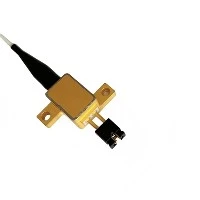
Laser Rangefinder Modules play a vital role in modern technology and are widely used in high-precision distance measurement fields such as industrial automation, building measurement, and autonomous driving. By accurately measuring the distance of the target object, it not only improves operational efficiency and safety, but also realizes the possibility of precise control and data analysis, thereby promoting technological innovation and industry development.
Basic principles and technical implementation of laser time-of-flight technology
1. Basic principles
ToF concept: Laser time-of-flight technology, referred to as ToF, is a technology that uses laser to measure distance. Its basic principle is to measure the time it takes for the laser to be emitted from the transmitter to be received by the receiver. In this process, the laser is first emitted to the target object, then reflected from the target surface back to the source point and captured by the receiver.
Time and distance relationship: By detecting the round-trip time of the laser pulse, the distance between the transmitter and the target object can be calculated. This is because the speed of light is a constant, and the distance can be accurately converted by measuring the propagation time of the laser in the air.
2. Technical implementation
Laser emission: In the ToF system, a laser diode is used to emit short pulses of laser. These pulses typically have a very short duration, usually in the nanosecond range, which allows the measurement system to precisely locate the time of the reflected signal.
Signal Detection and Processing: When the laser pulses hit the target and reflect back, they are captured by photodetectors (such as avalanche photodiodes or APDs). These detectors convert the optical signals into electrical signals for further analysis by the system. The built-in microprocessor or processing unit calculates the exact time of the laser pulse's round trip, using advanced algorithms to handle possible noise and interference to ensure the accuracy of the measurement results.
Principles and Applications of Phase Measurement Technology
1. Concept Explanation
Continuous Wave Laser Signal: Phase measurement technology uses continuous wave lasers, which, unlike pulsed lasers, emit continuously and have a constant frequency. This technology relies on the wave nature of lasers, especially their phase information.
Phase Comparison Principle: In phase measurement, the emitted laser beam is reflected back after hitting the target object and the phase is compared with the original emitted laser. Since the speed of light is fixed, the phase delay during the laser's round trip can be used to calculate the distance between the emitter and the target.
2. Technical Details
Modulated Laser Beam: For phase measurement, the laser beam is modulated to a specific frequency before it is emitted. This creates a recognizable phase mark between the reflected and emitted beams.
Phase difference analysis: When the reflected laser returns to the receiver, the system detects the difference in its phase from the phase of the initially emitted laser. By comparing the two phases, the built-in algorithm can calculate the round trip time of the laser, which is then converted into distance information.
3. Data processing and accuracy
The role of the built-in algorithm: The accuracy of the phase measurement device depends largely on the optimization of its internal algorithms. These algorithms can process the phase data and take into account the possible impact of environmental factors such as temperature and humidity on the propagation speed of the laser, thereby providing high-precision distance measurement results.
4. Application areas
Actual application scenarios: Phase measurement technology is particularly suitable for close-range measurements that require high accuracy, such as building measurement, robot positioning systems, and high-precision industrial automation.
Key components and functions
1. Laser transmitter
Type and function: The laser transmitter is the core component of the laser rangefinder module, usually using a laser diode or a higher-precision laser. Its main function is to generate and emit laser beams, which are then used to measure distance.
Stability and strength guarantee: The laser transmitter needs to ensure the stability and sufficient intensity of the laser beam to ensure that the laser can accurately reach the target and return. This requires considering the choice of laser wavelength, the focusing of the beam, and the influence of environmental factors during the design.
2. Photodetector
Capture reflected laser: The role of the photodetector is to detect the laser reflected back from the target. These detectors are usually highly sensitive avalanche photodiodes or PIN diodes that can capture very weak laser signals.
Photoelectric conversion process: When the reflected laser is captured by the detector, the detector converts it into an electrical signal. This conversion process is critical because subsequent distance calculations rely on the accuracy and reliability of these electrical signals.
3. Electronic processing unit
Signal processing: The electronic processing unit is responsible for receiving the electrical signal from the photodetector and processing it to extract distance information. This includes amplifying the signal, filtering noise, and performing phase or time flight calculations.
Data output: The processed data is ultimately converted into specific distance information, which can be output to other devices or systems. The performance of the electronic processing unit directly affects the response time of the module and the accuracy of the data.
4. Optical components
Lens and filters: Optical components such as lenses and filters are used to optimize the emission and reception of lasers. Lenses help focus and calibrate the emitted lasers, while filters can reduce interference from ambient light and improve the detector's reception efficiency.
Beam shaping: Optical components ensure that the laser beam has the proper shape and intensity when it is emitted, which is essential to ensure measurement accuracy and the module's working efficiency.
Application areas and actual cases
1. Industrial automation
Robot navigation: In the field of industrial automation, laser rangefinder modules are widely used in robot navigation systems. By accurately measuring the position and distance of obstacles, robots can autonomously plan paths, avoid collisions, and improve work efficiency and safety.
Object positioning: Laser rangefinder modules are also used for precise object positioning, such as automatic sorting and positioning of workpieces on production lines. This improves the automation of production lines and the accuracy of operations, and reduces production costs.
2. Building measurement
Measuring distance: In the construction industry, laser rangefinder modules are used to quickly and accurately measure distances and heights, such as measuring the height of buildings, the size of rooms, etc. This non-contact measurement method not only increases the speed of data collection, but also reduces the human errors that may occur in traditional measurement methods.
Monitoring structural stability: Laser rangefinder modules are also used to monitor the stability of building structures. By regularly measuring and recording the distance changes of key points of the structure, potential structural problems can be discovered in time and serious building safety accidents can be prevented.
Laser rangefinder modules accurately measure distances through the laser time-of-flight (ToF) principle or phase measurement technology. In the ToF principle, the module emits a laser pulse and measures the time it takes for it to reflect back to calculate the distance. Phase measurement technology determines the distance by comparing the phase difference between the emitted and reflected lasers. These modules are widely used in high-precision distance measurement fields such as industrial automation, building measurement, and autonomous driving, providing accurate data for robot navigation, object positioning, and monitoring structural stability.
Contact information:
If you have any ideas, feel free to talk to us. No matter where our customers are and what our requirements are, we will follow our goal to provide our customers with high quality, low prices, and the best service.
 Email:info@loshield.com
 Tel:0086-18092277517
 Fax: 86-29-81323155
 Wechat:0086-18092277517


