



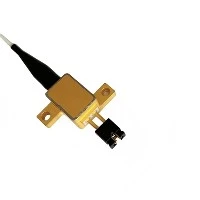
Multi-band Laser Rangefinder Modules are widely used in many fields and can provide accurate distance data according to different measurement distance requirements.
In short-range applications, such as smartphones and robot navigation systems, it can achieve fast and high-precision spatial positioning. In medium-range applications, such as industrial automation and vehicle collision avoidance systems, such modules are key for object tracking and obstacle avoidance. For long-distance measurements, such as geographic mapping and architectural measurement, long-wave laser rangefinders are preferred due to their extremely high accuracy and penetration. The flexibility and efficiency of these modules make them play a vital role in improving operational accuracy and safety.

1. Characteristics of lasers in different bands
- Ultraviolet laser (UV): short wavelength, high energy, suitable for fine processing and medical applications. It has a strong photochemical effect, but weak penetration and may be harmful to the eyes and skin.
- Visible light laser: including common colors such as red, green, and blue, with wavelengths between 400nm and 700nm. It is widely used in display technology and some medical devices. It is safe for human eyes, but direct exposure may still cause damage.
- Infrared laser: Long wavelength, usually used for communication and night vision technology. Less harmful to eyes, but still need to pay attention to safety at high power.
- Near-infrared and far-infrared lasers: Near-infrared lasers are often used for remote communication and certain types of laser processing, while far-infrared is used for special communication and thermal imaging technology.
2. Technological innovation integrating multiple bands
- Single device multi-wavelength output: Using a modulated laser diode, different wavelengths can be switched in one device to meet the needs of diverse application scenarios.
- Wavelength multiplexing technology: By integrating multiple wavelengths of laser in the same laser system, multiple measurements or communications can be performed simultaneously, greatly improving the efficiency and functional diversity of the system.
- Intelligent control system: Integrating advanced sensors and control software, it can automatically adjust wavelength and power according to environmental conditions and usage requirements to optimize performance and safety.
3. Interaction between bands and their impact on measurement accuracy
- Cross-wavelength interference: When using multiple wavelengths, light of different wavelengths may interfere with each other, especially in dense measurement environments, which may cause data errors.
- Environmental factors: Lasers of different wavelengths have different sensitivities to environmental factors such as water absorption and atmospheric scattering, which may affect the accuracy of long-distance measurements.
- Optical material response: Lasers of different wavelengths have different compatibilities with optical materials (such as lenses and filters), which may affect the transmission efficiency and measurement accuracy of the laser.

Applications with different usage distances:
1. Scenarios and requirements for short-range applications
Smartphones and tablets: used for 3D scanning, face recognition, and AR applications. These applications require laser rangefinders to have high accuracy and low power consumption.
Robot navigation: In autonomous vehicles and indoor robots, laser rangefinders are used for obstacle detection and avoidance, requiring fast response time and high reliability.
Home automation: such as smart door locks and air conditioning temperature control, the laser rangefinders in these devices require miniaturized design and low energy consumption performance.
2. Challenges and solutions for medium-range applications
Industrial automation: In applications such as assembly line monitoring and warehouse management, laser rangefinders are used to monitor object position and speed. The challenge is to deal with reflective surfaces and avoid mechanical interference, which is usually solved by optimizing beam encoding and receiver sensitivity.
Vehicle collision avoidance system: For collision avoidance systems for vehicles and aircraft, the key challenge is to ensure reliability under various weather and lighting conditions. Solutions include the use of multi-wavelength lasers and advanced signal processing algorithms.
Sports and entertainment: For example, sports performance tracking and interactive games require high-speed data acquisition and processing. Solving this challenge requires the development of high-speed laser scanning technology and real-time data analysis software.
3. Technical requirements for long-distance applications
Geographic surveying and mapping: used for map making and terrain analysis, requiring extremely high ranging accuracy and big data processing capabilities, technical requirements include high-power laser transmitters and high-precision detectors.
Building measurement: In the construction measurement of high-rise buildings and large facilities, extremely high accuracy and long-distance measurement capabilities are required, and advanced optical systems and stable platforms are used to ensure data accuracy.
Environmental monitoring: For example, forest coverage monitoring and sea level measurement, laser rangefinders are required to have high penetration and long-distance operation capabilities, and modulation technology and multi-band lasers are usually used to improve efficiency.
In short, laser rangefinder modules with different usage distances face different technical challenges and application requirements in their respective fields. Targeted technical innovations and solutions are the key to achieving their wide application.
How to choose a suitable laser rangefinder?
1. Measuring range and accuracy
Measuring range: Determine the required measuring distance according to the usage scenario. Short distance (usually tens to hundreds of meters) is suitable for home or office, medium distance (up to several kilometers) is suitable for construction site or stadium, and long distance (tens of kilometers) is used in professional fields such as geographic surveying and mapping.
Accuracy requirements: The accuracy requirements depend on the specific application. For example, architectural measurement and design may require sub-centimeter accuracy, while home use may not require high accuracy.
2. Type of laser technology
Laser wavelength: Different laser wavelengths are suitable for different measurement environments and materials. For example, infrared lasers perform better in low-light environments, while near-infrared lasers are suitable for outdoor long-distance measurement.
Laser power: High-power lasers can be used for long-distance measurement, but may involve higher costs and safety risks.
3. Environmental adaptability
Weather and environmental impact: Consider whether the equipment can work stably in extreme environments such as rain, fog, high temperature or low temperature.
Waterproof and dustproof ability: For outdoor use, it is more appropriate to choose equipment with a higher waterproof and dustproof rating.
4. Functional integration and interface
Data interface: Make sure the laser rangefinder has an interface that suits your needs, such as Bluetooth, Wi-Fi or USB, to facilitate data transmission and processing.
Software compatibility: Check whether the device supports integration with existing software, such as BIM (Building Information Modeling) software or professional measurement and data analysis software.
5. Ease of use and battery life
Ease of operation: Choose a model that is easy to operate, especially for non-professionals, such as a simple one-button measurement function.
Battery life: If you often need to use it outdoors, you should choose a device with long battery life.
6. Brand and after-sales service
Brand reputation: Choosing a well-known brand can ensure better product quality and technical support.
After-sales service: Make sure the manufacturer provides good user support and after-sales service so that problems can be solved in a timely manner.
7. Budget and cost-effectiveness
Budget constraints: Choose cost-effective products based on the available budget and avoid overpaying for unnecessary advanced features.
Maintenance and repair costs: Long-term costs including maintenance costs, replacement of accessories, etc. should also be considered.
In summary, by comprehensively considering the above factors, you can more effectively select a laser distance meter that suits your specific needs, ensuring that its performance meets your expectations and provides reliable measurement results. JTBYShield are a professional manufacturer of laser modules. We have a professional R&D team and accept ODM and OEM. If you are interested, we will be very happy to talk to you further, and we can provide such selection service. We look forward to your reply and hope to be your reliable partner.
Contact information:
If you have any ideas, feel free to talk to us. No matter where our customers are and what our requirements are, we will follow our goal to provide our customers with high quality, low prices, and the best service.
 Email:info@loshield.com
 Tel:0086-18092277517
 Fax: 86-29-81323155
 Wechat:0086-18092277517


