


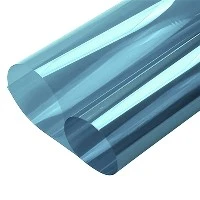

In the field of lasers, laser safety plates play a crucial role in ensuring the safety of operators and equipment. Understanding the factors that affect the protection effect of laser safety plates is essential.
Factors Affecting the Protection Effect of Laser Safety Plates
Thickness and Protection Effect
There is a direct relationship between the thickness of the laser safety plate and its protection effect. Based on basic physical principles, the protection ability of a protection plate is determined by the optical density (OD value). The optical density is related to the light - absorption characteristics and thickness of the material. The formula is OD=ϵ⋅c⋅tOD=ϵ⋅c⋅t, where ϵϵ is the material's absorption coefficient, cc is the absorber concentration, and tt is the thickness. When the material is fixed, increasing the thickness will increase the OD value, thereby enhancing the protection effect. For example, in a high - power laser environment, a thicker laser safety plate can provide more reliable protection. A 5mm thick plate will generally have a higher OD value than a 3mm thick one, making it more suitable for use in scenarios with stronger laser intensities.

Material Properties
The type and quality of the material used in the laser safety plate also significantly affect its protection effect. Different materials have different absorption coefficients ϵϵ. Materials with high absorption coefficients can more effectively absorb laser energy. For instance, some special optical glasses and polymer materials are commonly used in laser safety plates because they have good light - absorption properties at specific wavelengths. The purity and homogeneity of the material also matter. If the material has impurities or inhomogeneities, it may lead to uneven absorption of laser light and reduce the overall protection effect.
Absorber Concentration
As shown in the formula OD=ϵ⋅c⋅tOD=ϵ⋅c⋅t, the absorber concentration cc is another key factor. A higher absorber concentration within the protection plate can increase the optical density. However, there are limitations to increasing the absorber concentration. Too high a concentration may cause problems such as decreased transparency or even damage to the structural integrity of the material. Therefore, a proper balance needs to be struck between absorber concentration and other material properties.

Recommendation of Our 1064nm 5mm and 3mm Laser Protection Plates
Our 1064nm laser protection plates are specially designed to meet the high - standard protection requirements at this specific wavelength. The 5mm thick laser protection plate offers excellent protection in high - energy laser environments. Thanks to its relatively large thickness, it has a high OD value, which can effectively block the 1064nm laser and protect operators from laser radiation.
|
|
|


The 3mm thick laser protection plate, on the other hand, provides a more flexible solution. It is suitable for applications where the laser intensity is relatively lower or where space and weight are restricted. Although its thickness is less than that of the 5mm plate, it still maintains a good protection level at the 1064nm wavelength.
Both of our protection plates are made from high - quality materials with precise absorber concentrations and good homogeneity. They ensure reliable and stable protection performance, making them ideal choices for various laser - related industries, such as laser manufacturing, medical laser applications, and scientific research on lasers.