



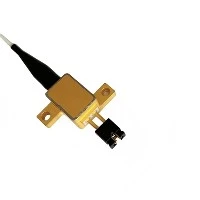
High-power laser diode stacks are devices composed of multiple high-power laser diodes. They are small in size and high in efficiency. They are widely used in industrial processing (such as cutting and welding), medical surgery, scientific research, and national defense. Their main advantages include: compact size, scalable power up to the multi-kW range. Such configurations are typically employed in solid state laser pumping, directed energy applications such as hair removal, and materials processing.

1. Classification by structure and packaging form
① Vertical Stack
Single-bar vertical stack: It consists of a single diode bar, and higher output power is achieved by stacking multiple bars in the vertical direction. Each bar contains multiple laser diode chips, which are electrically connected in series or in parallel to provide greater current carrying capacity and higher power output.
Multi-bar vertical stack: In order to further increase the power, multiple bars can be stacked vertically. This structure can achieve very high power density in a smaller space, but it also brings greater heat dissipation challenges. Because multiple bars are closely arranged, it becomes difficult to conduct and dissipate heat in the vertical direction, and more efficient heat dissipation technology is required to ensure the stable operation of the equipment.
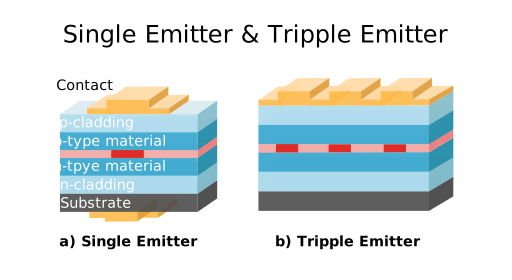
Features: The main feature of the vertical stacking structure is high power density, which can generate larger laser power in a limited space. However, this structure also faces severe heat dissipation challenges, because as the number of stacking layers increases, the heat transfer resistance in the vertical direction increases, which can easily lead to local overheating and affect the performance and life of the laser diode.
②Horizontal Array
Linear arrangement and two-dimensional expansion: Horizontal array refers to arranging laser diode bars or other light-emitting units in the horizontal direction to form a linear or two-dimensional array structure. Linear arrangement is the most basic form, and the power can be increased by increasing the number of bars; while two-dimensional expansion is arranged in both horizontal and vertical directions, further expanding the light-emitting area and power output.
Features: The advantages of the horizontal array structure are its uniformity optimization and spot shaping flexibility. Since the light-emitting units are more evenly distributed in the horizontal direction, it is easier to achieve uniformity and stability control of the beam. In addition, by adjusting the layout of the array and the design of the optical elements, the shape and size of the spot can be flexibly changed to meet the needs of different application scenarios.

③Hybrid packaging structure
Combined vertical and horizontal design composite solution: In order to meet the needs of higher power and more complex applications, a hybrid packaging structure combining vertical and horizontal designs is sometimes used. This structure retains the high power density advantage of vertical stacking and has the uniformity and spot shaping flexibility of the horizontal array. By reasonably designing the proportion and layout of the vertical and horizontal parts, the best balance of power, efficiency and beam quality can be achieved.
Application case: The fiber coupling system is a typical application case of the hybrid packaging structure. In this system, a vertically stacked laser diode stack is used as a light source, and the generated laser is coupled into the optical fiber through an optical coupling device. The optical fiber can not only transmit the laser, but also further shape and filter the beam, thereby improving the beam quality and transmission efficiency. This structure is widely used in material processing, communications, medical treatment and other fields, and has played an important role in promoting the development of related industries.
2. Classification by wavelength and output characteristics
① Near-infrared band (700–1100 nm)-755nm/ 808nm/ 940nm/ 1064nm laser diode stacks
Typical applications: In the field of material processing, laser diode stacks in this band can be used for cutting, welding and surface treatment of materials such as metals and plastics. Its wavelength can be well absorbed by many materials, thereby achieving efficient processing. For example, in automobile manufacturing, it is used for welding of metal sheets of car bodies; in the electronics industry, it is used for cutting and welding of circuit boards. In terms of solid-state laser pumping, it can be used as a pump source to provide energy for solid-state lasers, such as for pumping solid-state lasers such as Nd:YAG. The light generated by the laser diode stack is coupled to the gain medium of the solid-state laser through a suitable coupling method to improve the output power and efficiency of the solid-state laser.

② Mid-infrared band (1.5–2 μm)
Application: In terms of gas detection, since many gas molecules have characteristic absorption peaks in the mid-infrared band, laser diode stacks in this band can be used to detect the presence and concentration of specific gases, such as monitoring harmful gases in the environment and gas components in industrial production processes. In the field of medical surgery, it can be used for operations such as tissue cutting and coagulation. Its wavelength's penetration and absorption characteristics for biological tissues give it advantages in some specific surgical scenarios, such as certain ophthalmic surgeries and soft tissue surgeries.
③ Visible light band (400–700 nm)
Application: In the field of display technology, it can be used for laser display devices, such as laser TVs and laser projectors, to achieve high-resolution and high-color saturation image display by modulating laser beams of different colors. In biological imaging, it can be used for cell imaging, tissue imaging, etc., to help biologists study the structure and function of biological samples. Due to the short wavelength of visible light, it can provide higher spatial resolution.
④ Tunable wavelength stack
Wavelength dynamic adjustment technology (such as external grating feedback): By adopting technologies such as external grating feedback, the laser wavelength can be dynamically adjusted. This tunable wavelength stack has greater flexibility in different application scenarios. For example, in spectral analysis experiments, lasers of different wavelengths can be accurately selected to excite samples as needed to obtain richer spectral information; in multi-wavelength communication systems, it can achieve flexible switching and allocation of wavelengths, improving the capacity and performance of communication systems.

3. Classification by cooling method
① Microchannel Cooling
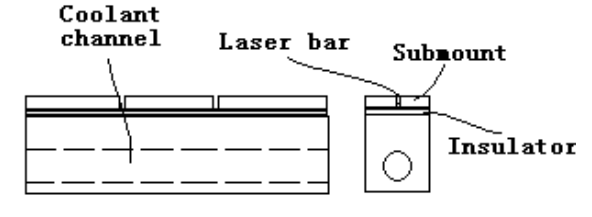
Principle and efficiency advantage: Microchannel cooling creates tiny liquid channels near the laser diode stack, allowing the coolant to circulate in these channels to take away heat. This cooling method has efficient heat exchange capabilities because the tiny channels can increase the contact area between the coolant and the heat source, thereby improving the heat dissipation efficiency. The coolant can quickly transfer heat from the laser diode during the flow process, keeping the stack at a lower temperature level and ensuring its stable operation.
Industrial high-power scene application: In industrial high-power application scenarios, such as high-power laser cutting, welding and other processing equipment, the laser diode stack will generate a lot of heat. Microchannel liquid cooling can effectively cope with this high heat load and ensure the performance and reliability of the equipment under long-term high-power operation. For example, in large metal processing workshops, laser diode stacks using microchannel liquid cooling can provide a stable light source for high-precision laser cutting equipment, ensuring cutting quality and efficiency.

②Thermoelectric Cooling (TEC)
Scenarios requiring precise temperature control (such as scientific research instruments): Thermoelectric cooling uses the Peltier effect of semiconductor materials. When current passes through a loop composed of two different metals or semiconductors, heat absorption or heat release occurs at the node. By controlling the direction and magnitude of the current, the laser diode stack can be precisely controlled. This cooling method can provide a very stable temperature environment. For some scientific research instruments that require extremely high temperature accuracy, such as spectrometers and high-precision sensors, the thermoelectrically cooled laser diode stack can ensure that the performance of the instrument is not affected by temperature fluctuations, thereby improving the accuracy and reliability of the measurement.
③Air cooling and natural convection cooling
Applicability of low-power portable devices: Air cooling is to force air flow through a fan to take away the heat generated by the laser diode stack; natural convection cooling relies on convection caused by the natural temperature difference of the air to dissipate heat. These two cooling methods do not require complex cooling systems and coolants, and have simple structures and low costs. For low-power portable devices, such as small laser rangefinders and portable laser projectors, air cooling and natural convection cooling can meet the heat dissipation requirements while maintaining the portability and simplicity of the device. They can effectively dissipate heat during device operation, preventing the laser diode stack from being damaged by overheating, while not placing too much additional burden on the device.
4. Classification by output power and driving mode
① Continuous wave (CW) laser stack
Power range (hundred watts to kilowatts): Continuous wave laser stacks can output continuous and stable lasers, and their power range can extend from the hundred watt level to the kilowatt level. This wide power range enables it to meet the needs of different application scenarios. For example, in industrial processing, for some tasks such as material cutting and welding that require higher power but not extremely high power requirements, a hundred watt-level continuous wave laser stack can be competent; while in some large-scale industrial production or scientific research experiments with high power requirements, a kilowatt-level continuous wave laser stack is required to provide sufficient energy.
Long-term stability requirements: Since the continuous wave laser stack needs to continuously output stable lasers for a long time, it has higher requirements for its long-term stability. In the industrial production process, the equipment needs to run for a long time. If the output power of the laser stack is unstable, it will cause fluctuations in processing quality and affect the consistency and qualified rate of the product. In the field of scientific research, such as long-term physical experiments or chemical analysis, the laser stack is also required to maintain a stable output to ensure the accuracy and reliability of the experimental data. In order to meet the requirements of long-term stability, a series of measures are usually required during the design and manufacturing process, such as optimizing the heat dissipation system, selecting high-quality materials, and performing strict packaging.
② Pulse laser stack
Short pulse (nanosecond level) and ultrashort pulse (picosecond/femtosecond level): Pulse laser stack can produce short pulse laser output, which can be divided into short pulse (nanosecond level) and ultrashort pulse (picosecond/femtosecond level) according to the pulse width. The pulse width generated by the short pulse laser stack is at the nanosecond level. This pulse laser has a high peak power and is suitable for some scenes with high requirements for processing accuracy and speed, such as precision cutting and drilling of certain metal materials. The pulse width of the ultrashort pulse laser stack reaches the picosecond or even femtosecond level. It is characterized by an extremely low heat-affected zone and can process materials without causing obvious thermal damage. Therefore, it has important applications in precision processing fields such as semiconductor chip manufacturing and glass cutting.
Applications: Precision machining, LiDAR: In precision machining, the high precision and high energy density of pulsed laser stacks enable them to achieve fine machining of various materials, such as manufacturing tiny electronic components in the electronics industry and processing optical lenses in the optical field. In the field of LiDAR, pulsed laser stacks are used as emission sources to detect the distance and position information of the target by emitting short pulses or ultrashort pulses of laser and then receiving the reflected light signal. Due to the characteristics of pulsed lasers, high-precision distance measurement and target recognition can be achieved, and they are widely used in autonomous driving, aerospace and other fields.
The classification of high-power laser diode stacks covers structure and packaging (vertical stacking, horizontal arrays, hybrid packaging), wavelength and output characteristics (near infrared, mid-infrared, visible light, tunable), cooling methods (microchannel liquid cooling, thermoelectric cooling, air cooling and natural convection), output power and driving mode (continuous wave, pulse), and application scenarios (industrial manufacturing, medical biology, scientific research and national defense). When selecting technology, it is necessary to comprehensively consider power requirements, wavelength range, heat dissipation conditions, application environment and cost-effectiveness. For example, industrial high-power processing gives priority to vertical stacking or hybrid packaging structures with microchannel liquid cooling; precision medical surgery can choose stacks with near-infrared or mid-infrared bands and precise temperature control; in the field of scientific research, tunable or specific wavelength stacks are selected according to specific experimental needs, and combined with appropriate cooling and driving modes to ensure long-term stable operation.
Contact information:
If you have any ideas, feel free to talk to us. No matter where our customers are and what our requirements are, we will follow our goal to provide our customers with high quality, low prices, and the best service.
 Email:info@loshield.com
 Tel:0086-18092277517
 Fax: 86-29-81323155
 Wechat:0086-18092277517


