



In modern manufacturing, welding technology is essential for material connection. TIG (Tungsten Inert Gas Welding) and laser welding are two widely used welding methods, but there are significant differences in heat source (arc energy and laser beam), material adaptability, precision and safety requirements, and the emphasis on the selection of corresponding protective equipment is also different.
1. Technical Principles and Core Differences
1.1 Heat Sources and Energy Transfer
TIG Welding:
Uses an electric arc (3,000–6,000°C) between a tungsten electrode and the workpiece to melt the base metal and filler wire. Argon gas shields the molten pool from oxidation. It delivers broad heat input (0.5–5 kJ/mm), resulting in a large heat-affected zone (HAZ) and potential workpiece deformation712.
Laser Welding:
Focuses a high-energy-density laser beam (10⁶–10⁷ W/cm²) to melt materials. Its precise heat input (0.1–1 kJ/mm) creates a narrow HAZ (1/3–1/10 of TIG welding), rapid cooling, and minimal distortion713.
|
|
|


1.2 Material Compatibility
TIG Welding:
Suitable for: Carbon steel, stainless steel, aluminum, titanium (oxidation-sensitive metals), and thick plates (≥3 mm).
Limitations: Poor performance on low-melting-point metals (e.g., lead) and highly reflective materials (e.g., copper)712.
Laser Welding:
Suitable for: Thin sheets (0.1–4 mm), reflective metals (aluminum, copper), and precision components (electronics, molds). Capable of joining dissimilar metals (e.g., steel-aluminum)1213.
Limitations: High cost for thick plates (>6 mm) and stringent alignment requirements (gap <0.1 mm)7.
1.3 Process Characteristics
| Parameter | TIG Welding | Laser Welding |
|---|---|---|
| Speed | Slow (0.1–0.5 m/min) | Fast (1–10 m/min) |
| Automation | Manual operation, low automation | Highly automated, robot-friendly |
| Energy Efficiency | Low (30–40% heat loss) | High (30–50% photoelectric efficiency) |
| Post-processing | Grinding and straightening | Minimal or simple polishing |

2. Protective Curtain Selection
2.1 TIG Welding Protection Requirements
Radiation and Gas Hazards:
UV/IR Radiation: TIG arcs emit intense UV (5–30× stronger than ordinary welding). Use curtains with a shading level ≥DIN 12, covering a 1.5 m radius712.
Ozone and Fumes: Curtains should have sealed edges (e.g., magnetic strips) and integrate with ventilation systems (≥1,000 m³/h airflow)7.
High-Temperature Resistance:
Withstand spatter temperatures up to 1,500°C. Materials must meet UL94 V-0 flame-retardant standards (e.g., Nomex fiber with silicone-coated glass fiber)7.
2.2 Laser Welding Protection Criteria
Wavelength and Optical Density (OD):
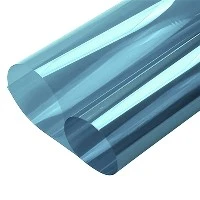
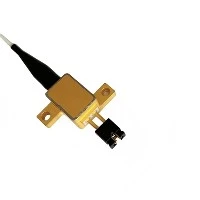
For fiber lasers (1,064 nm) or semiconductor lasers (808–980 nm), select curtains with OD ≥4 (blocks 99.99% energy). Materials may include lead-glass composites or polycarbonate layers13.
Anti-Reflection Design:
Use matte surfaces (reflectivity <8%) to prevent beam reflections. Overlapping seams (≥10 cm width) eliminate scatter leakage1213.
Durability and Flexibility:
Choose tear-resistant fabrics (≥50 N/cm ) and modular designs for adaptable workspace layouts12.

3. Economic and Application Considerations
3.1 Cost Analysis
Initial Investment: TIG equipment costs 10–20% of laser systems but requires ongoing expenses (argon gas, electrodes). Laser systems have higher upfront costs but lower long-term operational costs712.
Efficiency: Laser welding reduces labor costs by 60–80%, ideal for high-volume production (e.g., automotive parts)7.
3.2 Typical Applications
TIG Welding: Shipbuilding (thick plates), pipeline welding, and artisanal metalwork7.
Laser Welding: Consumer electronics (battery sealing), medical devices (clean welds), and aerospace (titanium components)1213.

4. Safety Standards
TIG Welding:
Ensure argon purity ≥99.99% and wear UV-protective gear (blocking ≥99.9% radiation)7.
Laser Welding:
Comply with laser safety standards (e.g., GB 7247.1-2012). Install interlock systems (shutter response <0.1 seconds)13.
5. Conclusion
TIG and laser welding are complementary: TIG excels in cost-effective thick-plate welding, while laser technology enables precision and efficiency. Protective curtains must align with process-specific risks-TIG requires UV shielding and gas containment, whereas laser demands wavelength-specific OD and anti-reflection properties. Enterprises should adopt integrated safety systems (e.g., isolation screens + PPE) rather than relying solely on curtains.