



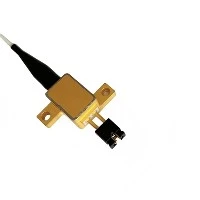
Mid-infrared laser refers to electromagnetic waves with a wavelength in the 3μm~1000μm band; in the field of laser technology, mid-infrared is generally defined as the 2μm~5μm band. Mid-infrared lasers have unique wavelength ranges and molecular absorption characteristics, and are suitable for a variety of application scenarios; while pulsed fiber lasers have shown wide application potential in industrial processing and other fields with their advantages such as high beam quality, good stability and compact structure.
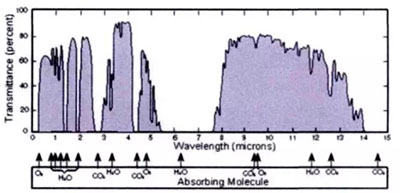
The mid-infrared band contains two main atmospheric transmission windows (3~5 μm and 8~12 μm regions). In these bands, the absorption of the main components in the atmosphere is very low, so long-distance transmission can be achieved, which is suitable for remote sensing, detection and other fields.
The mid-infrared band is located in the fundamental vibration resonance region of most molecules, and many liquids, gases and non-metallic materials have strong absorption of mid-infrared light. This feature makes mid-infrared lasers have important applications in spectral analysis, environmental monitoring, medical diagnosis and other fields.

Key technologies of mid-infrared pulsed fiber lasers
1. Gain medium selection
① Rare earth-doped fiber:
Er³⁺ (erbium ion): usually used to achieve laser output in the 2.7~2.8 μm band, suitable for medical, atmospheric remote sensing and other fields. Its energy level structure enables it to generate mid-infrared lasers under specific pumping conditions.
Ho³⁺ (holmium ion): can generate lasers in the 2.0~2.1 μm band, often co-doped with other ions (such as co-doped with Pr³⁺) to optimize laser performance. This band is in the atmospheric transmission window, safe for human eyes and has application value in laser radar and other fields.
Tm³⁺ (thulium ion): can generate lasers in the 2.3 μm band, which is meaningful for certain specific spectral analysis and applications.
② Nonlinear frequency conversion:
OPO (Optical Parametric Oscillator): Based on the parametric amplification process in nonlinear crystals, the energy of pump light is converted into signal light and idler light. By selecting appropriate nonlinear crystals and oscillator designs, laser output in the mid-infrared band can be obtained, and tuning can be achieved within a wider wavelength range.
DFG (Stimulated Raman Scattering): Mid-infrared lasers are generated using the Raman scattering effect. By adjusting the parameters of the pump light and the characteristics of the Raman medium, mid-infrared laser outputs of different wavelengths can be achieved, but higher pump power is usually required.
2. Pulse generation mechanism
① Q-switching technology:
Active Q-switching: The loss or pump power of the laser is controlled by an external modulation signal, so that the photon density in the laser cavity changes periodically, thereby generating pulsed laser output. For example, the laser is modulated using components such as an acousto-optic modulator or an electro-optic modulator to generate pulses. This method can accurately control the repetition frequency and pulse width of the pulse, but requires additional modulation equipment, which increases the complexity of the system.
Passive Q-switching: The nonlinear absorption characteristics of passive components such as saturated absorbers are used to modulate the photon density in the laser cavity. When the photon density reaches a certain threshold, the absorption coefficient of the saturated absorber changes, thereby changing the loss of the laser cavity and generating pulsed lasers. Passive Q-switching has a simple structure and low cost, but the repetition frequency and pulse width of the pulse are relatively difficult to control.
② Mode-locking technology:
Material saturable absorption (MSA) mode-locking: Materials with optical nonlinear absorption characteristics are used as mode-locking devices, such as commercial semiconductor saturable absorber mirrors (SESAM) and new nanomaterials (such as graphene, carbon nanotubes, etc.). These materials have strong absorption for weak light and high transmittance for strong light, thereby achieving intracavity pulse narrowing and generating mode-locked pulses.
Nonlinear polarization rotation (NPR) mode-locking: With the help of the nonlinear Kerr effect of the optical fiber itself, different nonlinear phase shifts are applied to light in different polarization directions. Under the action of the intracavity polarization device, the resonant cavity exhibits characteristics similar to saturable absorption, thereby achieving mode-locking. This technology is not limited by the band gap and relaxation time of the material, has transient ultrafast recovery characteristics and high modulation depth and damage threshold, and is suitable for high-power femtosecond pulse generation.
Frequency shift feedback (FSF) mode locking: Through a certain feedback mechanism, the frequency of part of the output light is shifted and fed back to the laser cavity, interacting with the light field in the cavity to form a stable mode-locked pulse sequence. This mode locking method can achieve high repetition frequency and narrow pulse width of pulses.
3. Core challenges
① Thermal management:
Mid-infrared pulse fiber lasers generate a lot of heat during operation. If the heat cannot be dissipated in time and effectively, it will lead to problems such as laser performance degradation and fiber damage. Therefore, it is necessary to adopt efficient heat dissipation technology and thermal management measures, such as using fiber matrix materials with high thermal conductivity, designing reasonable heat dissipation structures, and using cooling devices to ensure the stable operation of the laser.
② Photon darkening effect:
Under high-power pumping conditions, the photon darkening effect in rare-earth-doped optical fibers will affect the performance and life of the laser. Photon darkening refers to the phenomenon that when the laser material is irradiated with strong light, the electrons generated by light excitation are captured by the trap center, resulting in changes in the absorption and emission characteristics of the material. In order to reduce the impact of the photon darkening effect, it is necessary to optimize the doping concentration of the optical fiber, improve the preparation process of the optical fiber, select a suitable pump source and working conditions, etc.
③ Limitations of mid-infrared optical fiber materials:
Currently, the types of optical fiber materials that can be used in the mid-infrared band are limited, and there are still some problems in the drawing process, optical properties, and mechanical properties of the optical fiber. For example, although fluoride glass fiber is a commonly used mid-infrared optical fiber matrix material, its phonon energy is relatively high, which limits the emission wavelength range of the laser; sulfide glass fiber has problems such as poor chemical stability and difficulty in preparation. Therefore, it is necessary to continuously explore and develop new mid-infrared optical fiber materials to meet the development needs of mid-infrared pulsed fiber lasers.

Main application areas
1. Medical and biological imaging
① Laser surgery
Principle: Mid-infrared lasers (2-5μm band) can be strongly absorbed by water molecules, and about 70% of human tissue is water. This allows the energy of mid-infrared lasers to be concentrated on the surface when they come into contact with human tissue, reducing thermal damage to surrounding tissues. For example, in ophthalmic surgery, this feature can be used to perform high-precision corneal cutting without causing unnecessary damage to other eye tissues.
Advantages: Compared with traditional visible light or near-infrared laser surgery, mid-infrared laser surgery has higher precision and lower thermal effects, which can achieve more delicate surgical operations and reduce patients' pain and recovery time.
② Label-free tissue imaging
Principle: For example, optical coherence tomography (OCT) technology uses the low scattering characteristics of mid-infrared lasers to perform high-resolution tomographic imaging of biological tissues. When mid-infrared light is irradiated on tissues, tissue layers at different depths will reflect back light signals of different intensities. By collecting and processing these signals through detectors, a three-dimensional structural image of the tissue can be constructed.
Advantages: This imaging method does not require staining or marking of tissues, avoiding the damage and chemical contamination that traditional staining methods may cause to tissues, and can obtain dynamic information of tissues in real time, providing a powerful tool for early diagnosis and treatment of diseases.
2. Environmental monitoring and gas sensing
① Trace gas detection
Principle: Many trace gases (such as CO₂, CH₄, etc.) have characteristic absorption peaks in the mid-infrared band. By aiming the laser emitted by the mid-infrared pulsed fiber laser at the gas sample to be tested and measuring the energy change after the gas absorbs light of a specific wavelength, the concentration of the gas can be determined. For example, CO₂ has a strong absorption peak at 4.26μm. By detecting the attenuation of the laser energy at this wavelength, the concentration of CO₂ can be inferred.
Advantages: Mid-infrared pulsed fiber lasers have the characteristics of high sensitivity and high resolution, and can detect trace gases at extremely low concentrations, which is of great significance for environmental monitoring, industrial process control, and climate change research.
② Atmospheric pollution analysis
Principle: Pollutants in the atmosphere (such as nitrogen oxides, sulfides, etc.) also have different absorption characteristics in the mid-infrared band. By scanning the atmosphere with a mid-infrared pulsed fiber laser, the concentration distribution of multiple pollutants can be detected simultaneously. For example, by analyzing the absorption of lasers of different wavelengths in the atmosphere, a spatial distribution map of pollutants can be drawn.
Advantages: This remote, non-contact measurement method can quickly and widely obtain atmospheric pollution information without collecting samples, providing an efficient means for environmental protection and air quality assessment.
3. Industrial processing
① Polymer/semiconductor precision processing
Principle: Mid-infrared lasers can be strongly absorbed by polymers and semiconductor materials, causing the molecular bonds inside the materials to break, thereby achieving material removal or modification. During the precision processing process, by precisely controlling the parameters of the laser (such as pulse width, energy density, etc.), the material can be cut, drilled, engraved, and other operations can be performed with high precision. For example, in semiconductor chip manufacturing, mid-infrared lasers can be used to achieve micro-processing of silicon wafers and improve the integration and performance of chips.
Advantages: Compared with traditional mechanical processing or photolithography technology, mid-infrared laser processing has the advantages of non-contact, high precision, and high efficiency, which can avoid mechanical stress and damage to materials and improve product quality and reliability.
②Infrared transparent material cutting
Principle: Some infrared transparent materials (such as chalcogenide glass) have good transmittance in the mid-infrared band. When these materials are cut by mid-infrared pulsed fiber lasers, the laser energy is absorbed inside the material and converted into heat energy, causing the material to partially melt or vaporize, thereby achieving cutting. By adjusting the scanning path and parameters of the laser, material parts of various shapes and sizes can be cut.
Advantages: This cutting method has the advantages of smooth edges, high precision, and small heat-affected zone, which can meet the needs of infrared optical systems, aerospace and other fields for high-performance infrared transparent material parts.
4. National Defense and Security
①Infrared Countermeasures
Principle: In military applications, mid-infrared pulsed fiber lasers can be used to emit high-power infrared laser beams to interfere with or destroy enemy infrared detection equipment, guided weapons, etc. For example, by emitting lasers with the same working wavelength as the enemy's infrared detection system, its detector is saturated or invalidated, thereby protecting one's own targets.
Advantages: Mid-infrared lasers have good atmospheric transmission characteristics and strong anti-interference capabilities. They can effectively implement infrared countermeasures in complex battlefield environments and improve the combat effectiveness and survivability of military equipment.
② Laser radar (LiDAR)
Principle: LiDAR calculates the distance, direction, height and other information of the target by emitting laser pulses and receiving the signals reflected by the target. Mid-infrared pulse fiber lasers can achieve longer distance and higher precision target detection due to their short pulses and high peak power. For example, in applications such as topographic mapping and target identification, mid-infrared laser radar can obtain more detailed target information.
Advantages: Compared with traditional microwave radars, mid-infrared laser radars have higher resolution and accuracy, can better identify and classify targets, and have important application prospects in defense reconnaissance, autonomous driving and other fields.
③ Remote detection of explosives
Principle: Many explosives (such as dynamite, drugs, etc.) have characteristic spectra in the mid-infrared band. Use mid-infrared pulse fiber lasers to illuminate long-distance targets, collect spectral signals reflected by the targets, and determine whether explosives exist by analyzing spectral characteristics. For example, in security inspection places such as airports and ports, mid-infrared laser remote detection equipment can be used to inspect personnel and luggage.
Advantages: This remote detection method has the advantages of non-contact, fast and accurate. It can timely detect potential safety hazards without affecting normal operations, and ensure public safety and social security.
5. Scientific research
① Ultrafast spectroscopy
Principle: Ultrafast spectroscopy studies the changes in the spectral characteristics of substances in an extremely short time (femtosecond, picosecond level). Mid-infrared pulsed fiber lasers can produce extremely short pulsed lasers, which can be used to excite samples and detect their ultrafast spectral responses. For example, through the pump-probe technology, the sample is pumped with a mid-infrared laser to produce an excited state, and then another laser beam is used to detect the spectral changes of the sample at different delay times, so as to study the ultrafast processes such as the electronic state and lattice vibration of the substance.
Advantages: It provides a powerful research method for fields such as chemistry, physics, and materials science, which helps to deeply understand the internal structure and dynamic process of substances.
② Cold molecule manipulation
Principle: The interaction between mid-infrared lasers and molecules can be used to capture, move and manipulate cold molecules. By precisely adjusting the frequency, intensity and phase of the laser, a specific optical potential well can be formed to imprison cold molecules and realize the motion control of molecules. For example, in the field of quantum computing and quantum information processing, mid-infrared lasers can be used to manipulate the quantum state of cold molecules to achieve the operation of quantum bits.
Advantages: It provides a new experimental platform for research in quantum physics, chemical physics and other fields, and is expected to make important breakthroughs in quantum computing, quantum simulation and other aspects.
③ Generation of attosecond pulses
Principle: Through nonlinear optical processes such as high-order harmonic generation (HHG), mid-infrared pulsed fiber lasers can generate ultrashort pulses at the attosecond level (10⁻¹⁸ seconds). When mid-infrared lasers interact with atoms or molecules, high-order harmonics are generated. The frequencies of these harmonics are in the extreme ultraviolet (XUV) band, and their pulse widths can reach the attosecond level.
Advantages: It provides extremely high time resolution for the study of ultrafast processes such as nuclear motion and electron dynamics, which helps to further reveal the mysteries of the microscopic world of matter.
In summary, mid-infrared pulsed fiber lasers have shown broad application prospects and great potential in the fields of medical and biological imaging, environmental monitoring and gas sensing, industrial processing, national defense and security, and scientific research. With the continuous development and improvement of technology, it is believed that mid-infrared pulsed fiber lasers will play an important role in more fields and bring more welfare and progress to human society.
Contact information:
If you have any ideas, feel free to talk to us. No matter where our customers are and what our requirements are, we will follow our goal to provide our customers with high quality, low prices, and the best service.
 Email:info@loshield.com
 Tel:0086-18092277517
 Fax: 86-29-81323155
 Wechat:0086-18092277517


