



With the continuous development of Laser technology, its application in industrial fields is becoming more and more extensive. The emergence of pulsed fiber lasers has brought revolutionary changes to fields such as laser cleaning. It not only improves cleaning efficiency and quality, but also reduces the impact on the environment. In the future, with further technological advancement, pulsed fiber lasers are expected to exert their unique advantages in more industrial fields.
Application of pulsed fiber laser in laser cleaning field
Laser cleaning is a technology that uses laser light to remove dirt from the surface of materials. Pulsed fiber lasers are particularly important in this area for the following reasons:
High control accuracy: Precise control of pulse width can adjust the energy density of the laser to adapt to different cleaning tasks.
Small thermal impact: Due to the short pulse action time, the thermal impact on the substrate is minimized, making it suitable for cleaning heat-sensitive materials.
Good cleaning effect: Pulse fiber laser can provide enough energy to remove stubborn dirt, such as oil, rust, coating, etc.
Flexible operation: You can adjust pulse frequency, energy and other parameters to adapt to different cleaning needs.
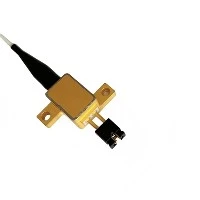
The basic principle of pulsed fiber laser involves three key parts: gain medium, optical resonant cavity and pump source.
Pulsed fiber lasers insert modulation devices, such as Q switches, into the resonant cavity to periodically change the cavity loss, thereby achieving pulsed laser output. The gain medium is generally an optical fiber doped with rare earth ions. These ions can amplify the optical signal passing through the optical fiber. Optical resonators are composed of specific reflective elements that provide positive feedback for light and select wavelengths. The role of the pump source, usually a semiconductor laser, is to provide energy to excite particle population inversion in the gain medium, thereby amplifying the optical signal passing through the fiber.
Characteristics of pulsed fiber lasers include high peak power, good beam quality, and compact design.
Pulsed fiber lasers are capable of producing high peak power laser pulses, which are critical for applications such as laser marking, cutting, ranging, and more. Due to the longer gain medium in fiber lasers, it is difficult to obtain narrower pulse width laser output, but through appropriate technology, such as master oscillator power amplification (MOPA) technology, high peak power and high energy pulse laser output can be obtained. The beam quality is high and the core diameter is on the order of several microns, which greatly improves the beam quality of the laser and meets the high-quality requirements of industrial processing. With compact structure design, fiber lasers are highly integrated and their performance is usually better than traditional solid-state and gas lasers. This is due to the advantages of optical fiber, such as easy heat dissipation, long service life, and low maintenance costs.
The basic principles and advantages and disadvantages of laser cleaning technology
The basic principle of laser cleaning technology is to use high-energy laser beams to irradiate the surface of the object to be cleaned, quickly heating the dirt, rust, coating and other impurities on the surface to the point of vaporization or decomposition, thereby achieving the purpose of removing pollutants.
The advantage of laser cleaning technology is that it is a non-contact processing method, which means that it does not cause mechanical stress on the object being cleaned, avoiding damage that may be caused by traditional cleaning methods. In addition, laser cleaning is a kind of dry cleaning that does not require the use of chemical reagents, so it does not produce chemical pollution and is environmentally friendly. The technology also enables precise control, allowing the laser's parameters such as wavelength, energy density and pulse width to be adjusted to optimize treatment for different types of contaminants.
However, laser cleaning technology also has some limitations. First, its equipment cost is relatively high, especially high-power lasers and precise control systems. Secondly, for some materials, laser may damage the substrate or change its surface properties, so laser parameters need to be carefully selected and the cleaning process controlled. Additionally, for large or complex-shaped objects, a more sophisticated scanning system may be required to ensure that the laser covers all areas that need to be cleaned.
Despite this, laser cleaning technology is still successfully used in many fields, such as cultural relic protection, aerospace, automobile manufacturing, ship maintenance, etc. In these fields, laser cleaning technology is favored because of its high efficiency, environmental protection and controllability. As technology advances and costs decrease, the applicability and popularity of laser cleaning technology is expected to further increase.
Application of pulsed fiber laser in laser cleaning
Pulsed fiber lasers are widely used in laser cleaning technology, especially in the fields of aerospace, automobile manufacturing, electronic manufacturing, and cultural relic protection. In these industries, pulsed fiber lasers are used to remove surface dirt, strip paint, and perform surface treatment of materials.
In the aerospace industry, pulsed fiber lasers are used to clean aircraft engine blades, turbines and other critical components. For example, the use of high peak power laser pulses can effectively remove oil stains and oxide layers on the blade surface, improving engine performance and reliability. This non-contact cleaning method avoids the damage that traditional cleaning methods can cause, while reducing cleaning time and costs.
In automotive manufacturing, pulsed fiber lasers are used for coating removal before car body welding and for surface treatment of engine components. By adjusting the laser parameters, the old coating can be removed without damaging the substrate, providing a good foundation for the application of new coatings. In addition, laser cleaning can also be used to remove oil and rust from automotive parts, improving assembly quality and overall product performance.
In electronics manufacturing, pulsed fiber lasers are used to remove residue and contaminants from circuit boards. Due to its precise control capabilities, laser cleaning can clean circuit board surfaces without damaging tiny components, ensuring the quality of electronic products. This dry cleaning method also avoids the use of chemical reagents and reduces the risk of environmental contamination.
In the field of cultural relics protection, pulsed fiber lasers are used to remove dirt and coverings from the surfaces of monuments and cultural relics. For example, for stone artifacts, traditional cleaning methods may damage their surface structure, while laser cleaning can precisely control the energy density to avoid damage to the original material. This delicate cleaning method is crucial to preserving historic heritage.
Although pulsed fiber lasers offer many advantages during operation, they may also face some challenges. For example, the equipment costs more, requires higher operator skills, and in some cases specific safety measures may be required. To address these challenges and optimize cleaning results, laser parameters need to be carefully adjusted and controlled to ensure optimal cleaning results in different applications. Additionally, training operators to become proficient in laser cleaning technology is critical.
Pulsed Fiber Lasers Compared to Traditional Cleaning Methods
Pulsed fiber lasers differ significantly from traditional cleaning methods in terms of efficiency, cost-effectiveness and environmental impact.
First, from an efficiency perspective, pulsed fiber lasers generally have greater advantages in the speed and quality of contaminant removal. Laser cleaning is a non-contact treatment method that can quickly heat dirt, rust, coating and other impurities on the surface to the point of vaporization or decomposition, thereby quickly removing contaminants. In comparison, traditional mechanical cleaning methods may take longer and may not completely remove all contaminants. Chemical cleaning, while quick to remove certain types of contaminants, can require longer reaction times and can be damaging to some materials. Ultrasonic cleaning can remove contaminants in a shorter period of time but may require the use of specific cleaning fluids and higher energy input.
Second, from a cost-effectiveness perspective, pulsed fiber lasers generally have a higher acquisition cost, but due to their efficient, dry cleaning characteristics, operating and maintenance costs are relatively low. Traditional cleaning methods may require the purchase of large quantities of cleaning agents and consumables, as well as regular maintenance and replacement of cleaning equipment, which will increase long-term costs.
Finally, pulsed fiber lasers are more sustainable from an environmental impact perspective. Laser cleaning is a dry cleaning method that does not require the use of chemical reagents and therefore does not create hazardous waste disposal issues. In contrast, traditional chemical cleaning methods may produce large amounts of waste liquid and waste gas, which need to be properly treated to avoid environmental pollution. Mechanical and ultrasonic cleaning, while not producing hazardous waste, may require the use of large amounts of water for flushing and cleaning.
In certain industrial applications, pulsed fiber lasers have demonstrated superiority and practicality over traditional methods. For example, in the aerospace industry, laser cleaning is used to clean engine blades and other critical components, removing dirt and old coatings without damaging the substrate. In automobile manufacturing, laser cleaning is used to remove coatings before body welding and to treat the surfaces of engine parts, improving production efficiency and reducing waste generation. In the field of cultural relics conservation, laser cleaning can precisely remove dirt and coverings from the surfaces of monuments and cultural relics while minimizing damage to the original materials.
Pulsed fiber lasers offer significant advantages in terms of efficiency, cost-effectiveness, and environmental impact. Although the equipment acquisition cost is high, its efficient and environmentally friendly characteristics make it an ideal cleaning method in many industrial applications. With the advancement of technology and reduction of costs, pulsed fiber lasers are expected to be more widely used and developed in the future.
Pulsed fiber lasers have significant advantages in the field of laser cleaning. These advantages are mainly due to their unique technical characteristics. Pulsed fiber lasers have high peak power and precise pulse control capabilities. This technical feature allows the laser to quickly and accurately remove surface contaminants without causing damage to the substrate. Compared with traditional cleaning methods, pulsed fiber lasers can achieve higher quality and more efficient cleaning results.
Pulsed fiber lasers offer many advantages over traditional cleaning methods. For example, laser cleaning is a non-contact processing method that avoids the damage that mechanical cleaning can cause. In addition, laser cleaning does not require the use of chemical reagents, reducing the risk of environmental pollution. At the same time, laser cleaning equipment usually occupies a small area and is easy to operate and maintain, reducing long-term cost investment.
Pulsed fiber lasers have broad application potential in different industrial fields. In the aerospace field, laser cleaning is used to clean engine blades and other key components; in automobile manufacturing, laser cleaning is used to remove coatings before body welding and to treat the surface of engine parts; in the field of cultural relics protection, laser cleaning can accurately Easily remove dirt and coverings from the surfaces of monuments and cultural relics. With the advancement of technology and reduction of costs, pulsed fiber lasers will play a more important role in future industrial cleaning.
Contact information:
If you have any ideas, feel free to talk to us. No matter where our customers are and what our requirements are, we will follow our goal to provide our customers with high quality, low prices, and the best service.
 Email:info@loshield.com
 Tel:0086-18092277517
 Fax: 86-29-81323155
 Wechat:0086-18092277517


