



Laser technology plays a vital role in PCB drilling. By providing a high-precision, fast and non-contact processing method, Laser Drilling technology has greatly improved the efficiency and quality of PCB manufacturing. This technology is particularly suitable for processing high-density interconnect (HDI) boards and multi-layer PCBs, which require extremely high precision and a large number of tiny holes.
Compared with traditional mechanical drilling methods, laser drilling can achieve finer apertures and more complex patterns without damaging the material, meeting the stringent requirements of modern electronic products for precision and performance. In addition, the flexibility and programmability of laser technology make it an ideal choice for rapid prototyping and small-batch production, further promoting the innovative development of PCB manufacturing.
As a basic component of the electronics industry, PCBs are widely used in almost all electronic devices, including communications equipment, computers, consumer electronics, automotive electronics, and medical devices. Due to the continuous improvement of the electronics industry's requirements for integration, performance, and reliability, the design and manufacture of PCBs have become increasingly complex. Modern PCBs often need to integrate more functions, support higher signal transmission speeds, and adapt to more compact and thin design requirements. Therefore, steps such as precise drilling, circuit layout and interlayer connection in the manufacturing process become particularly critical, and these complexities are precisely the areas where laser technology can effectively solve.
Laser drilling technology is a processing method that uses a high-energy laser beam to accurately drill holes in materials. Its working principle is to use a focused laser beam to irradiate the surface of the material, and by controlling the power, pulse width and focal position of the laser, the material is locally heated, melted or even evaporated to form the desired holes. This process is usually non-contact, which can avoid damage to the material caused by mechanical pressure or tool wear.
Different types of laser technology
1. CO2 laser technology:
- CO2 laser technology mainly emits lasers in the far-infrared band, which is suitable for non-metallic materials and some metal materials. It can provide greater power and higher efficiency, but may not be as accurate and repeatable as other laser types.
2. UV laser technology:
- UV (ultraviolet) laser technology provides a shorter wavelength, which can achieve higher processing accuracy and smaller heat-affected zone (HAZ). This makes UV lasers particularly suitable for applications with high precision requirements, such as micromachining of semiconductor chips.
3. Fiber laser technology:
- Fiber lasers provide excellent beam quality and extremely high power density, suitable for metal drilling and deep cutting. It has high electro-optical conversion efficiency, low maintenance cost, and flexible operation, and is suitable for a variety of industrial environments.
4. Green laser technology:
- Green laser has a short wavelength and is usually used for drilling plastics, glass and some transparent materials, as well as some precision processing that needs to avoid thermal effects.
Comparison of the advantages of laser drilling and traditional mechanical drilling
- Accuracy and fineness:
- Laser drilling can achieve precise control at the micron level (μm), far exceeding the accuracy of traditional mechanical drilling. Especially when processing small and complex holes, laser technology shows unparalleled advantages.
- Material applicability:
- Laser drilling does not rely on hard tools, so it can process a variety of hard materials, including metals, ceramics, glass, etc., while mechanical drilling is unable to cope with these hard materials.
- Repeatability and consistency:
- Laser drilling has high repeatability and consistency because it is precisely controlled by a computer system. In contrast, mechanical drilling may cause the processing quality to change over time due to tool wear.
- Heat effects and material damage:
- Laser drilling has a smaller heat-affected area on the material due to its non-contact nature, reducing the possibility of material damage and deformation. Mechanical drilling may cause greater physical damage and mechanical stress.
- Flexibility and speed:
- Laser drilling systems are easy to program and adjust, supporting fast switching and customized production, which is unmatched by stopping and replacing mechanical drills. In addition, laser drilling is usually faster, especially when producing large quantities of identical parts.
Key applications of laser drilling of PCB boards:
1. High-density interconnect technology (HDI)
In the manufacture of HDI boards, a large number of tiny vias are required to achieve high-density layout of electronic components. Laser drilling can provide precisely controlled micro-hole processing to meet the design requirements of high-density interconnection. Compared with traditional mechanical drilling technology, laser drilling can achieve smaller apertures and higher precision, which is crucial to improving the performance and reliability of HDI boards.
2. Manufacturing of microelectronic devices
For microelectronic devices such as smartphones, wearable devices, etc., the internal PCB boards require extremely fine and precise hole positions to ensure the compact structure and function of the devices. Laser drilling technology can achieve high-precision hole processing on the PCB boards required for these miniaturized devices, ensuring maximum integration and functionality while maintaining the aesthetics of the overall design.
3. Multi-layer PCB board manufacturing
In the manufacturing process of multi-layer PCB boards, precisely aligned vias are required between the layers. Laser drilling provides an efficient and accurate method to manufacture these holes, ensuring the correct connection between the layers of the multi-layer board. In addition, laser technology can be easily adjusted to accommodate the unique punching requirements between different layers, improving the flexibility and efficiency of production.
4. High-frequency PCB board manufacturing
In high-frequency applications, PCB boards need to have specific electromagnetic interference (EMI) shielding and signal integrity characteristics. Laser drilling can be used to accurately manufacture the required apertures and shapes to optimize high-frequency performance. For example, through precise laser processing, specific waveguide structures can be formed on PCB boards to enhance signal transmission quality and reduce losses.
5. Prototype boards and small-batch production
In PCB prototype development or small-batch production, laser drilling provides a fast and customizable drilling option. Compared with the mechanical drilling method used in mass production, laser drilling is more cost-effective and time-effective in single-piece or small-batch production. Designers can quickly iterate and modify designs, and the flexibility of laser drilling equipment makes this iterative process more efficient and economical.
Through the analysis of the above key applications, it can be seen that the versatility and key role of laser drilling technology in PCB board manufacturing not only improves production efficiency, but also ensures the overall quality of the product. It is one of the indispensable technologies in the modern electronics manufacturing industry.
Laser drilling improves PCB manufacturing efficiency and quality:
Improvement of production efficiency
Fast processing speed: Laser drilling can operate at extremely high speeds, drilling hundreds to thousands of holes per second, greatly shortening production time compared to traditional mechanical drilling methods.
No need to change tools: In mechanical drilling, holes of different sizes or shapes may require different drill bits, and changing drill bits requires downtime and recalibration, but laser drilling does not require this, reducing equipment adjustment and preparation time.
Automation and programming control: Laser drilling systems can be easily integrated into automated production lines, and through computer programming control, unattended operation can be achieved, improving overall production continuity and efficiency.
Reduced subsequent processing: Since the edges of holes produced by laser drilling are usually clean and smooth, subsequent cleaning and processing work such as deburring is reduced.
Improved quality
Accuracy and repeatability: Laser drilling can control the size, shape and position of holes very accurately, ensuring that the holes on each PCB board are consistent, which is critical to the stability of electrical performance.
Reduce physical damage: Laser drilling is a non-contact process, and there will be no material damage or microcracks caused by mechanical pressure or drill wear, thereby improving the durability and reliability of the PCB board.
Flexibility to cope with complex designs: For PCB boards with complex layouts and tiny components, laser drilling can easily cope with various design requirements, accurately manufacture precise holes, and avoid quality problems caused by design limitations.
Optimize material utilization and cost: The accuracy of laser drilling means less material waste, and each PCB board can use the best layout to optimize material use, while reducing manufacturing defects and scrap rates, and reducing overall production costs.
Through the above analysis, it can be seen that laser drilling technology not only greatly improves production efficiency in PCB board manufacturing, but also significantly improves the overall quality of products. It is a key tool to enhance competitiveness in the modern electronics manufacturing industry.
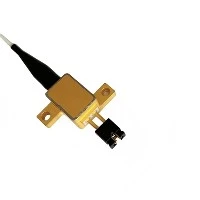
PCB laser drilling usually uses specialized laser drilling equipment, which varies according to the laser type and manufacturer. Here are the laser drilling products we can provide at JTBYShield:
1. Laser drilling equipment
CO2 laser drilling machine: Suitable for a variety of materials, including wood, plastic, glass and some metal materials.
UV laser drilling machine: Provides higher precision processing, especially suitable for precision applications such as micro-machining of semiconductor chips.
Fiber laser drilling machine: Known for its high power and high photoelectric efficiency, suitable for metal drilling and deep cutting.
2. Laser drilling software
Control software: Used to program and control the operation of the laser drilling machine, including the setting of parameters such as the pattern, speed, power, etc. of the drilling.
3. Auxiliary equipment
Cooling system: The laser drilling equipment will generate high temperature during operation, and the cooling system is used to protect the equipment from overheating damage.
Smoke and dust extraction system: Smoke and dust may be generated during the drilling process, and an extraction system is required to maintain a clean and safe working environment.
4. Service and Support
Technical support and service: We can provide high-quality technical support and after-sales service throughout the process to ensure stable operation and timely maintenance of the equipment.
Choosing the right laser drilling product not only needs to consider the performance of the equipment itself, but also the compatibility with the PCB manufacturing process, production efficiency requirements and budget constraints. JTBYShield can provide the best customized solutions, which can be adjusted and optimized for specific PCB manufacturing needs. If you are interested, we will be very happy to talk to you further. We look forward to your reply and hope to be your reliable partner.
Contact information:
If you have any ideas, feel free to talk to us. No matter where our customers are and what our requirements are, we will follow our goal to provide our customers with high quality, low prices, and the best service.
 Email:info@loshield.com
 Tel:0086-18092277517
 Fax: 86-29-81323155
 Wechat:0086-18092277517


