



Most buyers shopping for high-power laser modules encounter the same confusing specification gap: listed wattage ratings often fail to reflect the real optical power that actually reaches and processes target materials.
This issue is extremely common in the blue diode laser industry. Many mainstream 450nm laser cutting modules advertise their electrical input power instead of genuine laser output power, leading to mismatched performance expectations for end users.
This guide explains how the 80W 450nm laser cutting module is specified, what factors influence its processing capability, and what engineers should check before integrating it into a CNC cutter, engraver, or custom laser platform.

80W Electrical Power vs. >20W Laser Output Power
One of the most important specifications to understand is the difference between electrical power and laser output power.
According to the published product specifications, the JTBYShield 80W 450nm laser module is rated at 80W electrical power and provides more than 20W of laser output power at a wavelength of 450nm.
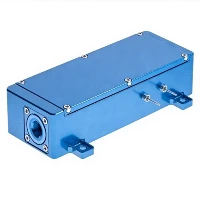
The module is also specified with a 12V operating voltage, 5A working current, PWM modulation, a compact aluminum housing, and a focused spot below 0.08mm.
View the full module specifications
| Specification | Value |
| Laser Wavelength | 450nm |
| Electrical Power | 80W |
| Laser Output Power | >20W |
| Operating Voltage | 12V |
| Working Current | 5A |
| Control Method |
|
| Condensed Beam Spot | <0.08mm |
| Focus Specification | 40mm |
| Spot Mode | Dot |
| Housing Material | Aluminum |
| Module Size | 50 × 50 × 154mm |
| Weight | Approx. 350g |
For buyers, the key point is that the 80W electrical rating and >20W laser output are separate specifications.
When evaluating cutting capability, laser output power is one of the most important numbers because it indicates the optical energy available for processing the material.
However, output power alone does not determine the final result. Focused spot size, material absorption, cutting speed, focus accuracy, airflow, and CNC motion stability can all affect actual cutting performance.
This is why experienced machine builders compare the complete optical and mechanical system rather than selecting a module based on headline wattage alone.
Why 450nm Blue Diode Lasers Are Used for Cutting and Engraving
The 450nm blue diode laser is the go-to wavelength for both hobby DIY and industrial laser applications, and it dominates the market for practical reasons.
As a visible blue-spectrum laser, the 450nm beam absorbs far better across most common engraving and cutting materials. When precisely focused onto a workpiece, the laser energy concentrates quickly into localized heat. This creates clean cuts, fine engraving details, and accurate surface markings with reliable results.
Built for wide-ranging material processing, this 80W 450nm laser cutting module performs best on wood, paper, and plastic. It also delivers steady marking and light engraving on stainless steel, making it suitable for most custom laser fabrication tasks.
That said, real-world laser performance is never fixed. Final cutting and engraving quality depends heavily on real operational conditions - including material type, surface texture, thickness, focus calibration, and CNC cutting speed. Proper parameter tuning is essential to stable, high-precision results with blue diode laser modules.
In practical CNC applications:
Wood and paper are common materials for blue diode laser cutting and engraving.
Plastics can behave very differently depending on color, fillers, transparency, and composition.
Metal processing is highly dependent on surface condition and the intended process. Marking, engraving, or surface treatment may be more suitable than direct cutting for some metals.
For OEM projects, testing the customer's actual material is more reliable than relying only on a general material compatibility list.
<0.08mm Focused Spot: Why Beam Concentration Matters
Laser output power is only part of the cutting equation.
The size of the focused beam also affects how efficiently that power is delivered to the material.
This 80W 450nm module specifies a condensed beam spot below 0.08mm, a dot-beam configuration, and a 40mm focus specification.
A smaller focused spot concentrates optical energy into a smaller area, increasing local energy density.
This can help improve:
- Cutting efficiency
- Engraving detail
- Edge precision
- Fine-line processing
- Energy utilization
Correct focusing is equally important.
If the beam is not properly focused on the processing surface, the spot becomes larger and energy density decreases, reducing cutting and engraving efficiency.
For CNC machine designers, the Z-axis and mounting system should therefore provide accurate and repeatable focus adjustment. Bed flatness, gantry stability, and Z-axis repeatability can all influence whether the module maintains consistent processing performance across the work area.
CNC Integration: Mechanical Design, PWM Control and Cooling
A laser module may perform well as a standalone component but still produce poor results if it is not correctly integrated into the machine.
For OEM and CNC applications, three areas deserve particular attention.
Mechanical Integration
The module measures 50 × 50 × 154mm and weighs approximately 350g, giving it a relatively compact form factor for installation in CNC engravers, laser cutters, woodworking equipment, and customized automation systems.
Before finalizing the machine design, check:
- Available installation space
- Mounting bracket design
- Z-axis load capacity
- Cable routing
- Airflow around the module
- Focus adjustment range
- Clearance between the laser head and workpiece
The module's compact size can simplify integration, but the full motion system should still be evaluated to ensure stable movement and repeatable positioning.
PWM Control for CNC Systems
The module includes PWM modulation, allowing laser output to be controlled by a compatible CNC controller.
PWM control makes it possible to adjust laser output for different processing requirements.
| Process | General Control Approach |
| Cutting | Higher laser output with feed rate optimized for the material |
| Deep Engraving | Higher output or multiple controlled passes |
| Surface Engraving | Lower output with faster movement |
| Marking | Output adjusted according to surface response |
| Different Materials | Duty cycle and feed rate adjusted to match material behavior |
Before connecting the module to an existing CNC controller, confirm:
- PWM signal compatibility
- Signal voltage
- Frequency range
- Wiring polarity
- Ground connection
For OEM projects, it is better to verify controller compatibility during the machine design stage rather than after mechanical assembly is complete.
Fan Cooling for Stable Operation
High-power diode laser modules generate heat during operation, making thermal management an important part of long-term system reliability.
This module uses integrated fan cooling to support heat dissipation during operation.
When mounting the laser inside a machine enclosure, make sure:
- Air inlets and outlets are not blocked
- Cables and brackets do not interfere with airflow
- Hot air is not continuously recirculated inside the enclosure
- Adequate ventilation is available during extended operating cycles
Poor cooling can affect output stability and component life, especially during high-duty-cycle operation.
For production equipment, thermal conditions should therefore be considered as part of the overall machine design.
7 Specifications to Check Before Buying an 80W 450nm Laser Module
When comparing high-power blue laser modules, avoid making a decision based only on the advertised wattage.
Instead, check these seven points:
1. Laser Output Power
Confirm whether the advertised wattage refers to electrical power or actual optical output.
For this module, the published specifications list 80W electrical power and >20W laser output power.
2. Wavelength
Verify that the wavelength is appropriate for the materials you plan to process.
This module operates at 450nm.
3. Focused Spot Size
A smaller focused spot can increase energy density and improve processing precision.
This module specifies a condensed spot below 0.08mm.
4. CNC Control Compatibility
Confirm that the module's PWM control is compatible with your CNC controller.
Signal voltage, frequency, and wiring should all be checked before installation.
5. Module Size and Weight
Make sure the module fits the available machine space and does not negatively affect gantry or Z-axis performance.
6. Cooling Design
Check whether the machine enclosure provides enough airflow for the module's fan cooling system.
7. Material Testing
Always test the customer's actual material before finalizing production settings.
Materials with the same nominal thickness can still behave differently depending on density, composition, moisture, coatings, adhesives, and surface color.
For OEM machine builders, these factors are usually more useful than comparing wattage alone.
Typical Applications
With >20W laser output at 450nm, PWM control, a compact aluminum housing, and fan cooling, this module can be considered for a range of laser processing systems.
Typical applications include:
- CNC laser cutting systems
- Laser engraving machines
- Woodworking equipment
- Paper and packaging processing
- Customized laser equipment
- Prototype and R&D systems
- OEM automation platforms
Actual processing performance depends on the material and machine configuration, so application testing is recommended before moving to batch production.
Frequently Asked Questions
Is this an 80W optical laser?
No. The published specifications list 80W electrical power and more than 20W laser output power. These are separate specifications and should not be treated as the same value.
What wavelength does the module use?
The module operates at 450nm, which falls within the blue visible-light spectrum.
Does the module support CNC laser power control?
Yes. The module supports PWM modulation, allowing compatible CNC controllers to adjust laser output during processing.
What thickness can this 450nm laser module cut?
The manufacturer does not publish a single maximum cutting thickness for this module.
Actual cutting capability depends on material type, density, focus, feed rate, number of passes, airflow, and other machine parameters.
For OEM applications, testing the customer's actual material and target thickness is recommended before finalizing machine specifications.
Looking for a 450nm Laser Module for Your CNC or OEM Project?
Selecting the right laser module means matching its optical performance, control interface, mechanical dimensions, and cooling requirements to the actual application.
If you are developing a CNC laser cutter, engraving machine, woodworking system, or customized laser processing platform, send us your:
- Target material
- Material thickness
- Required processing result
- CNC controller
- Available installation space
- Power supply
- Expected operating cycle
Our engineering team can help evaluate module compatibility and integration requirements for your project.
Contact us to discuss your 450nm laser module application.