



Professional terms for the structure of Semiconductor Lasers
1. Working substance/working medium/gain medium: refers to any substance that can produce particle number inversion luminescence, and generally select more efficient substances.
2. Incentive energy/incentive method: refers to the external energy that stimulates the light of the working substance, which can be electrical energy, light energy, chemical energy, etc.
3. Optical resonant cavity/resonant cavity: refers to the area formed by the mirrors on both sides of the working substance. Its function is to confine the photons released by the working substance between the two mirrors, and continuously reflect and stimulate the working substance to produce stimulated radiation.
4. Pump source: refers to the device that provides incentive energy to the working substance, or the source of the incentive energy.
Principle terminology of Semiconductor Laser
5. Spontaneous radiation: refers to the process in which atoms at a high energy level naturally transition from a high energy level to a low energy level without any interference from external factors, and the excess energy is released in the form of photons.
6. High energy level/excited state: both refer to the absorption of external energy, and the electrons will jump to orbits farther away from the nucleus and move around the nucleus. During this process, the electrons have not left the nucleus, that is, they have not yet reached an ionized state.
7. Low energy level/ground state: They all refer to the movement of electrons around the nucleus in the closest orbit of the nucleus under normal circumstances.
8. Energy level transition: refers to an energy change of electrons, which absorbs energy from a low energy level to a high energy level, and releases energy from a high energy level to a low energy level.
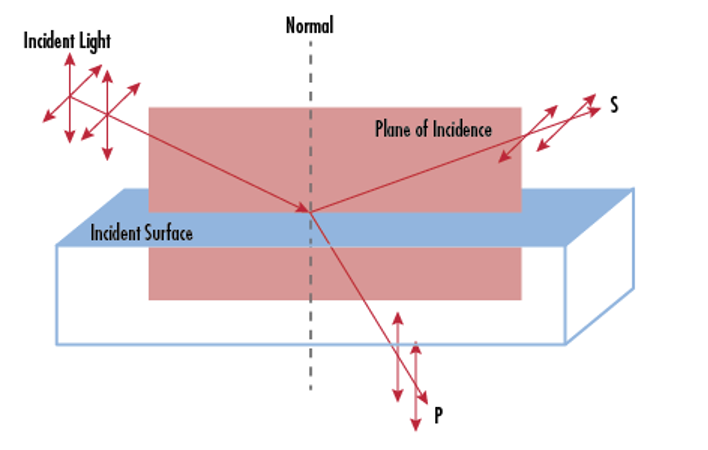
9. Polarization state: refers to a characteristic of light. The state of a certain polarization form of light is fixed. There are five polarization states of laser light, namely natural light, linearly polarized light, partially polarized light, elliptically polarized light, and circularly polarized light.
10. Stimulated radiation: refers to the phenomenon that an atom at a high energy level radiates a clone photon when it transitions to a low energy level under the action of an external photon. This clone photon is identical to the external photon in terms of frequency, phase, propagation direction and polarization state.
11. Phase: Refers to the alternating waveform changes that the photon vibrates up and down when it is moving forward. Macroscopically, the light we see is straight, but microscopically, it is composed of many different waveforms.
12. Coherence: Refers to the nature of the correlation between waves and their own waves, and between waves and other waves. It is generally believed that waves with the same frequency, the same vibration direction, and a constant phase difference have good coherence.
13. PN junction: After the semiconductor working material is doped with different substances, it is divided into a doped P region and a doped N region. The area where the P region and the N region are in close contact is the PN junction.
14. Light amplification: refers to the increase of photons and the increase of light intensity.
15. Inversion of the number of particles: refers to the observed phenomenon. In the natural state, the number of low-energy particles is more than that of high-energy particles. The inversion is to increase the number of high-energy particles, and vice versa. Photons are in the process of inversion was released from.
16. Doping: At room temperature, pure semiconductor materials and optical fiber materials are non-conductive, so doping is required to achieve charge transfer and light emission.
17. Wavelength: refers to the distance that a wave travels in one vibration cycle. From the direction of wave propagation, the distance λ between two adjacent peaks or troughs is as shown in the figure below.

18. Covalent bond: For non-metals like semiconductors, two atoms share one outer electron. Such a stable chemical structure is a covalent bond.
19. Hole: Refers to electrons gaining energy, getting rid of covalent bonds and becoming free electrons, leaving vacancies on covalent bonds called holes.
Professional terms for Semiconductor Lasers
20. Pure light: refers to the light with good monochromaticity without superimposing other colors.
21. Operation mode: refers to the operation mode according to certain rules.
22. Single pulse: refers to firing only once within the duration.
23. Repetitive pulse: refers to multiple transmissions within a duration.
24. Pulse width/laser pulse width: refers to the duration when the laser power is maintained at a certain value.
25. Q-switching: refers to the technology of compressing laser energy into extremely narrow pulses to increase the energy of short-term laser bursts.
26. Mode-locking: It is a technique used in optics to generate extremely short-time laser pulses.
27. Gain switch: a control device for generating laser pulses.
28. Tuning: refers to the technology that we can change the output laser wavelength of the laser through external signals.
29. Coupling: refers to the process in which the light output from the laser is aligned and propagated into the fiber core.
30. Diffraction: Different from the reflection of light irradiated by objects, diffraction refers to the phenomenon that light will be affected by the electromagnetic force of the object at the edge of the object and refracted with the object. A simple example is squinting to look at the light, you can see colored light, this is the complex refraction of white light and the edge of your eyes, entering your eyes and being recognized by you.
Contact information:
If you have any ideas, feel free to talk to us. No matter where our customers are and what our requirements are, we will follow our goal to provide our customers with high quality, low prices, and the best service.
 Email:info@loshield.com
 Tel:0086-18092277517
 Fax: 86-29-81323155
 Wechat:0086-18092277517


