


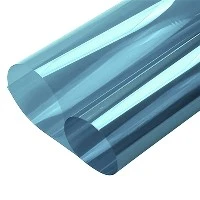

Laser Protection take corresponding safety countermeasures against the harmful effects of laser on the human body and the working environment. Its basic goal is to avoid and reduce harmful laser radiation as much as possible and reduce the possibility of the human body, especially the eyes and skin, being exposed to laser radiation. Specifically, the main goals of laser protection include preventing laser blinding and protecting against laser dazzling. Laser protection technologies for optoelectronic imaging systems are mainly divided into two categories: one is protective materials, which prevent laser blinding by absorbing or reflecting laser; the other is computational imaging technology, which prevents laser dazzling by optimizing image processing algorithms.
In addition, in order to achieve these goals, various protective products and technologies are required, such as laser protective goggles, laser protective glasses, laser protective masks, laser protective helmets, etc. At the same time, the safe design and use of laser devices and laser systems is also very important, including setting safe use rules, regular equipment testing and maintenance, etc.
It is important to note that although laser protection products can address the occasional laser injury problem, they cannot completely eliminate the risk. Therefore, when using lasers, safety regulations must be strictly followed to ensure the safety of personnel.
B. Basic principles of laser protection
There are two main basic principles of laser protection, one is absorption type and the other is reflection type. Absorption protection technology is to add various absorbers to glass or plastic lenses. These absorbers can absorb laser light and prevent it from passing through the lens. The reflective protection technology is to coat the lens with a set of high refractive index dielectric films. When light hits this dielectric film, since all reflected light on the interface has the same phase, the light reflection of this wavelength will be enhanced. This kind of reflective protection can not only effectively reflect laser light to protect the eyes, but also has high transmittance ability for other visible light.
In addition, another way of protection is laser protection technology based on phase change materials. The basic principle of this protection technology is that protective materials based on the phase change principle will undergo a reversible phase change under external stimulation. During the phase change process, the optical properties of the material will change in a very short time.
1. Reflection principle and application of laser protection
The reflection principle of laser protection is mainly to coat the lens with a set of high refractive index dielectric films. When light hits this dielectric film, since all reflected light on the interface has the same phase, the light reflection of this wavelength will be enhanced. This kind of reflective protection can not only effectively reflect laser light to protect the eyes, but also has high transmittance ability for other visible light. In addition, laser protection technology based on phase change materials is also a commonly used protection method at present. The basic principle is that protective materials based on the phase change principle will undergo reversible phase changes under external excitation. During the phase change process, the optical properties of the materials will change. Properties can change within a very short period of time.
This kind of reflective laser protective goggles has been developed and used since the 1970s. Its advantage is that it can effectively prevent laser irradiation of specific wavelengths and achieve protective effects. Specifically, it mainly uses the reflective properties of materials to reflect incident light to achieve protection purposes. It should be noted that you should never look directly at the laser source while wearing laser protective goggles, as this may cause damage to your eyes.
2. Absorption principle and application of laser protection
The absorption principle of laser protection is mainly to add a light absorber of a specific wavelength to the lens material, and use the light absorption performance of the absorber to absorb and protect the light of the corresponding wavelength that it comes into contact with. This technology emerged in the late 1980s. Specifically, when laser light of a specific wavelength hits the lens, absorbers in the lens absorb these rays, preventing them from entering the eye and causing damage.
Laser protective goggles are typical products that use this absorption principle. It should be noted that you should never look directly at the laser source while wearing laser protective goggles, as this may cause damage to your eyes. In addition, the stability of laser protective goggles requires maintaining the light filtering effect within 5 seconds.
At the same time, compared with reflective laser protective glasses, the advantage of absorptive laser protective glasses is that it has a protective effect on all wavelengths of light, not just limited to a specific wavelength. However, its disadvantage is that it has a greater impact on vision and may cause problems such as color distortion.
3. Scattering principle and application of laser protection
The scattering principle of laser protection is mainly used in light scattering technology, which is a protection method based on nonlinear optical principles. Light scattering technology uses the Brownian motion of particles to cause fluctuations in light intensity. Tiny particles suspended in liquid or gas will move irregularly. When light passes through these colloids, the particles will scatter the light. In addition, the optical properties of the material surface are also used to achieve laser scattering protection, such as laser protective films prepared from nanostructured materials. This film can achieve protection by scattering incident light.
It is worth noting that no matter which protection method is used, it is necessary to select a suitable protection solution based on the specific laser parameters and use environment. At the same time, protective equipment, such as wearing special protective glasses, must be used correctly to ensure personnel safety.
4. Attenuation principle and application of laser protection
The attenuation principle of laser protection is mainly to weaken the intensity of laser through absorption, reflection or light splitting, so as to achieve the purpose of protection. Specifically, attenuated laser protective glasses use this principle to coat the lenses with a layer of material that can absorb light of specific wavelengths. When these light of specific wavelengths enter the lenses, they will be absorbed and converted into heat energy. This achieves the effect of attenuating laser intensity.
It is worth noting that some issues need to be considered in practical applications, such as thermally induced deformation, interference effects, polarization effects, spatial inhomogeneity and beam deflection. In addition, attenuated laser protective glasses are mainly used in industrial fields, especially those involving laser operations, such as laser cutting, welding, etc. It is also widely used in the military field and medical field.
Contact information:
If you have any ideas, feel free to talk to us. No matter where our customers are and what our requirements are, we will follow our goal to provide our customers with high quality, low prices, and the best service.
 Email:info@loshield.com
 Tel:0086-18092277517
 Fax: 86-29-81323155
 Wechat:0086-18092277517


