



Ultrashort Pulse Lasers have broad application prospects in medical treatment and optical recording, and many applications are currently in the experimental stage of practicality, including applications in physical science research.
Another feature of this technology is that the range of pulses used is very wide. For example, in information communication applications, the ultra-high repetition frequency of a single pulse with small energy (pJ level) is above 100 GHz; The energy range of the level works at high repetition rates; in high-intensity quantum science research applications, high peak intensities in the petawatt (PW) level can be achieved with single-frequency pulses. In terms of wavelength, through the conversion of the ultrashort pulse laser output wavelength, it can be processed from the soft X-ray region of a few nanometers to the THz pulse equivalent to submillimeter waves. Considering the status quo of ultrashort pulse lasers from the application point of view, they can be roughly divided into the following three categories.
(1) Lasers for physical science research. This is the field of application of the first established ultrashort pulse laser devices. Because this application imposes various requirements on pulse characteristics, such as wavelength, pulse duration, and pulse energy, a variety of lasers including dye lasers and excimer lasers can be used. In the case of paying attention to performance and not considering cost, solid-state lasers are mostly used. Solid-state lasers have flexible performance (the parameters such as pulse energy or repetition frequency can be tuned in a relatively wide range), such as lasers used for nuclear fusion ignition or large-scale laser systems developed and utilized in various research equipment, all belong to this category.
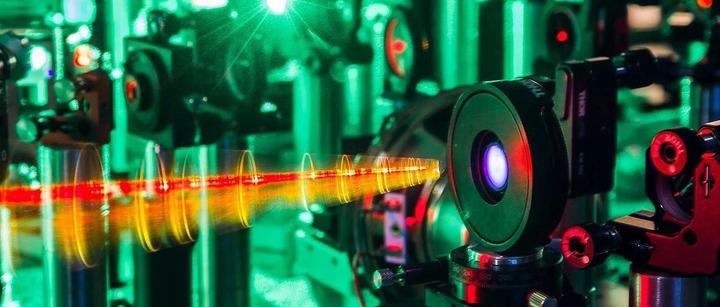
(2) It is expected to be used as a laser for industrial equipment applications. Mainly considered in the field of measurement and processing. Ideal processing results can be obtained by using short-pulse lasers, but the reliability or maintenance and cost of equipment must be considered. In recent years, with the improvement of the reliability of mode-locked solid-state lasers and the emergence of high-power fiber lasers, people have high expectations for the development of this field.

(3) Semiconductor lasers and fiber lasers as optical information communication system devices. As far as this industrial application is concerned, the social benefits are the greatest, but it is also easily affected by social conditions such as market conditions and information and communication policies. People still remember the industry depression brought about by the bursting of the IT bubble. In addition to the performance of the device, issues such as its reliability, cost and environmental protection must also be considered, and the technical requirements are strict. From a long-term perspective, the field of communication is the field with the highest expectations.
In recent years, ultrashort pulse light technology has been popularized, and since the 1990s, various tunable ultrashort pulse mode-locked solid-state lasers have been put into practical use. A tunable laser is a photon-confined laser in which the lower energy level of the laser is in a vibrationally excited state, which broadens the oscillation frequency band.

A typical Ti:Sapphire laser works stably, realizing ultrashort (the shortest is about 5fs) pulsed light with an average output power of 1 W. If the laser crystal doped with Yb ions is used, sub-picosecond pulse output with higher average output power can be obtained.
Applications of Short Pulse Lasers
When cutting and drilling PCBs and FPCs, it is very important to minimize the heat-affected zone. The heat-affected zone of the cut surface or the material near the hole is a kind of thermal degradation to some extent. The use of ultrashort pulse width lasers minimizes the heat-affected zone. Ultrashort pulses can make the laser processing process "cooler", that is, "cold processing". This is because the pulse duration is shorter than the thermal diffusion time in organic materials, meaning that most of the laser pulse energy is carried away by the ejected material before it can diffuse.
Ultrashort pulse lasers (USP) with pulse widths in the femtosecond and picosecond range can well confine energy to the vicinity of the laser spot. When the power density reaches tens of GW per square centimeter, laser processing will achieve a "cold" ablation state, that is, in this case, most of the material is directly evaporated from the laser-directed area. In this way, the indirect damage that may occur near the spot is greatly reduced, because the material evaporates in a short time and the heat has no time to conduct. Most of the absorbed energy is carried away by the ablated material in the form of kinetic energy. Unfortunately, at present, ultrashort pulse lasers are difficult to be applied in industrial production. The main reason is that the processing speed is slow due to the low average power, so it is difficult to combine with automatic material processing equipment. In addition, the laser is relatively large in size (dedicated lasers are built on optical platforms).

Although the pulse energy of ultrashort-pulse lasers is much smaller than that of nanosecond lasers, the lower ablation threshold (higher processing efficiency) of these lasers offsets the reduced pulse energy, so the yield is higher. In addition, ultrashort-pulse lasers have higher pulse repetition rates to support rapid multiple processing, making them ideal for selectively processing thinner layers on top of substrates, typically ceramics.
The ultrafast laser provided by JTBYShield Laser Technology Co., Ltd. is the femtosecond laser amplification system with the lowest cost of ownership on the market today. It integrates all the components for generating high-power femtosecond pulses into one box, and uses an erbium-doped fiber femtosecond laser as the The seed source, plus the special design without adjustment (NOTweak), form the world's unique, ultra-stable, ultra-compact CPA series titanium sapphire chirped pulse amplification system.
Contact information:
If you have any ideas, feel free to talk to us. No matter where our customers are and what our requirements are, we will follow our goal to provide our customers with high quality, low prices, and the best service.
 Email:info@loshield.com
 Tel:0086-18092277517
 Fax: 86-29-81323155
 Wechat:0086-18092277517


