



The widespread use of lasers across various industries has significantly improved efficiency and precision in tasks such as medical procedures, manufacturing, and scientific research. However, with the increased integration of laser technology comes the need for robust safety measures to protect personnel from potentially hazardous laser radiation. One critical piece of personal protective equipment (PPE) is laser safety goggles, specifically those designed to protect against the wavelengths emitted by Nd: Yag fiber lasers.

Parameters
Optical Density and Wavelength Filtration
At the heart of laser safety goggles is the optical density (OD) which determines the amount of laser energy that can be blocked by the lenses. An OD rating provides a logarithmic measure of the amount of light transmission; for instance, an OD rating of 4 would allow only 0.01% of the incident laser light to pass through. Nd:Yag fiber laser safety goggles are engineered to have high OD ratings specifically for the 1064nm wavelength, making them highly effective in blocking the emissions from Nd:Yag lasers commonly used in materials processing and medical procedures.
Lens Material and Coatings
The choice of lens material plays a crucial role in determining the effectiveness and durability of laser safety goggles. Most Nd:Yag fiber laser safety goggles utilize polycarbonate or glass, both known for their high impact resistance and ability to withstand harsh environments. These lenses also often feature special coatings that enhance their functionality, such as anti-reflective coatings to reduce glare and anti-scratch coatings to increase the longevity of the lenses under harsh conditions.
Frame Design and Comfort
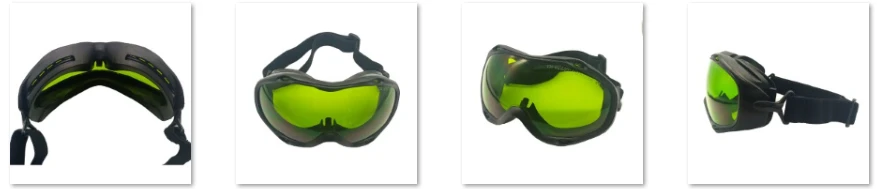
The frame design of safety goggles is another critical parameter that affects their performance. Nd:Yag fiber laser safety goggles typically come with wrap-around styles that offer complete side protection and a snug fit to prevent slippage during movements. The frames are usually made from lightweight materials like plastic or aluminum to minimize fatigue over prolonged periods, and they often include comfort features such as adjustable nose pads and soft temple tips.
Applications
Medical Procedures
In the medical field, particularly in ophthalmology, Nd:Yag fiber laser safety goggles play an essential role during procedures such as Laser-Assisted In Situ Keratomileusis (LASIK). During these surgeries, the 1064nm wavelength is used for creating precise incisions in the cornea. Medical professionals require glasses that offer uncompromising protection against the intense laser emissions generated during these operations, making high OD rating glasses at 1064nm crucial for their safety.
Manufacturing and Industrial Settings
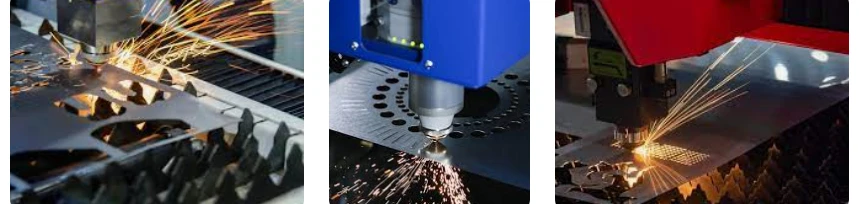
The manufacturing industry heavily relies on Nd:Yag fiber lasers for tasks such as cutting, engraving, or measuring. In these settings, Nd:Yag fiber laser safety goggles serve as a vital line of defense against potentially damaging laser light. These applications require reliable and robust safety goggles that can withstand the rigors of a factory environment while providing essential eye protection.
Research and Scientific Applications
Scientists working with Nd:Yag fiber lasers in research labs also benefit from the use of specialized safety goggles. Whether it's experiments involving laser spectroscopy or photodynamic therapy research, these goggles ensure the eyes remain protected from harmful laser exposures.
Installation Examples
Ensuring Correct Fitting
Proper fitting of Nd:Yag fiber laser safety goggles is imperative for their effective function. This involves adjusting the frame to fit snugly on the face without causing discomfort. Some models may include adjustable temples or nose pieces to accommodate different face shapes and sizes. It's also important to check that the glasses sit correctly on the bridge of the nose and cover the sides of the eyes sufficiently.
Maintenance and Care
To extend the life of Nd:Yag fiber laser safety goggles, regular cleaning is essential. Lenses should be wiped with a microfiber cloth or dedicated lens cleaner to remove fingerprints, dust, or smudges that could impair vision or damage the anti-reflective coatings. Storing safety goggles in a clean, dry case when not in use can prevent scratches and prolong their effectiveness.
Training and Awareness
The importance of training users on the correct use of Nd:Yag fiber laser safety goggles cannot be overstated. This includes demonstrating how to properly don do doff the goggles, cleaning and maintaining them, and understanding the specific hazards they are designed to protect against. In a medical or industrial setting, this might involve formal training sessions and the provision of instruction manuals or best practice guides.
Conclusion
In conclusion, Nd:Yag fiber laser safety goggles stand out in the realm of safety eyewear due to their specialized protection against the 1064nm wavelength emitted by Nd:Yag lasers. While they differ from general-purpose safety glasses in terms of their optical properties and design features tailored for very specific applications, they share common ground in their overarching goal: to protect the eyes from harm. By understanding the unique characteristics of Nd:Yag fiber laser safety goggles and how they compare to other safety eyewear on the market, individuals and organizations can make informed decisions to ensure the safety of their eyes in environments where lasers are present.