



Laser Laboratory Safety Measures
Laser Safety and Classification
When using lasers, safety regulations should be followed and appropriate protective equipment should be used. The human eye is extremely susceptible to injury, and very low-intensity laser radiation may cause damage to it. JTBYShield offers a range of laser safety accessories that can be used to reduce accidents or reduce risk. Lasers in the visible and near-infrared spectral ranges are most likely to cause retinal damage because the cornea and lens are fully transparent to these wavelengths and the lens focuses the laser energy onto the retina, which can be irreparably damaged.
People Management
1. Laser users should undergo relevant training and conduct experiments in strict accordance with operating procedures.
2. Set up a full-time laser safety officer, clearly designate the personnel who have the right to enter and exit the room where the laser is installed, and install warning lights, warning signs, etc. outside the door to restrict access.
3. During laser debugging and operation, operators must wear protective glasses and other protective equipment. Before conducting laser experiments, remove all reflective items (watches, rings, jewelry, jewelry, etc.) on the body to avoid accidental refraction of the laser beam and cause damage.
Environmental requirements
1. Larger-power lasers have interlocking devices and protective covers; the laser irradiation direction will not cause harm to others and prevent the laser emission port and reflector from rising.
2. Before powering on the laser, you should confirm whether the safety devices of the equipment are working properly, including: opaque baffles, non-reflective fireproof surfaces, goggles, protective masks, door chain locks, and ventilation equipment.
3. The room where the laser is placed should have bright light to allow the pupils to converge. If the laser beam accidentally enters the eye, the amount of light transmitted to the retina can be reduced.
4. Flammable cloth and plastic, as well as flammable and explosive gases or liquids cannot be placed around the laser light path.
Operating Instructions
1. Do not look directly into the laser beam or refracted light during operation to avoid direct exposure of the body to the laser beam.
2. Laser debugging should be performed at the lowest working power possible.
3. It is forbidden to check the laser fault with your eyes. The laser must be checked when the power is turned off.
Safety Measures and Laser Safety Accessories
·When adjusting a laser beam with non-negligible power (i.e. >Level 1), Hernei recommends wearing laser protective glasses at all times, as metal objects (such as screwdrivers) may accidentally change the direction of the beam.
·Laser goggles with specific wavelengths should be clearly placed near the laser equipment. Wearing goggles can avoid being injured by accidental reflected beams.
·Goggles are marked with the wavelength range that can be protected and the minimum optical density within this range.
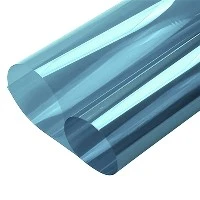
·Laser protective curtains and laser protective cloth can protect other areas of the laboratory from high-energy lasers.
·Light-shielding materials can block direct and reflected light beams emitted from the experimental equipment area.
·Optical equipment can be built within Herne's housing system to isolate or reduce the hazards of lasers.
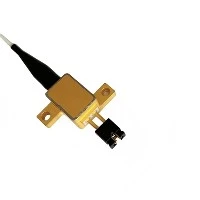
·Lasers with pigtails need to be turned off before connecting or disconnecting fiber connectors, especially lasers with power higher than 10 mW.
·All laser beams should terminate at the edge of the table, and laboratory doors should be closed when using lasers.
·Do not place the laser beam at eye level.
·Conduct experiments on an optical bench with all laser beams propagating in the horizontal direction.
·Do not wear unnecessary reflective objects (such as rings, watches and other reflective jewelry) when working close to the light path.
·Be aware that there may be reflected light from the front or rear surfaces of lenses and other optical components.
·Set the laser power to the minimum required by the application.
·If possible, reduce the output power when adjusting the optical path. Use optical shutters and filters to reduce beam power.
· Place appropriate warning signs or labels near laser equipment and laboratories.
·When operating a Class 3R or 4 laser, use a light box with a laser safety sign, that is, this type of laser requires the use of a safety interconnection device.
·Do not use a laser viewing screen as a substitute for a light trap.
Contact information:
If you have any ideas, feel free to talk to us. No matter where our customers are and what our requirements are, we will follow our goal to provide our customers with high quality, low prices, and the best service.
 Email:info@loshield.com
 Tel:0086-18092277517
 Fax: 86-29-81323155
 Wechat:0086-18092277517


