



In the realm of ophthalmic refractive surgery, lasers sculpt the cornea with micron-scale precision to restore vision. Yet, this transformative power carries inherent risks: uncontrolled laser exposure can cause irreversible ocular damage within milliseconds. This guide synthesizes the latest scientific consensus (2025) on laser hazards and protective strategies, focusing exclusively on polycarbonate (PC)-based absorptive eyewear-the global standard for shielding surgeons and patients. By dissecting mechanisms, thresholds, and material innovations, we aim to anchor safety at the heart of refractive excellence.
I. Laser-Cornea Interaction: The Science of Vision Correction
Core Laser TechnologiesFemtosecond Laser (1053/1550 nm)
Mechanism: Photodisruption creates plasma microbubbles, splitting corneal lamellae with <10 μm thermal collateral.
Precision: 3D-guided cutting depth tolerance: ±5 μm.
Excimer Laser (193 nm)
Mechanism: Photoablation severs peptide bonds (C-N/C-C), removing 0.25 μm tissue per pulse.
Biomechanics: Corneal reshaping follows:
ΔK = (n-1)/R n = 1.376 (corneal refractive index) R = curvature radius (mm)
Clinical Targets
| Refractive Error | Corneal Modification | Tissue Removal per 1D |
|---|---|---|
| Myopia | Central flattening | 12 μm |
| Hyperopia | Peripheral steepening | 15 μm |
Safety Imperative: Residual stromal bed ≥280 μm prevents ectasia.

II. Laser Hazards: When Precision Turns Destructive
Critical Injury Thresholds
| Laser Type | Target Tissue | Damage Mechanism | Consequence | Exposure Limit |
|---|---|---|---|---|
| 193 nm UV | Cornea | DNA denaturation | Haze, ulceration | 0.1 J/cm² (1 pulse) |
| 1550 nm IR | Lens | Protein coagulation | Focal cataract | 100 mW/cm² (5 s) |
| Scatter IR | Retina | Photothermal necrosis | Macular hole | 0.25 s exposure |
Systemic Risks
Skin: 193 nm → Erythema; 1550 nm → 1st-degree burns (>5 W/cm²).
Carcinogenesis: Chronic UV exposure ↑ squamous metaplasia risk (OR 4.2).

III. PC-Based Absorptive Eyewear: Technical Specifications
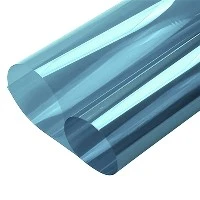
Protection Principle: PC lenses embedded with nano-absorbers convert laser energy to heat.
1. Surgeon Eyewear (Reusable)
| Parameter | Requirement | Validation Standard |
|---|---|---|
| Material | Triple-layer PC: - 2 mm surface-hardened - 3 mm doped absorptive core - 1 mm anti-fog inner |
ISO 21254-1:2025 |
| Optical Density | - OD ≥8 @ 193 nm - OD ≥7 @ 1550 nm |
EN 207:2024 (10× MPE test) |
| Ergonomics | Full-wrap (40° coverage), weight ≤30 g | ISO 10993-5 cytotoxicity |
2. Patient Eyewear (Single-Use)
| Parameter | Requirement | Validation Standard |
|---|---|---|
| Material | 4 mm medical-grade PC | ISO 15004-2:2025 |
| Performance | OD ≥7 @ dual bands | ANSI Z136.1-2025 |
| Sealing Fit | Light leakage <0.1% | Headform testing (ISO 12870) |

IV. Future Frontiers & Ethical Mandate
Next-Gen Materials
Self-Monitoring PC: Nano-sensors alert OD decay via color shift.
Biodegradable Polymers: Hydrolytic degradation ≤24 months.
Precision Protection
Genetic risk stratification (e.g., CRYAA mutation carriers → OD+1 for IR).