



For manufacturers and system integrators working with enclosed laser equipment, selecting the right protective viewing window is an important part of equipment design. A laser safety window needs to provide the appropriate optical protection while allowing operators to observe the working area inside the enclosure.
For a 450nm laser system, selecting a protective window should go beyond simply matching the wavelength. The actual operating wavelength, optical density, laser protection rating, visible light transmittance, material, thickness, dimensions, installation configuration, and technical documentation should all be considered before a window is selected.
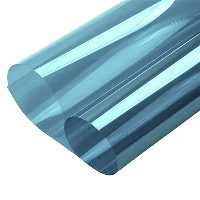
The XL1PW5D5T 450nm Laser Safety Window from JTBYShield is presented on the company's product page as a protective viewing panel for laser equipment enclosures and observation areas. The product page lists OD5+, specified protection wavelength ranges of 190–450nm and 455–535nm, a nominal thickness of 5mm, and a standard sheet size of 1280 × 1000mm. OEM customization is also available for different equipment designs and installation requirements.
active members
years experience
events & challenges
expert instructors
Start With the Laser Wavelength
The first step when selecting a laser safety window is to confirm the laser's actual operating wavelength.
The product page recommends checking the operating wavelength, wavelength tolerance, and any additional laser emissions before selecting the XL1PW5D5T model. This is because the product's protection performance is specified for particular wavelength ranges.
For the XL1PW5D5T, the detailed product specifications list protection wavelengths of 190–450nm and 455–535nm. The product page also lists a laser protection rating of:
DIR AB5 + M AB5Y: >315–450 nm
DIR AB5 + M AB5Y: >455–535 nm
The summary specification at the top of the page additionally describes the protection waveband as 190–540nm and identifies the main protection wavebands as 315–450nm and 455–535nm. Because the page presents these protection specifications in different sections, buyers should confirm the applicable protection data with the supplier's technical documentation for the specific model before ordering.
For equipment manufacturers and system integrators, the practical starting point is therefore to compare the laser source's actual specifications with the documented protection range of the selected window.
Understand OD5+ and Laser Protection Ratings
Optical density is another important specification when evaluating a laser protective viewing window.
The XL1PW5D5T is listed with an optical density of OD5+. The product page specifies this rating together with the applicable wavelength ranges and test conditions rather than presenting OD5+ as an independent specification for every possible laser application.
The page specifically states that OD5+ is subject to the specified wavelength ranges and test conditions. It also recommends determining the required optical density and laser resistance rating according to the laser system's operating conditions.
For this reason, equipment manufacturers should not select a protective window based on the OD value alone. The wavelength, operating conditions, applicable laser protection rating, and relevant technical documentation should be evaluated together.
For the XL1PW5D5T model, the product page recommends verifying the optical density, specified protection wavelength ranges, visible light transmittance, and applicable laser resistance ratings against the relevant technical documentation before installation.
Balance Laser Protection With Visible Light Transmittance
Protection is not the only consideration when selecting a viewing window for enclosed laser equipment. Operators may also need to observe the working area through the protective panel.
Visible Light Transmittance, or VLT, is therefore another specification to consider. The detailed product description for the XL1PW5D5T lists 65% VLT and describes the window as a viewing panel intended for applications where both optical protection and process visibility need to be considered. The product selection section also recommends evaluating whether the stated VLT meets the equipment's observation requirements.
For laser equipment manufacturers, this means the viewing requirement should be considered alongside the protection requirement. A protective window is not simply a barrier; in the applications described on the product page, it is also intended to provide visibility of the enclosed working area.
Important specification note: the summary specification at the top of the current product page displays VLT: 25%, while the detailed product introduction, parameter table, selection guidance, and FAQ list 65%. This discrepancy should be confirmed with JTBYShield before the specification is used in a published technical document or purchasing decision.

Material Selection: Acrylic and PC
Material is another specification that should be confirmed when selecting a laser safety window.
The product page's summary specifications list the material as Acrylic / PC, while the detailed product introduction describes the XL1PW5D5T as an acrylic protective viewing panel. The FAQ identifies the standard model as acrylic (PMMA).
The standard configuration is listed with a 5mm thickness.
For equipment manufacturers evaluating the XL1PW5D5T, the material and configuration should therefore be confirmed for the specific order. This is particularly relevant for customized OEM windows, because the product page states that custom thicknesses and configurations can be discussed and that the applicable optical protection performance should be verified for customized specifications.
Rather than assuming that every customized panel has exactly the same configuration as the standard reference product, buyers can provide their equipment requirements and request a technical review before production.
Check Window Thickness, Size and Installation Requirements
A laser safety window must also fit the physical design of the equipment enclosure.
The XL1PW5D5T product page lists a standard sheet size of 1280 × 1000mm and a nominal thickness of 5mm. The plate size is described as customizable.
When specifying a protective viewing window, equipment manufacturers should confirm:
- Required panel dimensions
- Window thickness
- Mounting holes
- Cutouts
- Installation configuration
- Panel shape
According to the product page, JTBYShield provides precision cutting and shaping for rectangular, circular, irregular, and other custom-shaped laser protective panels. Custom mounting holes, cutouts, drilling, and edge processing are also available according to installation requirements.
These options allow an OEM customer to consider the protective viewing window as part of the equipment enclosure design rather than simply selecting a standard sheet.
Consider Laser Power and Operating Conditions
A laser wavelength alone does not determine whether a particular protective window is suitable for an application.
The XL1PW5D5T product page specifically recommends determining the required optical density and laser resistance rating based on the laser system's operating conditions. Its FAQ also states that the suitability of the window for enclosed 450nm laser engraving and cutting equipment depends on the laser's actual wavelength, power, operating mode, exposure conditions, and required protection level.
This creates a practical selection sequence for equipment manufacturers:
Confirm the actual laser wavelength.
Check wavelength tolerance and any additional laser emissions.
Determine the required optical density.
Evaluate the applicable laser protection rating.
Review the laser's operating conditions, including power and operating mode.
Consider exposure conditions and the required protection level.
Confirm window dimensions, thickness, and installation requirements.
Request a technical review before installation.
Following these steps helps ensure that the protective window is evaluated according to the actual laser system rather than its nominal wavelength alone.
Where Can 450nm Laser Safety Windows Be Used?
The XL1PW5D5T is presented as a laser equipment viewing window for applications that require protective observation panels.
The product page specifically identifies the following application areas:
450nm Blue Diode Laser Engraving Systems
Enclosed Laser Cutting Equipment
OEM Laser Equipment Viewing Panels
The product introduction describes the window as being designed for integration into laser equipment enclosures and observation areas. Its stated function is to provide wavelength-specific laser attenuation while allowing operators to observe the enclosed working area.
For these applications, however, the product page emphasizes that suitability depends on the actual laser specifications and operating conditions. Before installation, customers are advised to provide their laser specifications for technical review.
When Should You Consider a Custom Laser Safety Window?
Standard sheet dimensions may not match every laser equipment enclosure. For OEM manufacturers and system integrators, customization can therefore be an important part of the selection process.
According to the product page, JTBYShield offers OEM customization for the 450nm laser safety window, including:
- Custom dimensions and thicknesses
- Precision cutting and shaping
- Rectangular, circular, irregular, and other custom shapes
- Custom mounting holes and cutouts
- Drilling and edge processing
- Product marking
- Logo customization
The product page also describes two approaches to customized manufacturing.
For customers with production-ready drawings, the process is:
CAD Drawings & Specifications → Technical Review → Custom Manufacturing → Quality Inspection → Delivery
For customers without CAD drawings, the process is:
Your Requirements → Engineering Drawings → Customer Approval → Custom Manufacturing → Quality Inspection → Delivery
The page also states that customers can provide dimensions, installation details, laser specifications, or design ideas if they do not have production-ready drawings. The engineering team can then prepare manufacturing drawings for customer review and approval before production.
For OEM projects, this approach can make it easier to align the viewing window with the equipment's enclosure and installation requirements.


Verify Testing and Technical Documentation Before Ordering
Technical documentation should be part of the selection process for a laser protective viewing window.
For the XL1PW5D5T model, the product page recommends evaluating the following information:
- Optical density data for the specified wavelength ranges
- Visible light transmittance specifications
- Material and thickness information
- Applicable laser protection ratings and test conditions
- Product identification and relevant quality records
The page also states that European laser protection markings, where applicable, should be interpreted according to the relevant standard and product-specific test documentation.
For buyers, this means the final selection should be based on product-specific technical documentation rather than relying only on a general product description.
JTBYShield's product page recommends contacting the team to confirm the available technical documentation for model XL1PW5D5T.
450nm Laser Safety Window Selection Checklist
Before ordering a 450nm laser safety window, equipment manufacturers and system integrators can review the following checklist:
- Laser wavelength
- Wavelength tolerance
- Additional laser emissions
- Required optical density
- Applicable laser protection rating
- Laser power
- Operating mode
- Exposure conditions
- Required VLT
- Material
- Thickness
- Panel dimensions
- Mounting holes and cutouts
- Installation configuration
- Technical documentation
- OEM customization requirements
The purpose of this checklist is to evaluate both the optical protection requirements and the physical integration requirements of the laser equipment.
Conclusion: Choose the Window Based on the Complete Laser System
Selecting a 450nm laser safety window is not simply a matter of finding a window labeled "450nm." The laser's actual wavelength, protection requirements, operating conditions, visibility requirements, physical dimensions, and installation configuration all need to be considered before a final selection is made.
The XL1PW5D5T 450nm Laser Safety Window is listed by JTBYShield with OD5+, specified protection wavelength ranges of 190–450nm and 455–535nm, a nominal 5mm thickness, and a standard sheet size of 1280 × 1000mm. The detailed product description lists 65% visible light transmittance, and the product is presented for laser equipment viewing window applications with OEM customization options.
For OEM projects, buyers can provide the laser wavelength, operating conditions, required panel dimensions, and estimated order quantity for technical review. According to the product page, JTBYShield can review these requirements and confirm available product specifications, documentation, and quotation options for the XL1PW5D5T model.
The most reliable approach is straightforward: define the laser system first, then match the protective viewing window to the documented requirements.